Get Full Government Meeting Transcripts, Videos, & Alerts Forever!
Get email alerts on the Public Safety topic
No spam. Unsubscribe anytime.
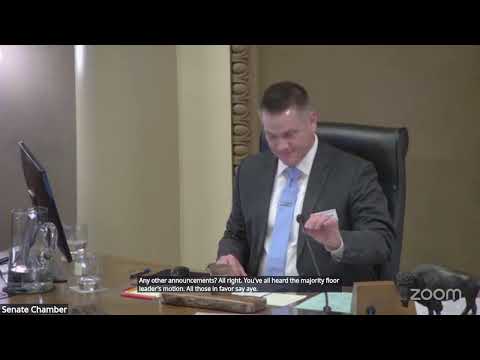
Senators approve wildfire staffing and inmate crews funding in two bills aimed at boosting response and prevention
Summary
The Committee of the Whole recommended passage of House Bill 36 (two wildland fire modules and a full‑time wildfire public information role) and House Bill 106 (two smoke‑buster leader positions for inmate crews), with debate on FTEs, off‑season duties and communications capacity.
The Senate Committee of the Whole advanced two bills aimed at strengthening Wyoming’s wildfire response: House Bill 36, authorizing two wildland fire modules (24 positions) and a statewide public information role, and House Bill 106, which funds smoke‑buster crew leadership positions to manage inmate crews that assist on post‑fire assignments.
Sponsor Senator Driscoll said House Bill 36 creates a pilot to add two specialized modules at a biennial cost of $5,144,000, including equipment and support. The bill also includes a $1,000,000 transfer from the State Lands account to support the modules. The Committee adopted Committee of the Whole Amendment #1, which clarifies positions and funding.
Debate centered on why the package included a full‑time Public Information Officer (PIO) with salary and benefits estimated at about $195,000. Senator Hicks questioned the need for a year‑round FTE when modules are largely seasonal; sponsor and proponents said statewide coordination, consistent messaging and mitigation work year‑round justify the position. ‘‘When fires occur and it crosses county lines, the information loop gets disjointed,’’ Senator Gru said, urging a statewide coordinator to prevent misinformation and closures caused by inconsistent communication.
Sponsor Senator Larson described House Bill 106 for smoke‑buster leaders as a modest investment ($499,709 in 2026) to manage inmate crews, citing 2024 statistics showing high use and multiple assignments across counties. Both bills were reported do pass by the Committee of the Whole.
What’s next: Both bills will advance to second reading; senators asked for clarity on the scope of year‑round duties for the PIO and evaluation metrics for module performance.