
Senate hearing pits business and local interests over SB 15 86’s land rezoning and tax incentives
Get AI-powered insights, summaries, and transcripts
Subscribe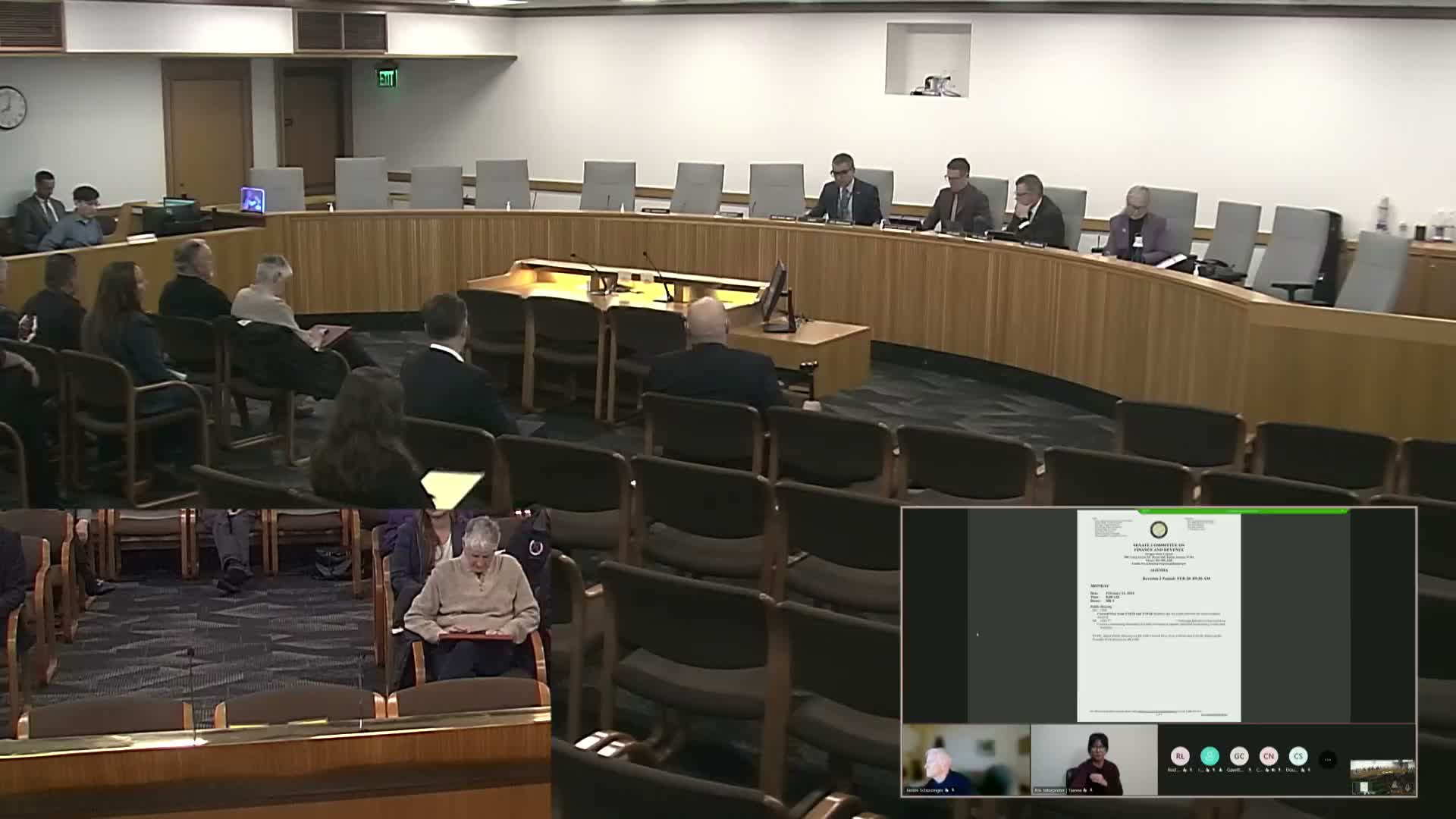
Summary
Testimony split over SB 15 86: sponsors and industry groups argued the package (including dash‑4 land changes and dash‑7 tax credits) is needed to keep Oregon competitive in semiconductors and advanced manufacturing, while residents, labor unions, and farmers warned about farmland loss, water/electric impacts, and large public subsidies—some lawmakers support a dash‑8 amendment to bar data centers and crypto from tax breaks.
The Senate Committee on Finance and Revenue heard more than three hours of public testimony Feb. 20 on Senate Bill 15 86, a package of changes aimed at growing semiconductors and advanced manufacturing in Oregon. Proponents said targeted incentives, clarified definitions, and ready sites are essential to retain and attract investment. Opponents warned the measure risks permanently converting fertile farmland and expanding large tax breaks without stronger job and community accountability.
Sen. Janine Salmon, speaking for supporters of the bill’s land component, told the committee the dash‑4 amendment would bring 373 acres contiguous to an existing urban growth boundary into the UGB and designate roughly 1,400 additional acres as urban reserves; she emphasized those lands now sit outside the land‑use system and that any future change would still go through local planning commission and metro processes and could take decades to materialize. "This land that we're talking about is not inside the land use system currently," she said, adding that public hearings at the city and metro level remain part of the process.
Industry and local‑government witnesses described the bill’s technical fixes and incentives. Duke Shepherd of Oregon Business and Industry explained dash‑7 language that aims to define "advanced manufacturing" more precisely and offered an optional capital equipment property‑tax abatement that requires net‑new machinery to be placed in service. Rocky Dahl of the Oregon Life Sciences Association described a new R&D tax credit with a $50,000,000 cap per biennium in the posted amendment language and said the credit is meant to be separate from and not dilute semiconductor credits.
Supporters, including the McMinnville Area Chamber of Commerce and local manufacturers, argued SB 15 86 would improve certainty, permitting, and long‑term revenue by encouraging investment. "No investment means no benefit," John Olsen, president of the McMinnville Area Chamber, told the committee.
Opponents raised land‑use and equity concerns. Several Hillsboro residents and farmers said the proposed industrial conversion threatens prime agricultural soils, local water supplies and quality‑of‑life. "We do not need leaders who are ready to lower the bar in the name of competitiveness," said Hillsboro resident Sarah Yeoman, who also noted recent layoffs at a local semiconductor employer. Labor representatives likewise urged caution: Mike Powers of SEIU Local 503 warned the package could expand tax subsidies without sufficient accountability and estimated the bill "could cost anywhere from 1,000,000,000 to over $2,000,000,000 over a 10 year period," saying more analysis is needed.
The committee also heard an amendment posted by Sen. Golden (presented by staff) — the dash‑8 — that would explicitly exclude standalone data centers and cryptocurrency mining operations from enterprise‑zone and other taxpayer‑subsidized benefits. That pitch drew support from Sen. Khan Pham, who said the dash‑8 would close a loophole and redirect hundreds of millions in tax breaks back to state and local coffers.
City of Hillsboro staff confirmed the map language in dash‑7 that brings specified acreage into the UGB and places the remainder as urban reserves, and several rural communities urged changes to regionally significant industrial site (RSIS) job thresholds to allow smaller facilities to qualify.
No committee vote was taken. The public hearing on SB 15 86 was closed and the committee moved on to SB 15 24; committee members and staff said they expect to review amendments and follow up on drafting questions raised in testimony.