
Agency and advocates clash over timing, costs and policy changes to Oregon campaign finance reform
Get AI-powered insights, summaries, and transcripts
Subscribe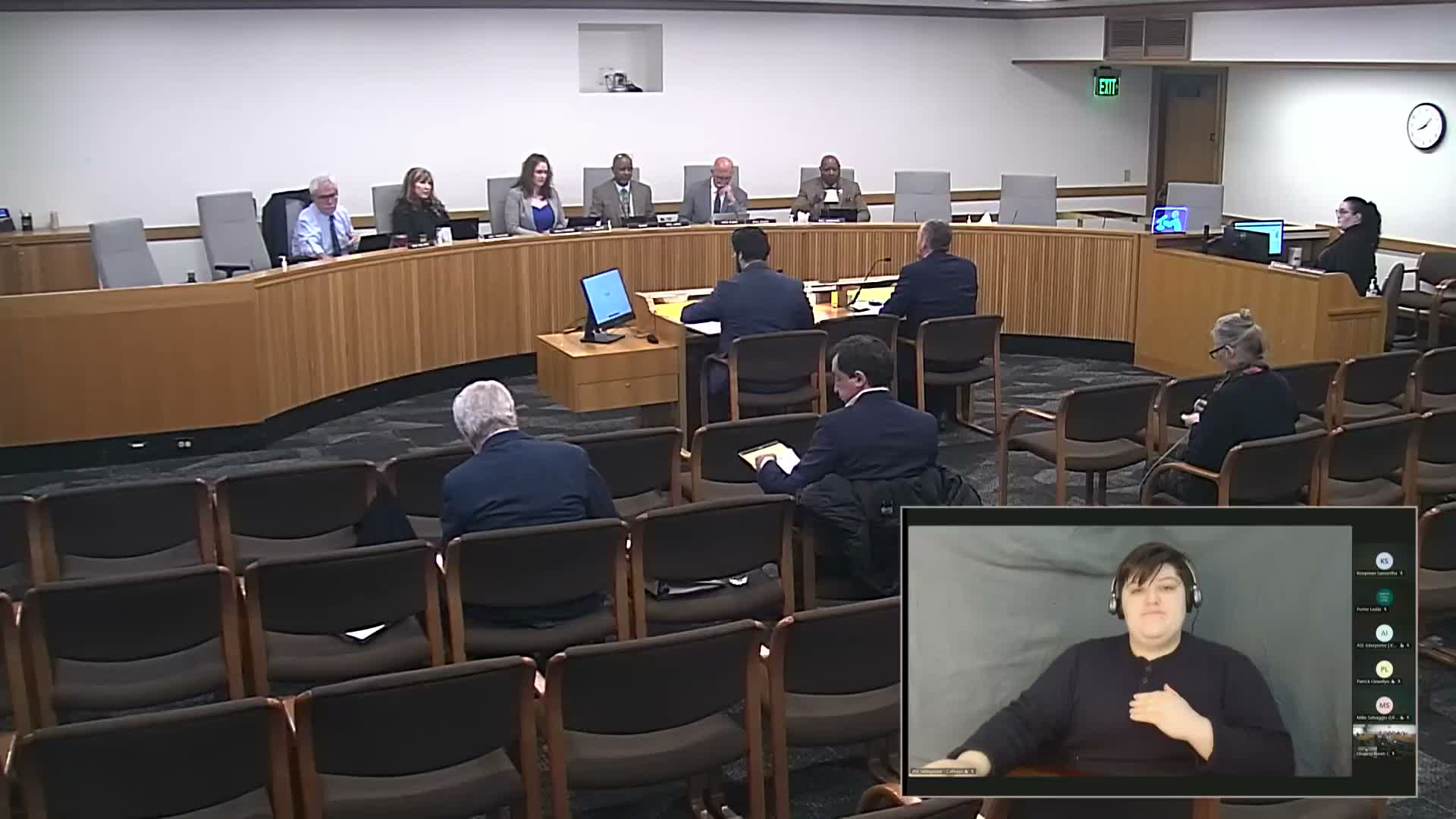
Summary
At an informational hearing, the Secretary of State’s office warned that House Bill 4024’s technical demands (a statewide compliance and reporting platform) will be costly and risky to build quickly, while good‑government advocates and the Campaign Legal Center said proposed fixes in HB 4018 would weaken anti‑evasion and coordinated‑expenditure rules; business groups defended technical corrections and a staggered timeline.
State elections officials and outside experts told the Senate Committee on Rules on Feb. 23 that Oregon’s campaign finance overhaul requires more implementation time and policy clarity than currently scheduled.
Michael Kaplan, Deputy Secretary of State, said House Bill 4024 requires a new statewide IT platform and capabilities that "vastly exceed" the department's 20‑year‑old Orestar system. Kaplan said the office released an RFP and presented a placeholder funding request of $25 million to implement HB 4024 in its current form, but warned costs could exceed that amount if rapid development premiums are required and vendors demand risk premiums. "To have even a shot of making those demanding requirements on a tight deadline, we are having to assume risk right now in our RFP process," Kaplan told the committee.
Kaplan and Ricardo Lujan Valerio, Deputy Chief of Staff to the Secretary of State, urged the committee to consider HB 4018, a proposal that keeps contribution limits slated for Jan. 1, 2027, while pushing the most technologically complex elements — including EFMC (entity‑filtering/networking concepts) and enhanced online disclosure — to a later, more realistic timeline. Lujan Valerio said rushing the entire package would raise "significant amount of risk, cost, confusion, and a lack of public confidence."
Advocates pushing for robust limits and transparency pushed back. Jason Kafoury of Honest Elections Oregon said he was "shocked" by a late, extensive rewrite of HB 4018 posted with little public notice and limited opportunity for remote testimony. He argued the draft contains substantive policy changes — not just technical fixes — including removing the explicit definition of coordinated expenditures from the definition of contribution and adopting an anti‑proliferation test that treats multiple entities as one only if they were created for the "sole purpose" of evading limits. "If this passes, we have created ... a third type of massive money," Kafoury said, warning the draft would enable evasion of limits.
Patrick Llewellyn, director of state work at the Campaign Legal Center, told the committee HB 4018 would "weaken laws intended to protect against corruption," in his view, by removing the explicit coverage of coordinated expenditures and by setting an "extraordinarily high" standard for anti‑proliferation enforcement. Llewellyn said those two changes together could render contribution limits ineffective and urged the committee to consider alternative approaches.
Representatives of business and conservative groups defended HB 4018 as largely technical and intended to clarify drafting errors. Preston Mann of Oregon Business & Industry and Louis DeSitter of R‑Oregon said the changes do not alter the limits themselves, clarify independent‑expenditure committee definitions, fix a misplaced funding stream, and move EFMC and the new online system implementation to 2031–2032 while leaving statutory contribution limits effective in 2027. Mann warned that the EFMC/networking threshold in current rules could sweep in ordinary donors unless clarified.
Committee members expressed a mix of concern about costs, implementation risk and procedural fairness. Senator Manning said voters expected swift reform after the 2024 vote; other members said technical correctness matters but that substantive policy rollbacks should not be rushed. Senator Golden described the process of recent drafts as "appalling" and warned he would vote against the bill unless amended.
The hearing produced no committee vote; the session was informational. Testimony and letters from advocates and experts were added to the record for committee consideration.