Get AI Briefings, Transcripts & Alerts on Local & National Government Meetings — Forever.
Committee hears bill to add immigration status to educational civil‑rights protections and require DOJ model policies
Loading...
Summary
Senate Bill 15 38 A would add immigration status as a protected class in Oregon's educational anti‑discrimination law, require the Oregon Department of Justice to revise model policies for schools responding to immigration enforcement, and includes an amendment (dash‑8) allowing a narrow process for some community colleges to revert to historic names without HECC approval.
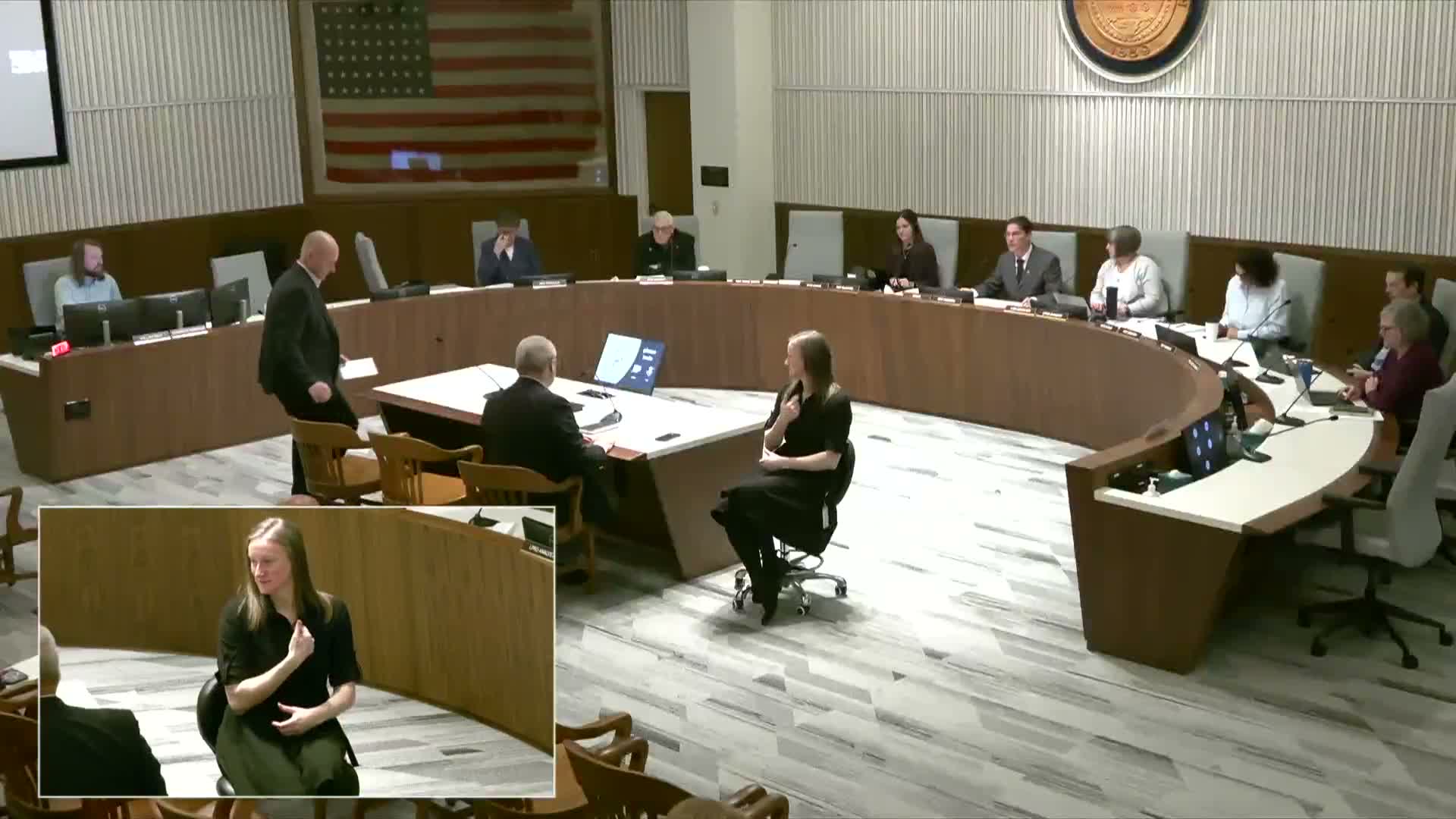
The House Committee on Education heard Senate Bill 15 38 A on Feb. 23, a bill that would add immigration status to Oregon's educational anti‑discrimination protections for instructional programs and require the Oregon Department of Justice to modify its model policies for schools responding to immigration‑enforcement activity.
Sponsor Sen. Lou Frederick framed the bill as codifying existing practice consistent with Plyler v. Doe (U.S. Supreme Court, 1982) and providing clearer statewide guidance to districts and staff during enforcement events. "This bill is not a sweeping new policy," Frederick said; he emphasized the bill's role in ensuring students are educated free from fear and bias.
Jessica Ventura, director of the Office of Immigrant and Refugee Advancement (Oregon Department of Human Services), described outreach her office conducted across more than 40 community organizations and said families raised recurring practical concerns: whether schools must share information with immigration authorities, who verifies warrants, and how districts should communicate with families. Ventura provided demographic context: "Oregon is home to more than 400,000 immigrants and more than 67,000 refugees" and the state has about 62,000 English language learners, data she cited from ODE reports.
Proponents emphasized that DOJ would consult with the Office of Immigrant and Refugee Advancement and education stakeholders in drafting model policies that school districts and education service districts would be required to distribute to employees. Morgan Allen (COSA) said the organization supports adding immigration status to civil-rights protections and that changes made in the Senate addressed earlier concerns about district-level mandates.
The bill also carries a dash‑8 amendment that would create a narrow, optional path for some community colleges to consider reverting to a historic pre‑1970 name without higher‑education coordinating commission approval or a public vote. Myra Flores (chief of staff to Sen. Anthony Broadman) and Greg Pereira (president, Central Oregon Community College) testified that the amendment is optional, would not change legal status or access to federal aid, and that a suggested 1960 cutoff would limit applicability to Central Oregon Community College; Pereira described COCC's service area (more than 10,000 square miles across five counties) and said any name conversation would be highly inclusive.
Committee members asked whether the bill changes enrollment requirements; proponents and staff said it largely codifies current obligations, clarifies that instructional programs are included, and provides model policies to help districts and families navigate enforcement‑related situations. The committee closed the hearing with no vote taken that day.