Get Full Government Meeting Transcripts, Videos, & Alerts Forever!
Get email alerts on the Legislative topic
No spam. Unsubscribe anytime.
Votes at a glance: Third‑reading bills passed on Oregon House floor Feb. 20, 2026
Summary
The House declared final passage on multiple third‑reading bills on Feb. 20, 2026, including measures on energy siting, hospice cannabis use, EMS reimbursement, student homelessness protections, administrative rule timing, vehicle title transfers, metal property theft prevention, and worker protections. All listed bills were declared passed by constitutional majority.
On the House floor Feb. 20, 2026, members completed third readings and declared passage by constitutional majorities for a set of bills. Key measures and outcomes are listed below.
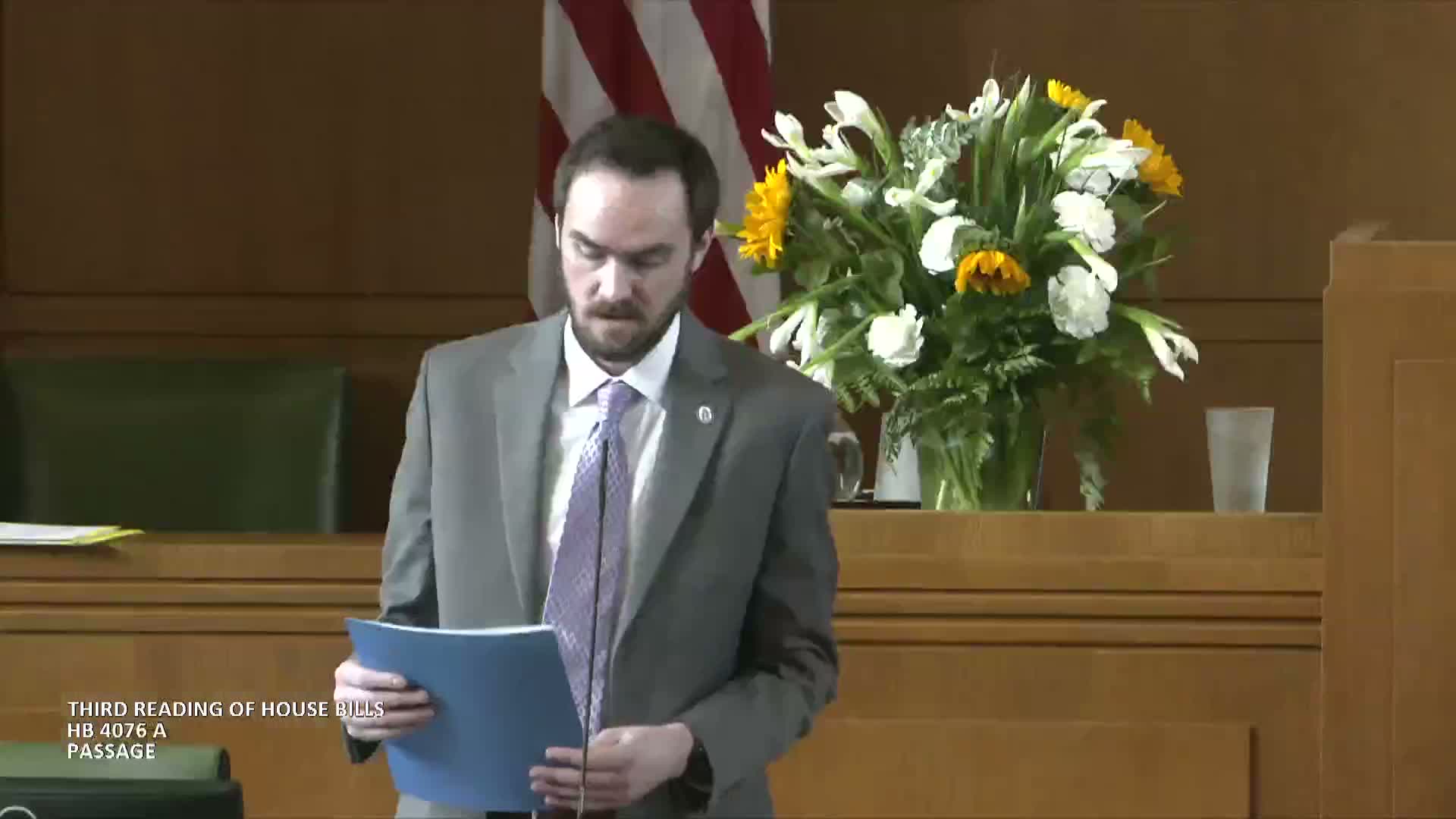
- HB 4076 — Energy siting and surplus interconnection: Passed. Sponsor said the bill allows projects that add generation at existing interconnection points to predetermine siting flexibility (up to two miles) to reduce land‑use impacts.
- HB 4142 — Medical marijuana in hospice/end‑of‑life ('Ryan's law'): Passed. The bill requires hospice organizations and designated residential facilities to adopt written policies and provide staff training so Oregon Medical Marijuana Program (OMMP) patients can access medical cannabis as part of end‑of‑life care. Sponsor cited OMMP data showing only one organizational caregiver designation serving eight patients as of January 2025.
- HB 4156 — Ground Emergency Medical Transportation reimbursement: Passed. Sponsor read testimony from Umatilla County Fire Chief Scott Stanton noting the district serves ~48,000 residents, responded to >5,000 medical calls last year and transported 3,761 patients; Stanton said the bill provides continuity without adding state funds.
- HB 4149 — Codify McKinney‑Vento student protections into Oregon law: Passed. The bill places federal McKinney‑Vento protections into state statute (immediate enrollment, transportation, district liaisons, dispute resolution), drawing support and some concern that statutory duties require commensurate budget commitments.
- HB 4021 — Administrative rule effective dates and notice: Passed. The bill establishes a minimum 28‑day period between filing and effective date for permanent rules that change compliance obligations, improves advance notice expectations, and requires agency rule contact information to be posted publicly while preserving emergency rule authority.
- HB 4137 — Transfer of interest in motor vehicles: Passed. The bill clarifies processes around notice of sale to DMV (notice within 10 days) and title transfer (within 30 days) and provides a minimum statewide response for courts to dismiss tickets when a seller shows proper DMV notice.
- HB 4140 — Commercial metal property and theft prevention: Passed. The bipartisan measure memorializes a theft alert system, expands statutory definitions to include critical broadband infrastructure (reference to ORS 164.365 in floor remarks), and requires written documentation for sale of commercial metal property.
- SB 1518 — Worker protections (Oregon Caregiver Protection Act): Passed. The bill clarifies wage and overtime protections for domestic and in‑home care workers so state protections remain despite changing federal definitions.
- SB 1520 — Paid family and medical leave accounting: Passed. The bill authorizes the Oregon Employment Department to establish accounting to label contributions by source to comply with an IRS ruling that could otherwise create payroll tax exposure; sponsor cited estimated employer exposure of ~$20,000,000/year and an estimated system update cost of about $5,600,000.
All listed measures were declared passed on third reading on the House floor and will proceed through enrollment and any further steps required by the legislative process.