
House passes bill to speed new generation by recognizing surplus grid interconnection
Get AI-powered insights, summaries, and transcripts
Subscribe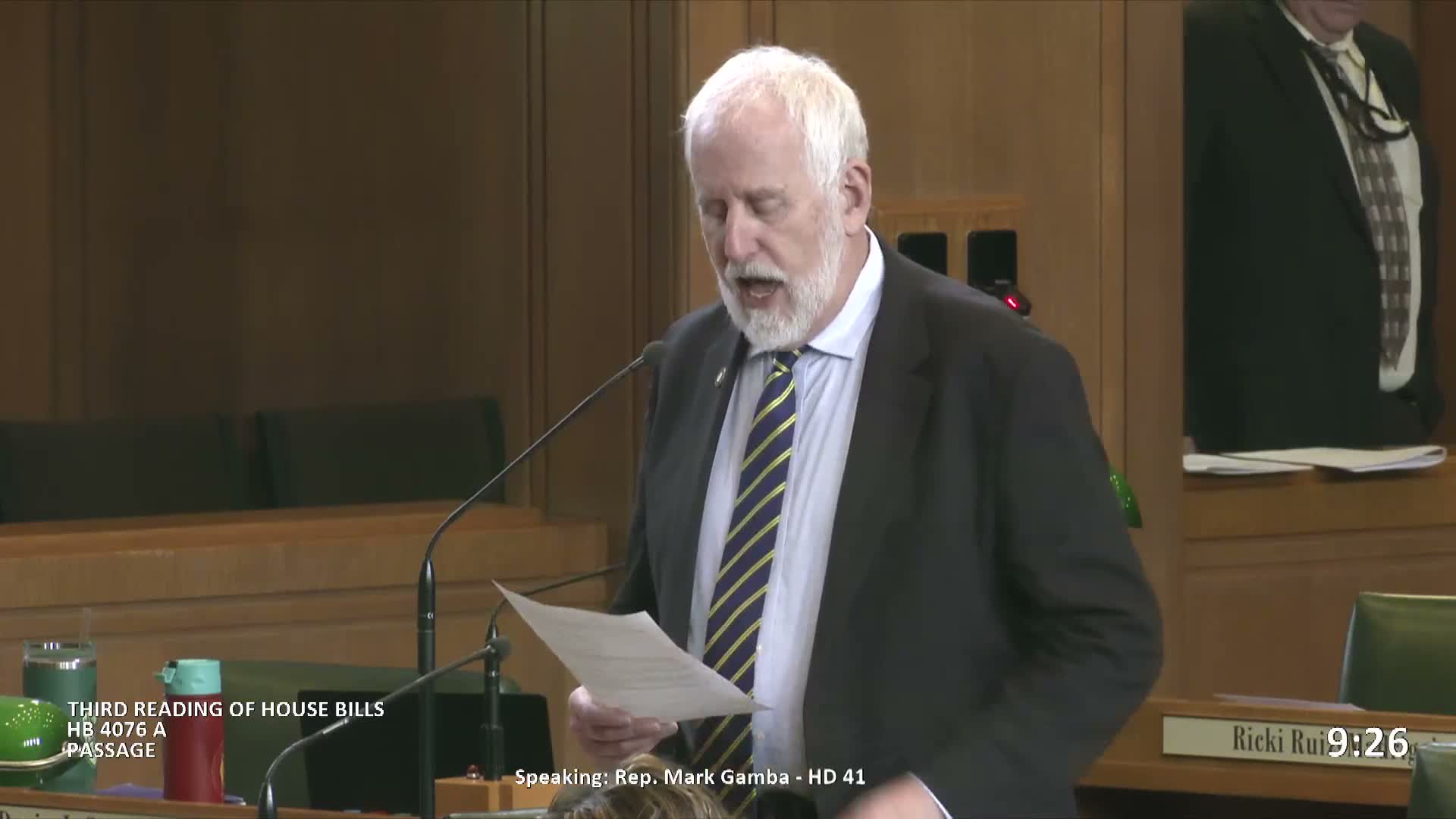
Summary
The House approved HB 4076 to let new energy projects locate within a two‑mile locational dependency of existing interconnection points when they reuse surplus capacity, aiming to reduce land‑use impacts and speed needed generation.
Representative Gamba urged passage of House Bill 4076 on third reading, describing it as a targeted step to accelerate clean energy development while preserving oversight. "House bill 40 76 a at its core is about something very simple, using what we already have more efficiently to meet Oregon's growing energy needs," Gamba said, arguing the approach reduces the need for new transmission and minimizes impacts on sensitive lands.
The bill would allow a "surplus energy project" — a project that adds generation to the grid at an existing point of interconnection — to predetermine a locational dependency up to two miles from the existing site certificate boundary. Gamba said the change provides developers, communities and local governments a more predictable path while leaving the Energy Facility Siting Council's review and authority intact. "My friends, this is just common sense," Gamba said.
Representative Owens spoke in support and noted committee conversations about timeline and permitting for county‑level projects, saying an amendment is being worked with Chair Lively to address those local considerations. Owens asked colleagues for a yes vote so projects that rely on existing interconnection capacity can proceed with less new land disturbance.
The measure was put to a voice vote and, having received a constitutional majority, was declared passed. The bill now proceeds under the House rules for enrolled measures and any subsequent steps required by the legislative process.