Get Full Government Meeting Transcripts, Videos, & Alerts Forever!
Get email alerts on the State Highway 205 Overlay topic
No spam. Unsubscribe anytime.
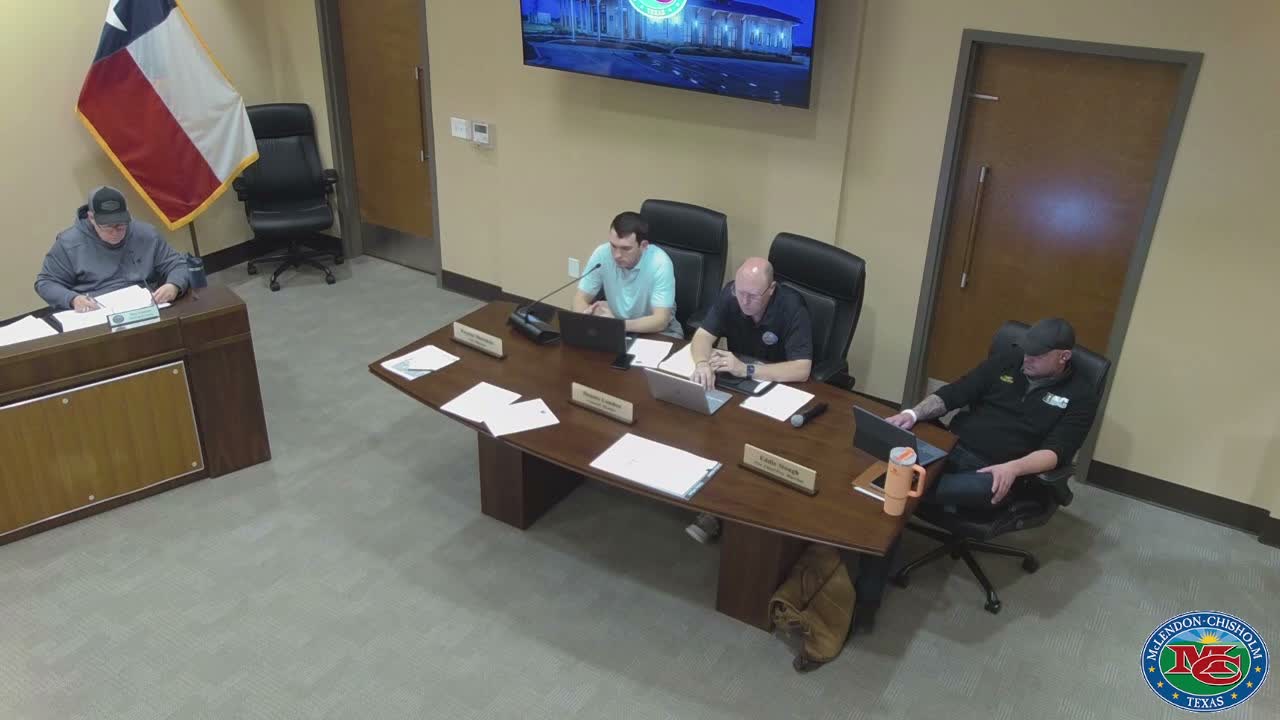
Planning and Zoning advances State Highway 205 corridor overlay to council after edits requested
Summary
The Planning and Zoning Commission voted to forward a proposed corridor overlay district for State Highway 205 to city council, asking staff to revise spacing rules so similar high-intensity uses are uniformly buffered from residences and from one another and to clarify signage and lighting exceptions.
The Planning and Zoning Commission voted to advance a proposed corridor overlay district for State Highway 205 to the city council, asking staff to incorporate several changes requested by commissioners before council consideration.
Staff introduced the overlay as an additional regulatory layer that "does not change the underlying base zoning districts, but establishes additional requirements for nonresidential development within that district," and recommended approval. The district would apply to the commercial corridor on State Highway 205 and would include spacing requirements, landscaping and buffering, site-development standards for signage, access management, building orientation, parking and pedestrian accommodations, and procedures for variances and enforcement "consistent with state law," staff said.
Commissioners pressed staff on the overlay table’s spacing rules, citing inconsistent distances for functionally similar uses. One commissioner noted apparent anomalies involving vape shops, payday lenders and massage parlors, saying the draft allowed, for example, some uses to sit closer to other like uses while imposing wider buffers on others. "It just seems like something were arbitrary," a commissioner said, urging a uniform approach that would prevent clustering of undesirable uses. Multiple commissioners and staff agreed to make spacing between similar high-intensity uses consistent and to require buffers from residential areas.
The commission also discussed monument signage and lighting. Commissioners suggested treating exceptions for around-the-clock illumination — such as for medical clinics that need 24-hour visibility — as special use permits (SUPs) or by refining the overlay language. Staff agreed to review existing sign illumination guidance and to either reference existing standards or add clearer lumen/illumination language where appropriate.
A motion to approve the overlay as amended carried after members confirmed that the version presented to council would reflect the commission’s requested edits. Staff told commissioners the ordinance will be updated online and presented to city council on February 24 at 5:30 p.m., and that public comment opportunities will also be available at that council meeting.
The commission’s action is procedural: forwarding the ordinance with direction to staff. City council will consider the ordinance and any requested amendments in its legislative process.