Child Custody Task Force weighs family-court study, faster hearings to curb parenting-time violations
Loading...
Summary
The North Dakota Child Custody Review Task Force discussed proposals to study or pilot a family law court, require education for parents and judges, and create expedited procedures (orders to show cause/hearings within 30 days, with hybrid 14-day pull-forward options) to address withholding of children and parenting-time violations.
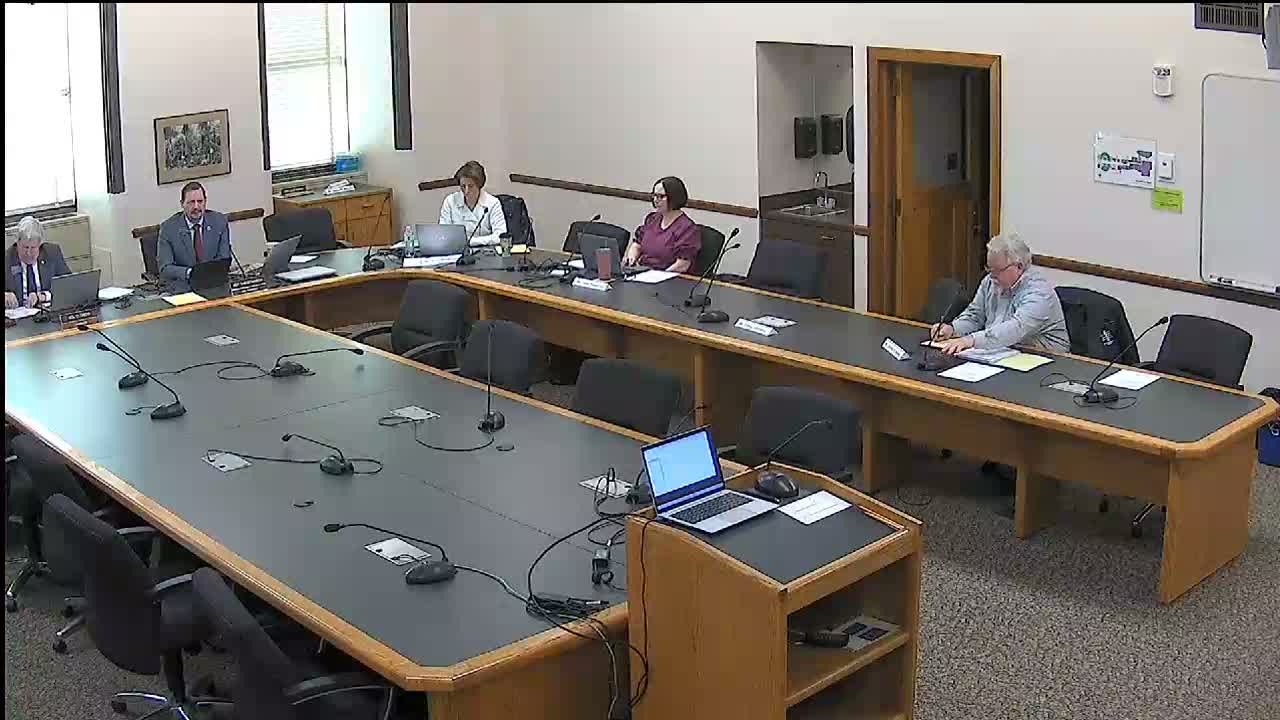
Bismarck — The Child Custody Review Task Force on Feb. 26 reviewed a legislative memorandum and heard wide-ranging testimony as members explored ways to speed enforcement of custody and parenting-time orders, including a possible study or pilot of a family law court and statutory deadlines for expedited hearings.
Legislative staffer Beth presented a memo summarizing six topic areas the task force should consider, naming the creation of a family court, expanded education for parents and judiciary, expedited proceedings for parenting‑time violations, law‑enforcement roles, parenting‑time expediters, and rules of procedure. "Those topics were put into the memo in alphabetical order," she told the committee before describing possible study and implementation questions about a family court, including costs and any reallocation of judicial resources.
Judge Hovey of New Rockford, a longtime family-law judge, told members the adversarial model often fails families and recommended studying a family law court or committee to design implementation. "The law states there is no preference based on gender," he said, adding that judges should start from a neutral position and then use best‑interest factors to tailor parenting time. He urged the development of expedited procedures so judges can quickly interpret or clarify ambiguous judgments rather than waiting months for modification hearings.
Committee discussion turned to timelines for expedited relief. Members debated models used in other states: Minnesota’s system can prioritize cases when a parent lacks parenting time for short periods, while staff and some judges suggested 30 days as a consistent statutory deadline mirroring existing interim‑order rules. Representative Snyder and others urged exploring a hybrid approach that would pull cases forward faster when a parent has missed a short window of time.
On parenting‑time expediters, members said a narrowly tailored model limited to time disputes — with short response windows and binding interim decisions — could reduce the need for full court hearings. “Parenting time expediters would only deal with parenting-time matters and would be subject to tight timelines,” one committee member said. Members also raised concerns about cost and scope, noting that existing parenting coordinators in North Dakota often handle high‑conflict, broad disputes and have limited practical impact when decisions can be appealed to a judge.
Law enforcement and prosecutors cautioned against making routine parenting‑time violations criminal, saying such an approach would burden investigators and prosecutors and might not result in meaningful enforcement. Instead, many members favored strengthening and standardizing judicial remedies — contempt, makeup parenting time, and attorney’s‑fees sanctions — and ensuring clerks and dockets support expedited hearings.
Education for parents and the judiciary drew bipartisan support. Practitioners recommended requiring a concise orientation (for example, an improved Parents Forever video or online module) early in family cases and adding judicial education about underused statutory tools. Members discussed cost and access: some participants said the course currently carries small fees in places and that funding or free state content may be necessary for equitable access.
Procedural rules were a recurring theme. Attorneys and judges pointed to conflicts between general motion rules and family‑law statutes that create confusion and delay, and they urged either family‑specific rules or a pilot program to test expedited processes. Several members recommended a study directive to the judiciary or a legislative study that would produce draft rules and pilot designs.
Votes and procedure: The committee approved the minutes from the Dec. 11, 2025 meeting at the start of the session. No final votes were taken on substantive proposals; members agreed to pursue bill drafts and additional research. Representative Schneider moved to approve the minutes; the motion passed on a voice vote.
Next steps: Members suggested asking legislative council for bill drafts on (1) a feasibility study or pilot program for a family law court, (2) making Parents Forever or an equivalent education component mandatory or integrated into existing scheduling/mediation orders, and (3) statutory language to require expedited hearings or an order‑to‑show‑cause process with a 30‑day (or hybrid 14/30‑day) deadline for alleged withholding or interference with parenting time. The task force will compile recommendations — including any proposed statutory text — for legislative management and a report due by June 30, 2026.
A range of opinions remained: some members urged immediate structural change to a family court, while others urged a narrower focus on practical fixes to ensure rapid access to judges and better enforcement of existing remedies. The task force plans to review bill drafts and pilot proposals at its next meeting.