
Senate committee advances bill to clarify educator discipline, prompting split public comment
Get AI-powered insights, summaries, and transcripts
Subscribe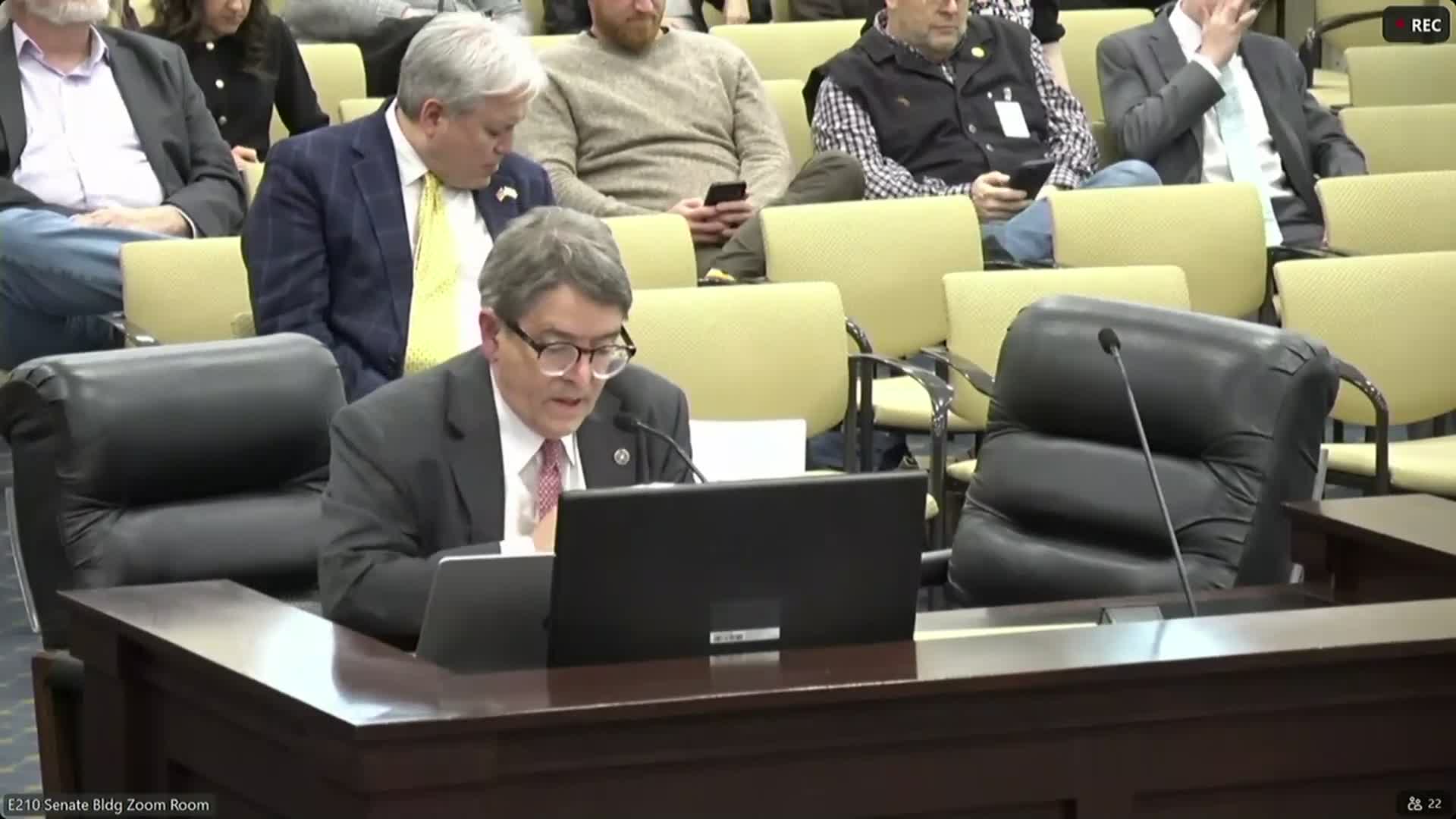
Summary
The Senate Education Committee gave SB 312 a favorable recommendation after debate and public testimony. Sponsors say the bill clarifies when license suspensions bar school employment; unions and some school officials urged waiting for a UPAK audit and warned of unintended consequences.
Senator Johnson brought SB 312 to the Senate Education Committee as a targeted rewrite of educator-discipline law intended to tie employment and volunteer restrictions to the seriousness of misconduct and to standardize how parent complaints are handled.
"This bill accomplishes three things. It protects students in cases of serious misconduct, prevents disproportionate punishment for technical errors, [and] creates a clear statewide standard instead of inconsistent district practices," the sponsor said during opening remarks.
The measure distinguishes "qualifying serious misconduct"—including conduct involving actual harm to a student, a credible threat or ongoing risk to student safety, grooming or boundary violations, abuse, exploitation, violence, or serious endangerment—from lesser and technical violations. Under the sponsor's description, automatic employment and volunteer restrictions would apply when license suspension or revocation results from qualifying serious misconduct; for nonqualifying suspensions, the State Board of Education would need written findings identifying a specific and articulable risk to student safety before imposing employment or volunteer bans.
Commission staff and supporters said the bill is intended to build proportionality into a system that sometimes delivers "all-or-nothing" outcomes and can leave classrooms without qualified adults while long legal processes proceed.
Opponents in public comment, including Bonnie Billings of the Utah Education Association, urged the committee to reject the bill. "We believe that this bill undermines the credibility and effectiveness of the UPAK process by diminishing the significance of a suspension," Billings said, warning that the measure could allow suspended educators to remain in school settings under some circumstances.
Other critics — including representatives of the Utah School Boards Association, some State Board members and union leaders — asked the legislature to wait for a concurrent audit of UPAK and cautioned that terms such as "credible risk" and "activity" need clearer definition. Several speakers argued that current processes already provide appropriate safeguards and that the bill as written could reduce rehabilitation and retraining requirements tied to suspensions and revocations.
Committee members traded concerns about due process and student safety. Senator Reby said she was concerned the bill might "circumnavigate UPAK," while sponsor Johnson said UPAK retains its role and the bill only clarifies when work restrictions attach.
The committee voted to forward SB 312 to the full Senate with a favorable recommendation; the chair recorded the result as passing 4–1 with opposition noted in the record.
The bill will next be considered by the full Senate, and sponsors signaled willingness to continue working with stakeholders on language clarifications.