Committee advances changes to one‑time UGB expansion and clears Woodburn provisions
Loading...
Summary
Lawmakers adopted an A4 amendment and moved HB 4035A to the Senate floor; the amendment narrows eligibility language, clarifies internal‑tract definitions, allows limited inclusion of resource land in certain circumstances and provides a Woodburn‑specific pathway requiring at least 600 units with 30% affordable.
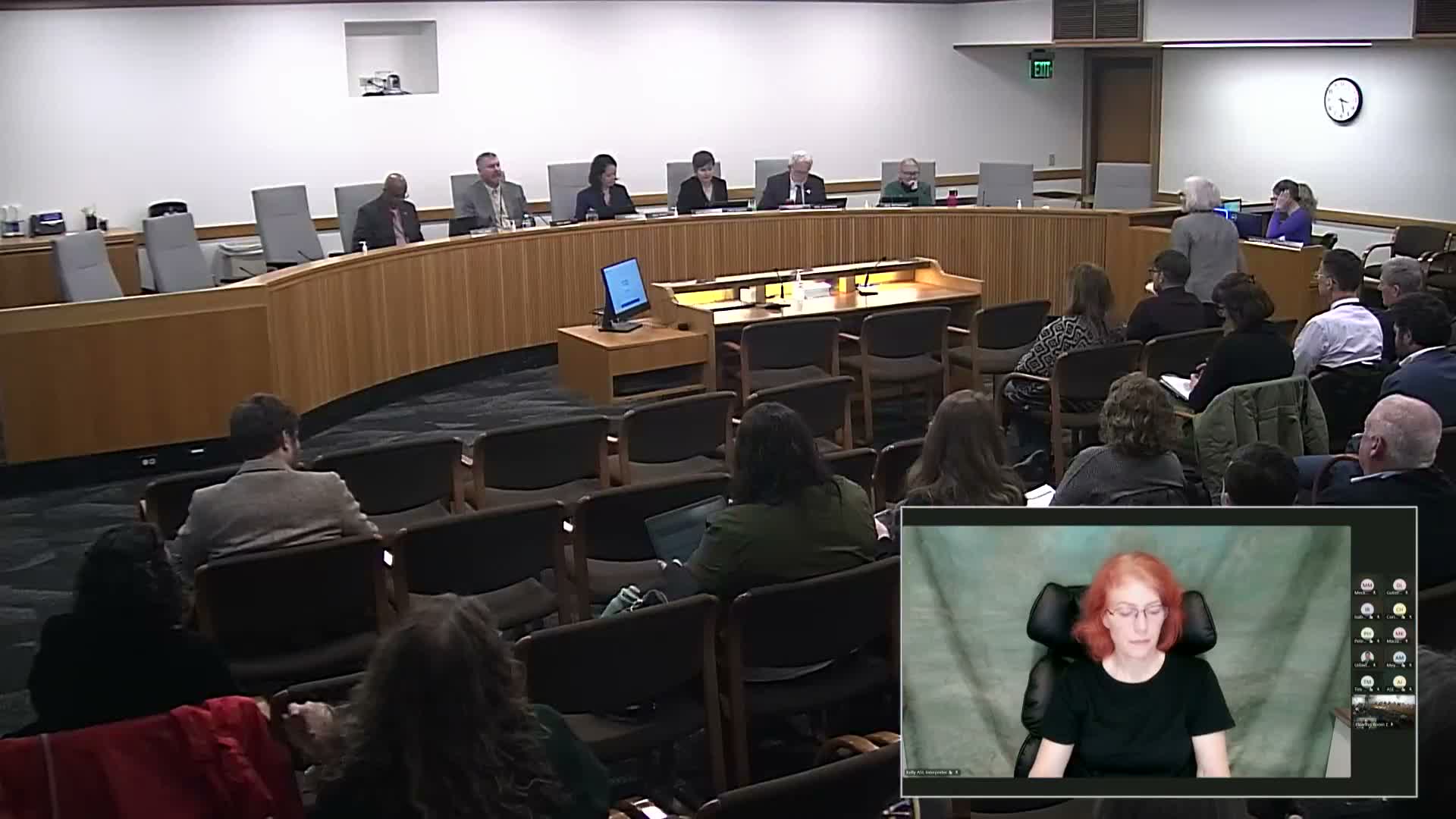
The Senate Housing and Development Committee on Feb. 24 adopted an amendment and voted to advance House Bill 4035A, a package of changes to the one-time urban growth boundary (UGB) expansion process originally enacted in SB 15 37. Sponsors said the bill was designed to make the expedited UGB tool usable by more cities while preserving complete-community standards.
Representative Marsh described four primary changes: replacing the ‘severely rent-burdened’ threshold (50%+ of income) with a more common cost-burden test (30%+ of household income); clarifying the definition of ‘internal tracts’ by specifying tracts larger than 20 net residential acres with no permanent buildings and limited access to utilities; creating a pathway for cities surrounded by resource lands (where at least 80% of the periphery is resource land) to select specified sites; and increasing acreage caps in some cases to 150 net buildable acres for larger cities while maintaining neighborhood commercial and open-space requirements.
Representative Leslie Munoz presented the Dash A4 amendment specific to the City of Woodburn, which would exempt the city from certain procedural steps while requiring that any site included through this process be governed by a master plan containing at least 600 residential units, with no fewer than 30% affordable for at least 60 years and 30% affordable at 80% AMI for a Woodburn-specific provision. Mayor Frank Lonergan of Woodburn said the city has a ready parcel, infrastructure in place and a developer prepared to proceed, and estimated that inclusion under the amendment could shorten planning timelines by roughly 18 to 24 months.
Supporters at the hearing included municipal and housing organizations, Farmworker Housing Development Corporation, 1000 Friends of Oregon and the League of Oregon Cities. Central Oregon Land Watch told the committee its position shifted to neutral after negotiated clarifications on acreage caps and inclusion criteria.
Vice Chair Anderson moved to adopt the Dash A4 amendment and then to move the bill to the floor with a do-pass recommendation. The roll call recorded aye votes from members present; Chair Pham announced the motion passed and the bill will be carried to the Senate floor.