
Legal experts tell Judiciary committee H.849 could invite federal challenges
Get AI-powered insights, summaries, and transcripts
Subscribe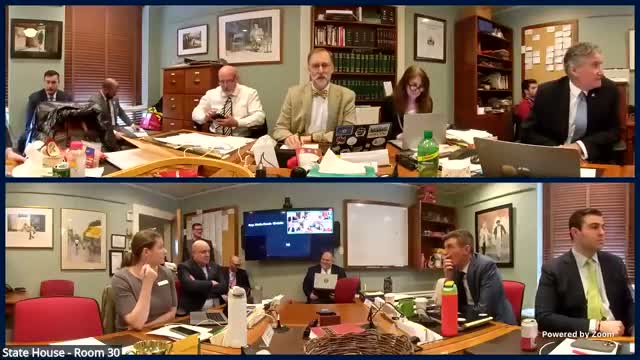
Summary
Witnesses and the Attorney General's civil‑rights co‑director warned H.849 (a state measure modeled on 42 U.S.C. —71983/Bivens) would create a new private right of action that could prompt federal litigation and preemption arguments; the committee sought comparative research before moving forward.
The House Judiciary Committee turned Feb. 20 to H.849, a proposed state law modeled on federal civil‑rights remedies. Tom Plurday, identified as chief superior judge, and Julio Thompson, assistant attorney general and co‑director of the Civil Rights Unit, told the panel the measure would allow state‑court suits against officials and could be litigated quickly in federal court.
Thompson warned the bill would effectively create "a new right" to sue federal employees and said that could trigger aggressive federal‑government challenges. "Both that it is a new right, which is a right to sue any of 3,000,000 or more federal employees, that did not exist before," Thompson said, urging the committee to consider litigation risk, preemption and the Supreme Court's recent reluctance to recognize new constitutional causes of action (so‑called Bivens extensions). He cited recent Supreme Court decisions and a Department of Justice complaint in Illinois as examples of how the federal government might respond to state laws that open federal officials to private suits.
Thompson recommended the committee collect comparative information from other states that have pursued similar statutes (including statutes of limitation and defensive language) and to include clear legislative findings and purpose language so courts considering the law have a record of the legislature's intent.
Committee members asked about defenses, qualified immunity and whether the bill should limit application to state and local actors; Thompson said some drafting approaches could mitigate risk but predicted litigation uncertainty would remain. The committee did not advance H.849 and requested additional legal analysis and comparative research to assess how other states' laws have fared and what litigation exposure Vermont might face.
The committee then returned to administrative business and adjourned.