
Judiciary committee hears calls for 90‑day timeline for AG reviews of officer‑involved incidents
Get AI-powered insights, summaries, and transcripts
Subscribe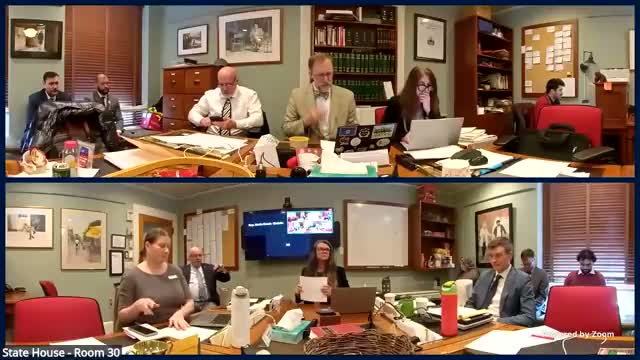
Summary
Witnesses, including police union leaders and officers, urged the House Judiciary Committee to require the attorney general's office to complete reviews of officer‑involved shootings within 90 days and to provide regular updates; the AG's office warned the work is criminal in nature and cited resource and expert‑witness constraints.
The House Judiciary Committee heard testimony Feb. 20 on H.171, a bill that would direct the attorney general's office to investigate certain law enforcement uses of firearms and to complete any such investigation within 90 days except in cases involving multiple injured people.
Police union leaders and officers who testified said prolonged case reviews have harmed officers' mental health and career stability and undermine recruitment and retention. "Officers are expected to work efficiently, meet deadlines, provide regular updates in the course of their duties. Yet when the professional standing and potentially their entire future is at stake, they are frequently left without meaningful updates for extended periods of time," said Joe Coro, who identified himself as president of the Vermont FOP State Lodge. Detective Jeff Bauer of the Burlington Police Department described his personal experience: "Now almost 7 months later, I've not heard a single word as to where I am in this situation."
Committee counsel Michelle Channels walked members through the draft language, noting it borrows existing definitions and currently uses the term "unholster" in a section the sponsors intended to address discharges of firearms. The bill requires the AG's office to prepare a written report for the officer and the employing agency detailing facts, analysis and recommendations, and would direct the office to adopt rules setting standards of review and timelines.
Assistant Attorney General Todd Davos cautioned the committee that these reviews are criminal investigations and pointed to Act 165 of 2020 and changes to use‑of‑force law that altered statutory standards. "I would point you to Act 165 of 2020," Davos said, adding that "there is nothing in statute that creates this process." He told the committee that the attorney general's office typically receives a completed file from the Vermont State Police major‑crimes unit and then conducts a prosecutorial review; when cases are not "clear cut," the office often engages outside use‑of‑force experts, which can lengthen a review.
Members pressed for better data and more frequent communication. Several lawmakers said they would like the AG's office to report how many cases are resolved within particular time thresholds so the committee can evaluate whether a statutory timeline reduces delays. Davos said he would return with more information and stressed resource constraints in the criminal division.
The committee did not take final action on H.171 and asked the Attorney General's Office to provide additional information on case counts, typical timelines and how expert engagement affects duration. The committee is expected to continue consideration when the AG's office responds.