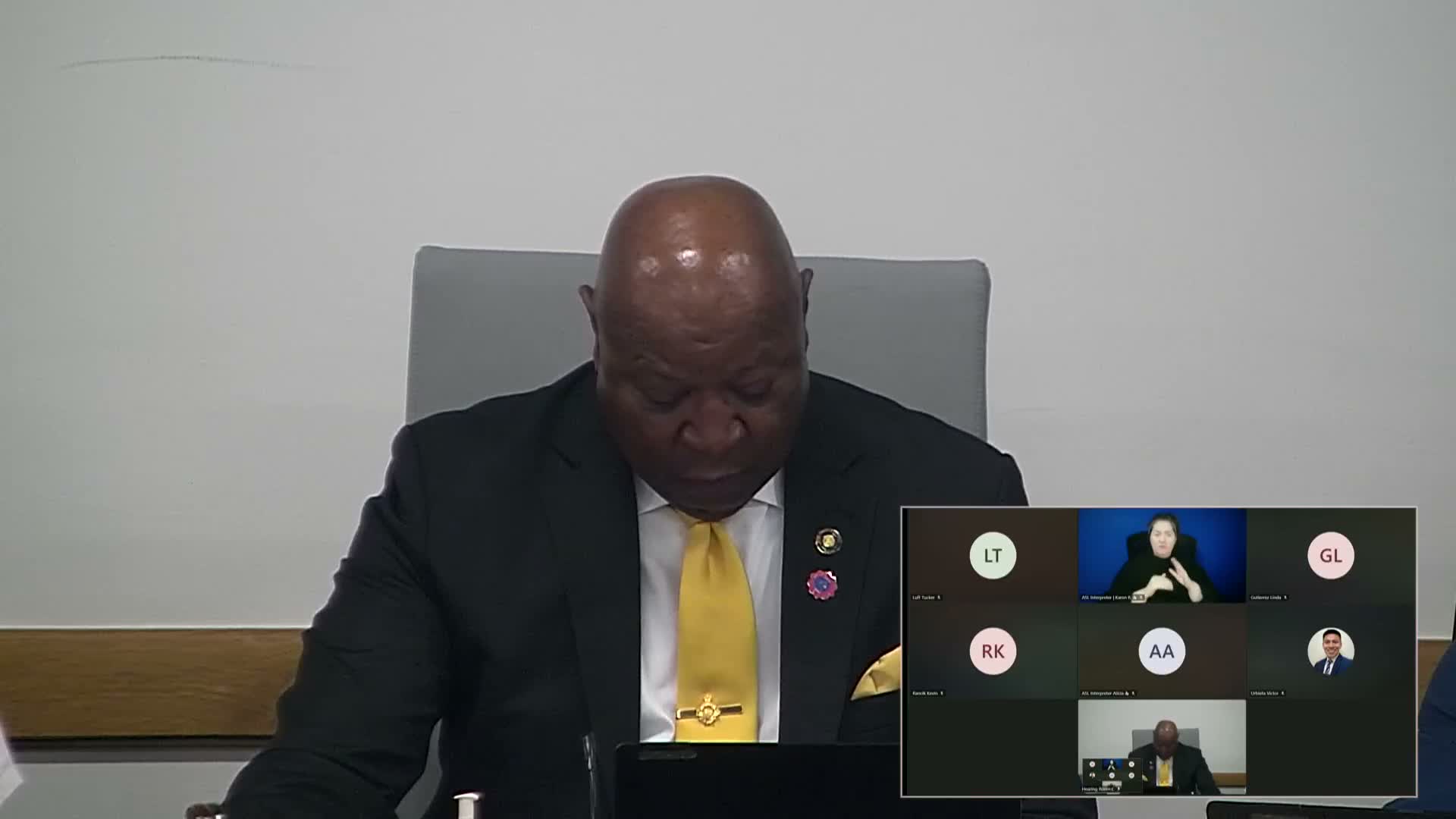
Retired master sergeant outlines pilot plan to reduce veteran suicide in rural Oregon
Loading...
Summary
Master Sergeant (Ret.) Laurie Kimmel told a Senate committee that a pilot program using VA‑standard 988 crisis cards, local outreach at community gathering points and medication lockboxes could improve rural veterans’ access to crisis services; she urged using existing VA materials and pursuing grant funding.
Master Sergeant (Ret.) Laurie Kimmel told the Senate Committee on Veterans, Emergency Management, Federal and World Affairs on Feb. 24 that rural veterans face elevated suicide risk driven by isolation, untreated pain and difficulty accessing services, and she outlined a pilot to distribute veteran‑specific crisis cards and train two‑person veteran crisis response teams in each county.
Kimmel said the plan would use downloadable Veterans Administration materials—"The Veterans Crisis Line is 988, then press 1"—customized with local logos and an added hearing‑impaired contact. The pilot would place credit‑card‑strength crisis cards and flyers on racks in businesses, public transportation and community locations such as American Legion halls, Elk lodges and feed stores, and include medication lockboxes and weapon‑storage boxes as suicide‑prevention tools.
Kimmel cited program metrics from grant‑funded efforts she reviewed during preparation: she reported that grantees reached 13,807 at‑risk veterans and provided roughly 27,000 referrals, with a portion of those classified as emergency lifesaving interventions. She recommended a pilot in rural counties with evaluation and local‑partner follow‑up, and urged using existing VA templates to avoid reinventing materials.
Committee members welcomed the proposal and discussed transportation and access barriers in rural areas; several members asked to receive printed prototypes and explore Veterans Caucus collaboration. The presentation was informational; the committee did not take formal action at the hearing but later recorded support for related task‑force legislation (HB 4,099).