Lifetime Citizen Portal Access — AI Briefings, Alerts & Unlimited Follows
ODOE warns Oregon relies on a single Portland hub for 90% of fuel; bills and plans aim to diversify storage
Loading...
Summary
The Oregon Department of Energy told the House committee that about 90% of the state's fuel is stored at the CEI hub in northwest Portland on liquefaction-prone ground, raising seismic and access concerns; ODOE and recent bills propose studies, cleanup-cost authority and recommendations for dispersed storage.
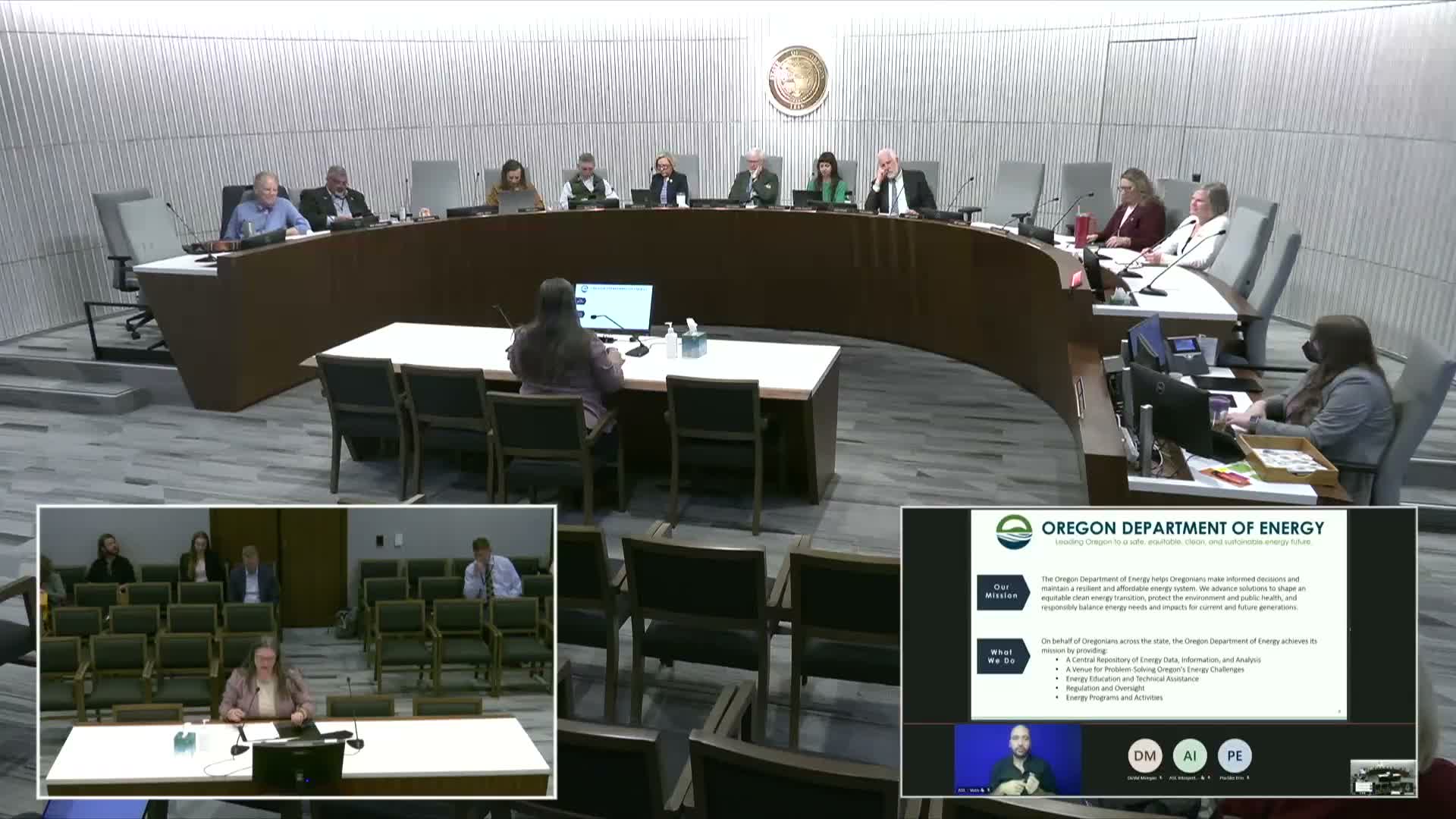
The Oregon Department of Energy told the House Climate, Energy and Environment Committee on Feb. 24 that roughly 90% of the state's fuel supply is stored at a six-mile cluster of terminals along the Willamette River known as the CEI hub, creating a concentration risk in the event of a Cascadia Subduction Zone earthquake or a major pipeline outage.
"About 90% of Oregon's fuel is stored at the CEI hub," Christie Split, government-relations coordinator for the Department of Energy, told the committee, noting the hub is located on a liquefaction-prone area and that the site's location reflected earlier, less-complete understanding of seismic hazards.
Why it matters: A single-site concentration of fuel storage complicates emergency response. ODOE officials said the state relies on private-sector partners for day-to-day fuel supply and would have to call on federal counterparts in a major disaster if private systems fail. The department highlighted steps it is taking and legislation in play to reduce risk and expand contingency planning.
Christie described how fuel reaches Oregon: the state has no refineries or crude production; about 77% of supply arrives via the Olympic Pipeline from Washington, with additional fuel arriving by barge and rail. Eastern Oregon receives supplies via barge up the Columbia to Pasco or Umatilla and from a Boise terminal.
Legislative actions and agency work: Christie cited Senate Bill 1567 (passed in 2022), which required seismic-vulnerability studies and mitigation planning by fuel companies and DEQ, and said two bills in the Ways & Means Committee are relevant: one addressing cleanup costs (HB 4100) and another (HB 4032) directing ODOE to make recommendations for additional storage locations. Christie's presentation also referenced House Bill 4129 as related context.
The department reviewed the November Olympic Pipeline rupture near Everett, Wash., as a recent example. "When that outage occurred," Christie said, "the governor declared an emergency," and ODOE coordinated with partners; Portland's ability to receive fuel by ship and rail helped Oregon avoid the severe jet-fuel shortages seen at SeaTac, which relies solely on pipeline delivery.
ODOE said it is running three fuel-focused emergency exercises in the year ahead, updating an Oregon Fuel Action Plan and will issue a fully updated Oregon Energy Security Plan in 2028 (with an intermediate update planned for 2027). The department also recommended evaluating opportunities for increasing distributed fuel storage across the state to support emergency response.
Committee members pressed for long-term solutions. Relocating the CEI hub to more seismically stable ground would require rebuilding multimodal access (barge, rail and truck) and would be costly; ODOE staff said declining petroleum demand under Oregon's decarbonization scenarios also factors into decisions about large infrastructure investments.
On wildfire-season jet A needs, members pointed to past local shortages in Umatilla and elsewhere; ODOE said it coordinates with private storage sites in Eugene, Umatilla and Pasco and can help route jet A where needed but acknowledged the logistical challenges of ensuring steady regional supply.
The committee did not take formal action. ODOE said it would continue planning, run emergency exercises and report back as requested by legislators.