
Subcommittee advances House Bill 4,144, adopts fiscal amendment to fund DEQ implementation
Get AI-powered insights, summaries, and transcripts
Subscribe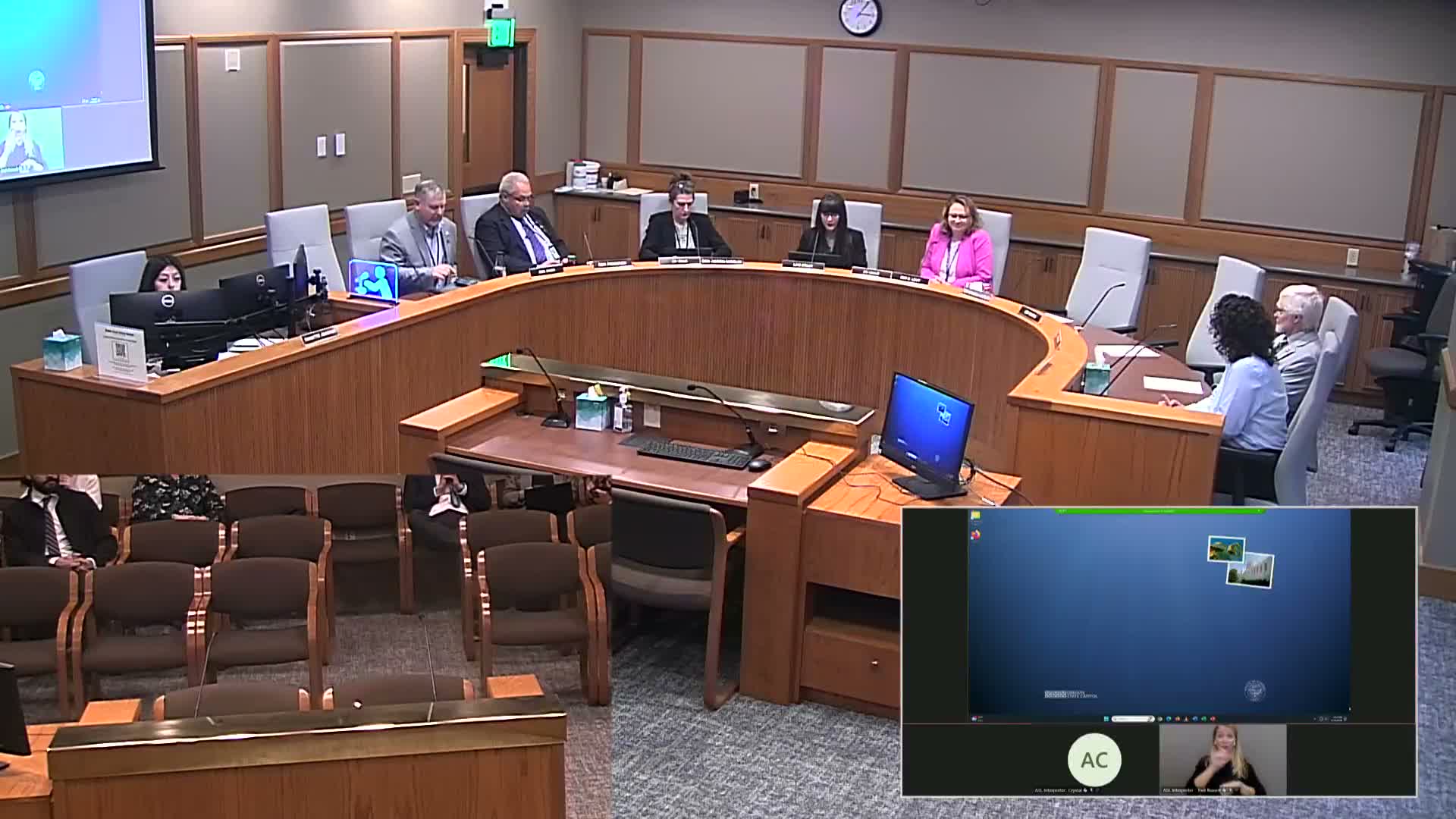
Summary
A Natural Resources subcommittee adopted a DASH-1 fiscal amendment to House Bill 4,144, which would create a statewide battery producer responsibility program, and voted to move the bill to the full committee with a due-pass recommendation.
A legislative Natural Resources subcommittee on Monday advanced House Bill 4,144 as amended and voted to send the measure to the full committee with a due-pass recommendation.
April, a staff member who reviewed meeting materials, summarized the bill for the subcommittee, saying the measure would establish a statewide battery producer responsibility program for producers of portable and medium-format batteries and battery-containing products and require producers to join a producer responsibility organization and submit plans to the Department of Environmental Quality (DEQ) for approval. "DEQ is directed to develop rules to administer the program, review and evaluate these plans, enforce compliance, and approve program changes," April said during the work session.
Under the bill, the Environmental Quality Commission would set administrative fees by rule to cover program costs and revenues would be deposited into a newly established Battery Producer Responsibility Fund. April told members DEQ must evaluate related studies and other states' programs and report findings and recommendations to the legislature by May 30, 2028.
The subcommittee also adopted the DASH-1 amendment, which April described as providing an increase of $142,317 in other funds expenditure limitation to establish and support a 0.5 full-time equivalent permanent program analyst position in DEQ's Land Quality Division to handle rulemaking, program development, ongoing oversight, research and reporting.
The Legislative Fiscal Office recommended adoption of the DASH-1 amendment and that House Bill 4,144 as amended be moved forward. Senator Frederick (recorded in the transcript as moving) formally moved adoption of the DASH-1 amendment and later moved the bill, as amended, to the full committee with a due-pass recommendation. The chair called for discussion on both motions, heard none on the amendment, and stated the amendment passed.
When the subcommittee called the roll on the motion to send the bill to the full committee, the transcript records these responses: "Senator Frederick" answered Yes; "Senator Nash" answered No; "Co Chair Nero Missley" answered Aye; "Representative Grace Iverson" and "Representative Owens" were recorded as Excused; "Representative Langley" answered Aye; and "Representative Dawson" answered Yes. The transcript records additional affirmative responses and the chair announced that the motion passed. (The roll-call names and short responses above are transcribed verbatim from the meeting record; portions of the spoken roll call in the transcript are unclear or abbreviated.)
Members said they would appoint carriers to take the bill to committee and the floor. The subcommittee chair closed the work session; April told members to "stay tuned" for next steps.
The work session materials posted to OLISS included a staff measure summary, the DASH-1 fiscal amendment, and the LFO recommendation memo for House Bill 4,144. The bill text and fiscal amendment will determine final program scope, fee levels and implementation timing if the Legislature ultimately passes the measure.
Next procedural steps: the bill was moved to the full committee with a due-pass recommendation; the full committee will schedule further consideration and any additional amendments.