
Committee advances companion bill to limit public disclosure of specified terrorism-designation materials
Get AI-powered insights, summaries, and transcripts
Subscribe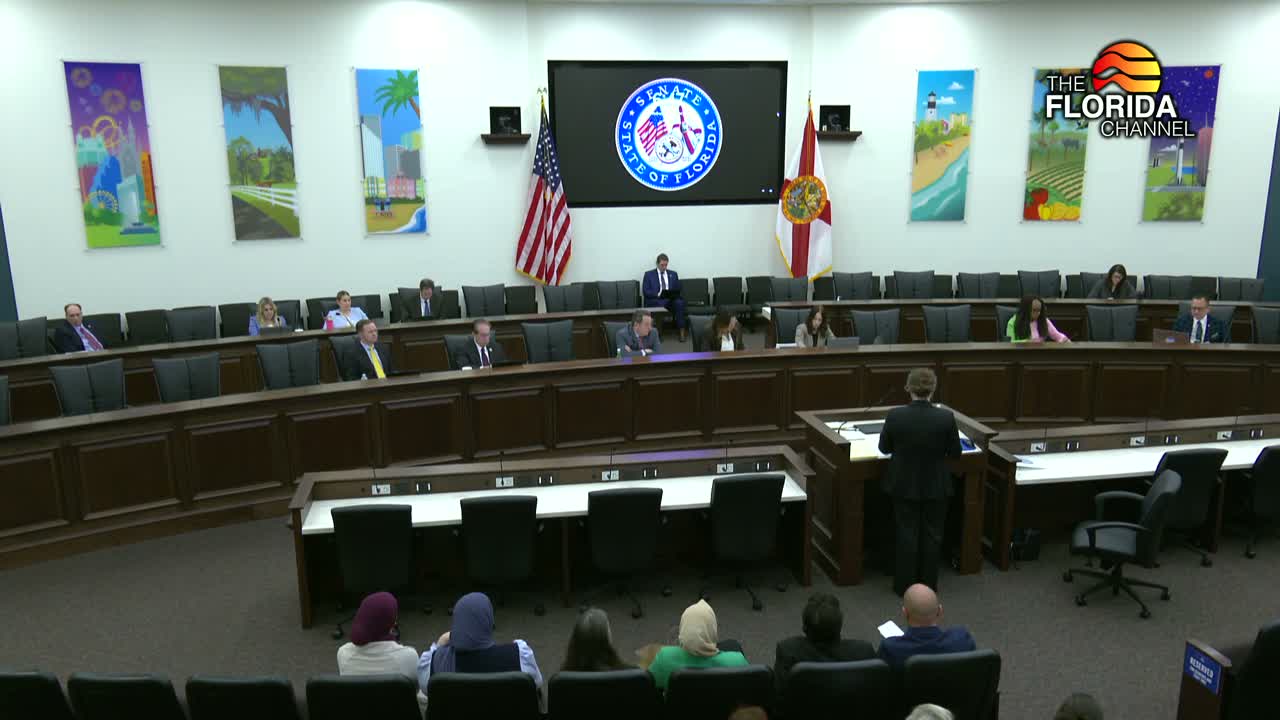
Summary
CS for SB 1634, the public-records companion to SB 1632, was reported favorably after the committee narrowed the exemption to only protect sensitive portions of written notice/findings that would reveal information critical to state or national security; opponents warned the carve-out is too broad and risks hiding evidence from public view.
The Senate Appropriations Committee on Thursday advanced CS for SB 1634, a companion bill to SB 1632 that creates a targeted public-records exemption for portions of written notice and formal findings used when the chief of domestic security seeks a designation.
Sponsor Senator Grahl said a recent amendment narrowed the carve-out so it "applies solely to sections of the written notice and findings that would disclose information vital to state or national security" and that the exemption holds records as exempt (not confidential) so they remain available to parties that challenge a designation in court.
Senator Smith and other critics questioned the breadth of the phrase "critical to state or national security," asked for concrete examples (for example, to distinguish tactical undercover identities or operational plans from policy deliberations), and pressed what remedies a member of the public would have if FDLE refuses a records request. Grahl said an in-camera judicial review and existing public-records remedies apply, and noted the statute allows attorney-fee awards where an agency unlawfully withholds records.
Public testimony opposing the exemption was extensive. Experts from the First Amendment Foundation and civil-rights groups argued that the narrowed exemption still risks hiding deliberations and evidence that the public needs to evaluate whether a designation was lawful or politically motivated. "Public records are one of the few tools citizens have to check government power," said a witness for the First Amendment Foundation.
Supporters, including some law-enforcement witnesses, said that narrowly shielding operational details and intelligence tied to active investigations is necessary to avoid jeopardizing ongoing operations and to protect state security. The sponsor said policy deliberations will remain public and only narrow, operationally sensitive items would be withheld.
The committee voted to report CS for SB 1634 favorably by roll call. Opponents signaled they will raise transparency concerns in later committee stops and in potential litigation.
What’s next: SB 1634 moves on to additional committee consideration where senators indicated they may seek further clarification of the exemption language and judicial remedies for withheld records.