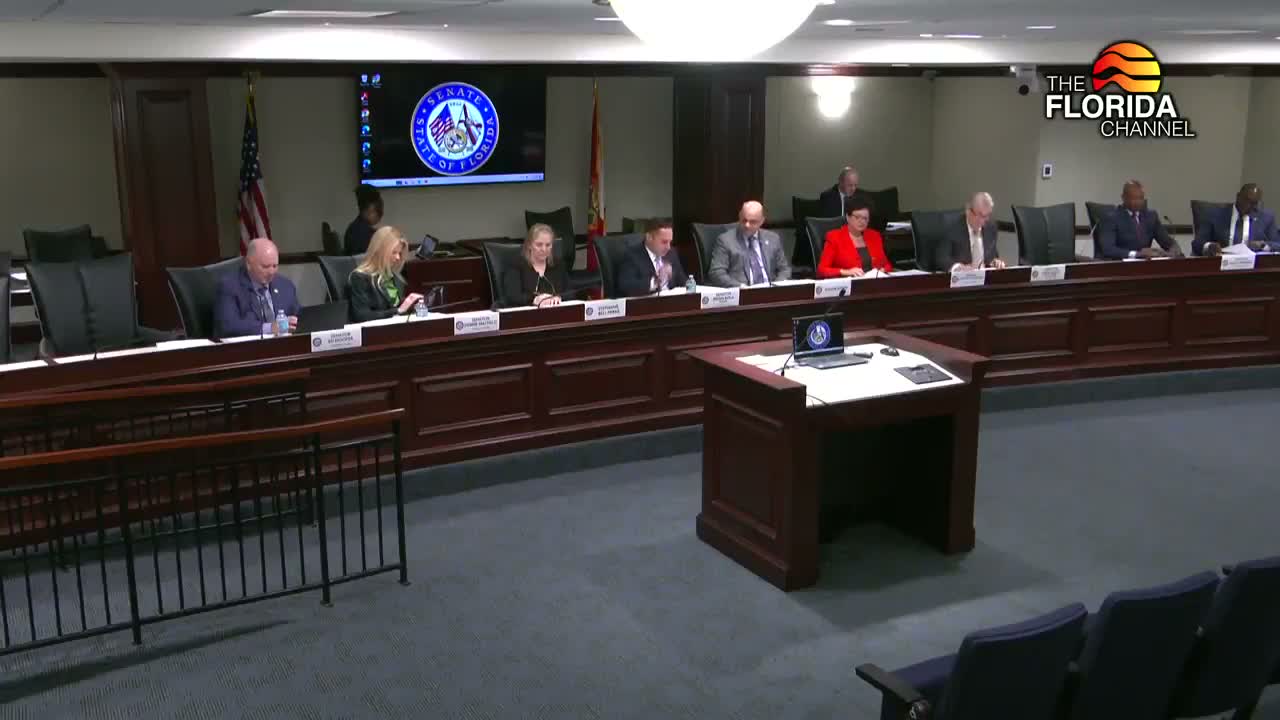
Committee reports bill to adopt 2026 federal tax changes with limits on certain retroactive provisions
Loading...
Summary
SPB 7,048 would adopt the Internal Revenue Code as of Jan. 1, 2026 while decoupling or phasing certain federal changes from the 2025 '1 Big Beautiful Bill' to limit retrospective budget impact. The committee favorably reported the measure after stakeholder comment and debate over bonus depreciation.
The Florida Senate Finance and Tax Committee on Feb. 26 reported SPB 7,048, a bill that adopts the Internal Revenue Code as in effect on Jan. 1, 2026, but limits how recent federal changes apply to state law. Committee members said the approach aims to capture most federal updates while avoiding large retrospective state revenue impacts tied to the '1 Big Beautiful Bill Act.'
What the bill does: Senator Avila explained that the bill adopts federal tax law in effect Jan. 1, 2026, but modifies how certain federal provisions operate for Florida taxpayers. It limits the effect of changes made by the 2025 federal law (House Resolution 1) so several provisions, such as accelerated depreciation and certain bonus-depreciation rules, will be phased or made prospective (for example, by adding back federal deductions and applying multi-year add-backs beginning in specified taxable years).
Stakeholder input: French Brown of the Florida Chamber told the committee that this year's conformity bill is more substantive than usual because of the federal law passed in July 2025. The Chamber urged clarity on bonus depreciation and other provisions to avoid unnecessary administrative burdens on businesses while preserving Florida's competitive position for job creation.
Debate and fiscal context: Committee members and staff discussed the fiscal tradeoffs of full retrospective conformity versus limited or phased adoption. One senator warned that a full retrospective adoption of bonus depreciation could have a multi-billion-dollar effect on the budget, while the committee’s drafting seeks to limit the near-term revenue loss and administrative complexity. The state revenue estimating conference was scheduled to review the bill later in the week.
Outcome: Without objection, members moved to submit SPB 7,048 as a committee bill and the committee reported it favorably. The bill will advance as a committee measure to further consideration and possible floor action.