
House committee advances bill to extend Prosperity 10,000 workforce program
Get AI-powered insights, summaries, and transcripts
Subscribe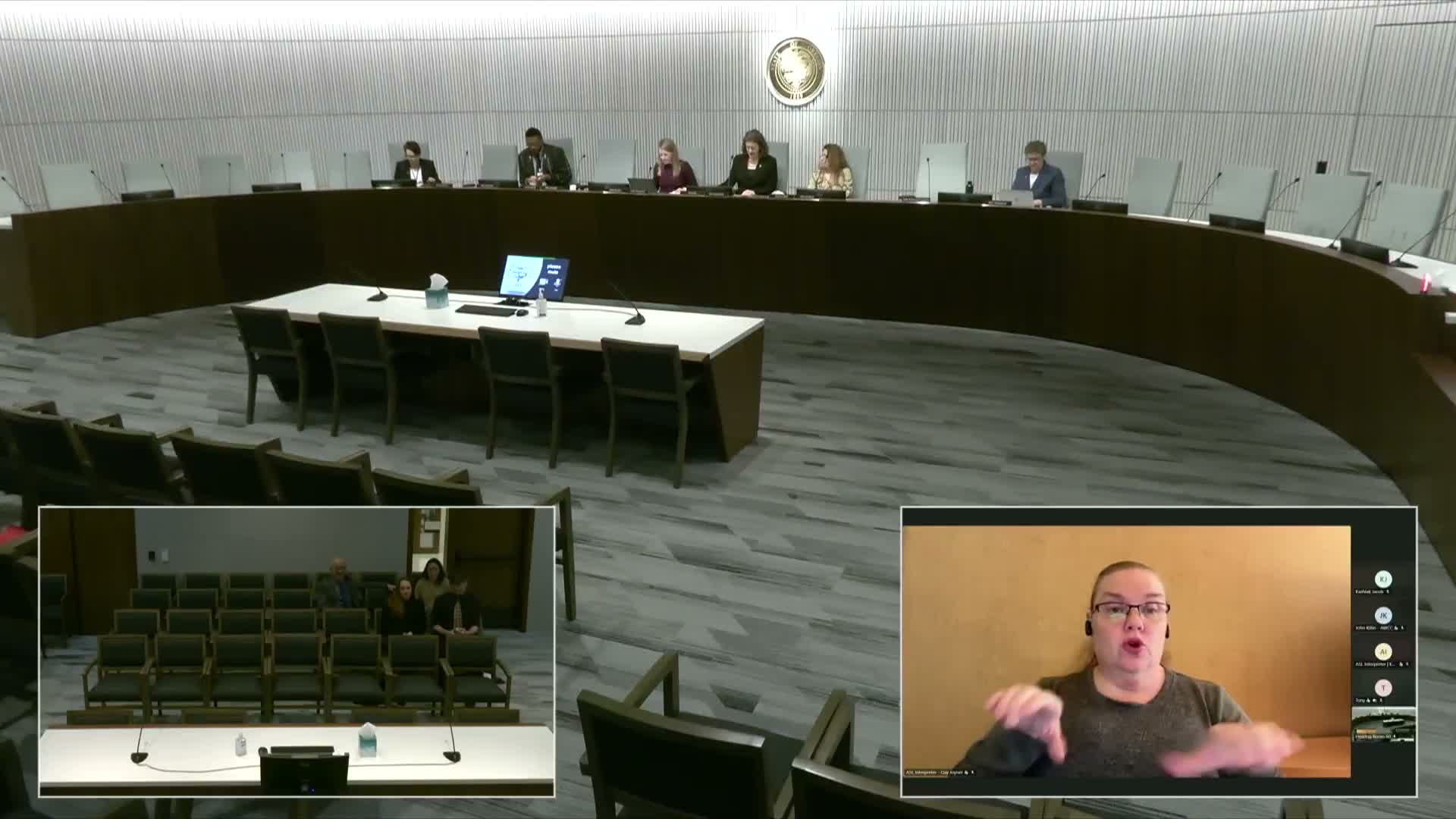
Summary
The House Committee on Labor and Workforce Development voted to advance Senate Bill 15 12, which would extend and modify the Prosperity 10,000 workforce program; committee witnesses described program outcomes, economic returns and alignment with statewide workforce priorities.
Madam chair of the House Committee on Labor and Workforce Development on Feb. 23 opened a public hearing and work session on Senate Bill 15 12 and the committee voted to advance the measure to the House floor with a due-pass recommendation.
Erin summarized the bill for the record, saying it extends the Prosperity 10,000 program, modifies its goals and purposes and carries a minimal fiscal impact and no revenue impact; she also noted the Senate passed the measure by a 28–2 margin. "This measure expands the population that Prosperity 10,000 can serve," Erin said during her work-session summary, and she described new requirements for local workforce boards to align administration with critical workforce shortages.
Georgia Conrad, executive director of the Oregon Workforce Partnership, told the committee the bill "serves the hardest to serve in Oregon and brings high paying jobs to people accessing the public workforce system," and described the nine local workforce boards and WorkSource Oregon centers that administer services statewide. Conrad said federal Workforce Innovation and Opportunity Act (WIOA) funds have declined over 50% since 2016, arguing the state program helps fill funding gaps and aligns with Governor Tina Kotek’s roadmap to prosperity.
Brent Balog, interim executive director of the Clackamas Workforce Partnership, provided outcome figures that he said show the program’s economic impact: with an initial $35,000,000 state investment, he reported roughly $219,000,000 in economic benefit and $23,000,000 in new tax revenue, which he characterized as about a 2.98:1 return on investment. Balog said the program has served more than 10,500 people to date and that average wages for participants now exceed the state self-sufficiency standard; he also cited completion and employment rates.
Tony Erickson, chief operating officer of a small aerospace company in Scappoose, spoke for employers and described using workforce-board funds for on-the-job training that helped his firm train roughly 30 employees and meet changing labor needs during the COVID-19 period.
Representative Flagler Bridal asked whether statutory-language changes altered priority-population protections; Conrad and Erin both said the bill removes some statutory priority-language but does not change the program’s eligibility standards, which remain based on WIOA. Erin added that the measure requires local boards to consider how grant proposals demonstrate engagement with priority populations and targeted industry sectors and authorizes the Higher Education Coordinating Commission to distribute additional appropriated funds to local boards if future appropriations occur.
Vice Chair Munoz moved the bill to the House floor with a due-pass recommendation. The clerk conducted roll call: Representatives Basso Davis and Bunch were recorded as absent; Representatives Fragula, Nelson and Ricky Smith, Vice Chair Munoz and Chair Raver voted aye; Vice Chair Sharf was excused. With that recorded tally the motion carried. The committee named Representative Flagler Bridal as the House carrier for the measure.
The committee closed the work session, thanked witnesses and staff, and adjourned. The bill will proceed to scheduling and floor consideration in the House.