Get Full Government Meeting Transcripts, Videos, & Alerts Forever!
Get email alerts on the Opioid Settlement topic
No spam. Unsubscribe anytime.
Carroll County Judges Weigh Using Opioid-Settlement Money for Local Recovery, Youth and Prevention Programs
Summary
Court members heard multiple requests to spend opioid-settlement funds on community recovery services: a Champions outreach request (reported $10,000), a Green River harm-reduction $25,000 ask for 'barrier relief' and a conceptual 'Second Chance Ranch' that leaders say could be eligible for multi-year support. Members agreed a formal resolution and attorney review are required before allocations.
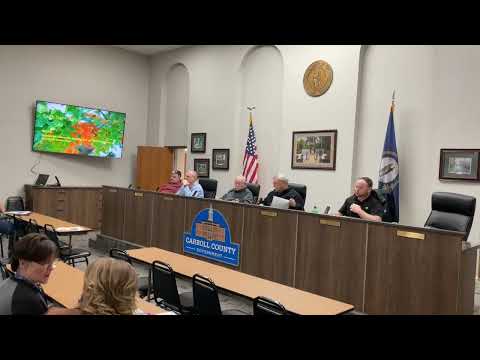
Carroll County fiscal court members on Feb. 10 discussed several proposals to spend opioid-settlement funds on local prevention, treatment and workforce-readiness programs, but stopped short of immediate allocations and directed staff to prepare a resolution and seek legal guidance.
The most immediate request came from Lindsay of the Green River District Health Department’s harm-reduction program, who told the court the syringe-exchange outreach had served 31 unique clients and distributed about 75 doses of naloxone from a mobile unit. Lindsay asked for a one-time $25,000 contribution from opioid-settlement money for "barrier relief" — a package she said would support workforce readiness, transportation vouchers, short-term housing assistance and small testing incentives to help people enter treatment.
"We've had 31 unique clients served," Lindsay said, adding the program has also made four successful referrals to detox and treatment and that community naloxone distribution has reduced overdose calls in the county. She described stocking seven to eight drop boxes and providing monthly outreach from a van.
A separate presentation from a Champions program representative described a volunteer-run outreach that delivers hygiene and food boxes, operates a teen "safe space" and provides school-based prevention education. The representative said Champions delivers "over 400 boxes a month" in Carroll County and reported an earlier $10,000 budget request; members discussed whether that work could qualify for opioid-settlement funding.
Judge and other court members raised legal and accounting questions. S2 (court member) cautioned about allowable uses, noting past counties have lost settlement money when it was used inappropriately and asked the presiding official to consult the attorney general’s office and the county clerk about eligibility. S2 also noted the county currently holds a substantial opioid fund balance — the court discussed figures including roughly $400,000 on hand and about $200,000 invested in a certificate of deposit — and referenced pending additional settlement proceeds.
The court also heard a concept from S3 for a "Second Chance Ranch," proposing animal-care and vocational programming that would pair rescued animals with court-involved youth; S3 said preliminary conversations with insurance carriers and opioid-settlement administrators suggested the idea could fit grant criteria but would require a staffed director and multi-year budgeting.
Members signaled willingness to consider one-year pilot funding but emphasized process: S2 and others said any allocation of opioid-settlement funds requires a formal resolution and clear program metrics, and the presiding official said staff would prepare paperwork and consult legal counsel before any money is disbursed. Several members asked program leaders to pursue grant-writing assistance and to return with specific budgets, proposed metrics and contract language if required.
Next steps: staff will consult with the attorney general’s office and the county clerk about allowable uses, program leads were encouraged to develop pro forma budgets and measurable outcomes, and the court directed counsel to prepare a draft resolution to authorize any awards for future consideration.