Get Full Government Meeting Transcripts, Videos, & Alerts Forever!
Get email alerts on the Consumer Protection topic
No spam. Unsubscribe anytime.
Senate committee advances bill to curb sale of counterfeit car seats online
Summary
The Senate Committee on Commerce and General Government voted to send House Bill 4,092A to the floor with a do-pass recommendation after testimony that counterfeit, noncompliant car seats are increasing in online marketplaces and pose a safety risk to children; the bill would bar sales of seats that do not meet federal/state standards and creates a private right of action.
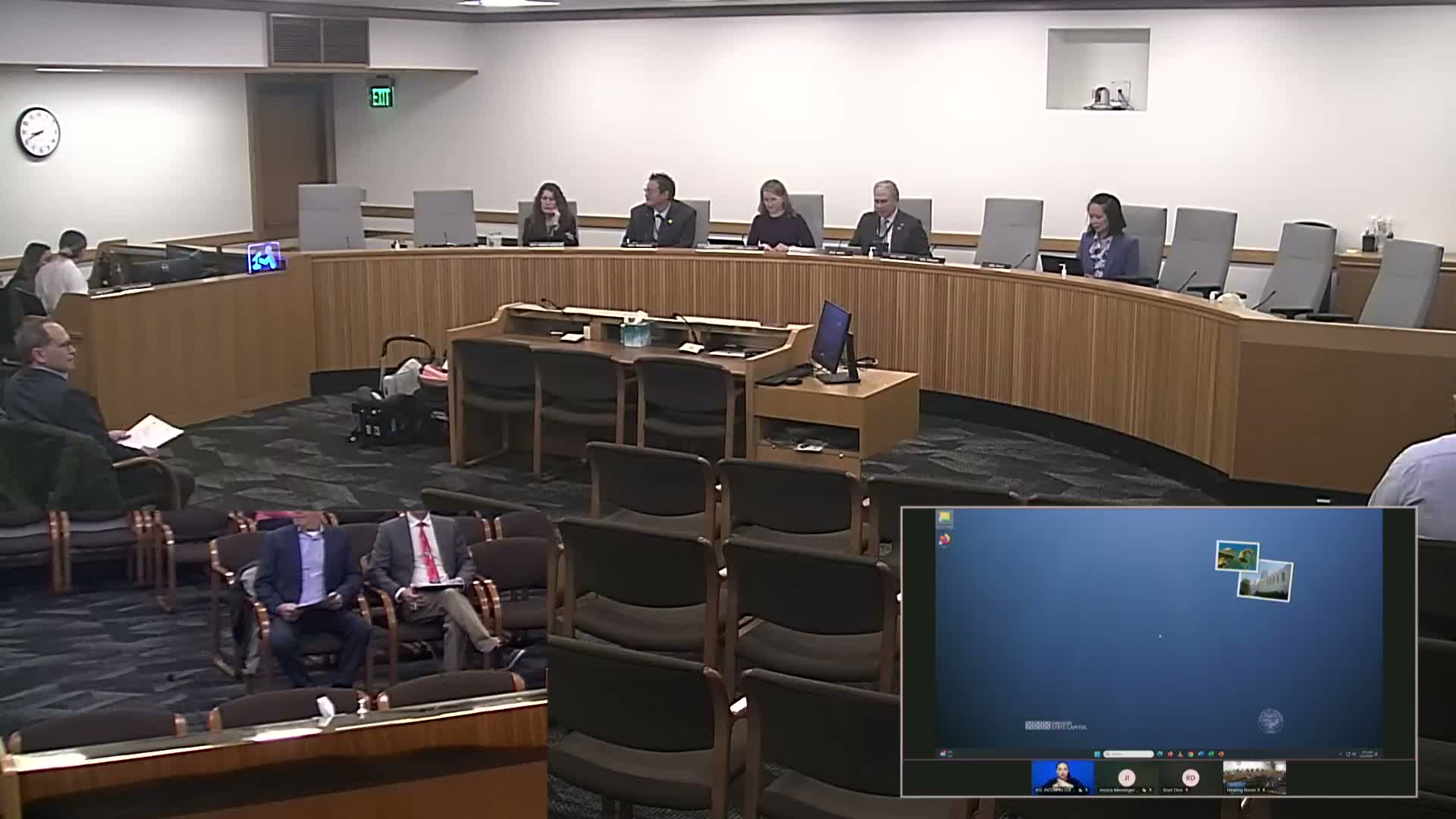
SALEM, Ore. — The Senate Committee on Commerce and General Government voted to send House Bill 4,092A to the Senate floor with a do-pass recommendation after a public hearing and work session on Feb. 23.
Representative Hai Pham, the bill sponsor, told the committee the measure is intended “to keep kids safe by preventing the sale of car seats online” that do not meet federal or state safety standards. The bill, as described to the committee, would prohibit retailers and online marketplaces from selling car seats that fail to meet applicable federal motor vehicle safety standards and would create a private right of action for consumers who buy noncompliant products.
The bill drew technical and safety testimony from pediatricians, early‑learning advocates and consumer‑advocacy groups. Dr. Ben Hoffman, a general pediatrician at OHSU Doernbecher and a long‑time child passenger‑safety expert, described an increase in counterfeit seats identified in clinical and community settings: “Since July, we’ve identified 21 fake seats just in doing our daily work,” he said, and showed committee members physical differences between compliant and counterfeit models. Hoffman cited Federal Motor Vehicle Safety Standard 213 (FMVSS 213) as the set of federal crash‑testing and labeling requirements that genuine seats must meet and noted that counterfeit seats “literally disintegrated” in the crash test he referenced.
Committee members pressed on implementation and consumer‑protection mechanics. Senator Neron Mislan asked whether the issue should be handled at the federal level; Hoffman answered that, in his view, this is the first state effort he’s aware of to regulate counterfeit car seats and that the National Highway Traffic Safety Administration (NHTSA) has limited ability to police counterfeit goods that do not enter the legitimate supply chain. Senator Robinson warned about potential unintended consequences and consumer confusion from enforcement mechanisms and from a private right of action.
Industry and public‑health stakeholders said they largely supported the bill’s aims while urging clarity about enforcement. Amanda Dalton, speaking for retail and delivery stakeholders, said the group is “neutral and eager to support” after negotiations on the House side and emphasized that many in the sector prefer that the attorney general enforce consumer‑protection laws rather than relying only on private lawsuits. She noted the bill creates “a standalone cause of action with a minimum statutory damages of $500 including attorney fees.”
Early‑learning advocates and community groups described on‑the‑ground impacts. Lisa Harnish, executive director of the Marion and Polk Early Learning Hub, said her coalition’s car‑seat clinics often encounter at least one unsafe seat per event and described immediate replacements arranged on site; she also told the committee that becoming a certified technician requires four days of training and annual recertification. David Whelan of Our Children Oregon said the problem is amplified in online marketplaces and disproportionately affects families facing economic hardship, language barriers and limited access to brick‑and‑mortar retailers.
On motion from Senator Robinson, the committee voted on a do‑pass recommendation. Roll call recorded: Senator Nura Miesland — Aye; Senator Pam — Aye; Senator Robinson — No; Vice Chair Drazen — Excused; Chair Meek — Aye. The motion passed and the bill was placed on the way to the Senate floor; Senator Neuromissen agreed to carry the bill.
What the bill does and what remains uncertain
According to testimony to the committee, HB 4,092A would: bar sales of car seats that do not meet federal or state safety standards; apply to both in‑store retailers and online or other marketplaces; and create a private right of action allowing statutory damages (testimony cited a minimum of $500) and attorney fees. Dr. Hoffman explained that legitimate certification under FMVSS 213 requires multiple crash tests and other long, technical certification steps; he also described typical safety differences — weaker buckles, missing chest‑clips or lower anchor attachments, thinner plastics and narrower harness webbing — that can render counterfeit seats dangerous in collisions.
Committee members and witnesses noted several open issues the Legislature may still need to clarify: whether private lawsuits or state enforcement will be the principal remedy, how to avoid consumer confusion about labeling, and how enforcement will treat third‑party sellers and offshore counterfeit sources that use large online platforms. Several witnesses urged continued partnership with online marketplaces, distribution programs to provide low‑cost certified seats to families in need, and public education through certified technician clinics.
Next steps
With the committee’s do‑pass recommendation, HB 4,092A will proceed to the Senate floor; Senator Neuromissen will carry the bill. The committee record shows bipartisan support among witnesses and sponsors, technical questions from members about implementation, and a single recorded committee no vote tied to implementation concerns.
(Reporting in this item is limited to statements and evidence presented to the committee during the Feb. 23 hearing and work session.)