
Senate committee clears e-bike bill, allowing local regulation of where low-speed e-bikes may be ridden
Get AI-powered insights, summaries, and transcripts
Subscribe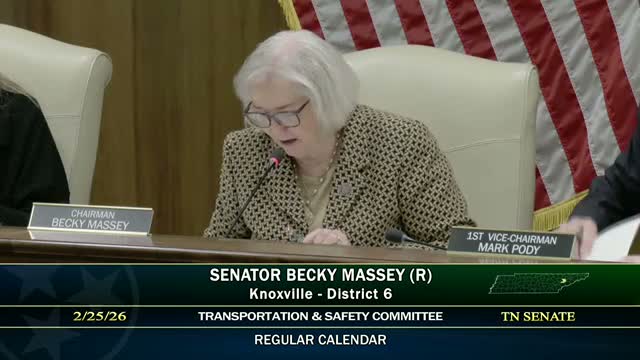
Summary
Senate Bill 1782, which clarifies class 1–3 e-bike definitions and gives local governments permissive authority to regulate low-speed e-bike use and safety requirements, passed the Transportation and Safety Committee by a 7–1 roll call; supporters said the bill protects kids and preserves local options.
The Senate Transportation and Safety Committee voted to advance Senate Bill 1782, legislation that recognizes three classes of electric bicycles and permits local governments and state agencies to regulate where lower-speed e-bikes are ridden and to set safety requirements.
Leader Johnson, the bill’s sponsor, told the committee the measure defines class 1 (pedal-assist up to 20 mph), class 2 (throttle-assisted up to 20 mph) and class 3 (pedal-assist up to 28 mph) e-bikes. He said the change would allow class 1 and 2 e-bikes to be treated the same as traditional bicycles where state law already allows bicycles, while giving cities, counties, state parks and campuses permissive authority to adopt ordinances or rules about helmet use, where e-bikes may be ridden and other safety measures.
Chairman Briggs, who carried earlier legislation on e-bikes years ago, walked the committee through the technical distinctions and legislative intent behind the class system, including current helmet and speedometer requirements for class 3 bikes. Several members said the intent is not to curtail general bike use but to provide local officials tools to address safety concerns, especially where children use e-bikes on streets and greenways.
Senator Campbell raised concerns about a patchwork of different local rules between counties and whether speed limits could address cross-jurisdiction issues. Sponsor Johnson and others replied the bill is permissive — it would empower local officials to educate and, if necessary, enforce safety rules — and would not automatically change statewide defaults.
The committee adopted an amendment that sponsor and supporters said clarified the measure, then approved the bill by roll-call vote (seven ayes, one no). With committee passage, SB 1782 moves to the Senate calendar for further consideration.
The committee did not record an implementation timeline; sponsors said they expect local governments and state agencies to use the permissive authority to tailor rules to community needs.