Get Full Government Meeting Transcripts, Videos, & Alerts Forever!
Get email alerts on the Public Access Security topic
No spam. Unsubscribe anytime.
Lorain resident says new City Hall security policy restricts access; council pauses meeting amid confrontation
Summary
A public‑access dispute over a City Hall security directive prompted a heated exchange, a council recess and a request that the administration publish formal rules on entry and recording; the council later reconvened and continued its agenda.
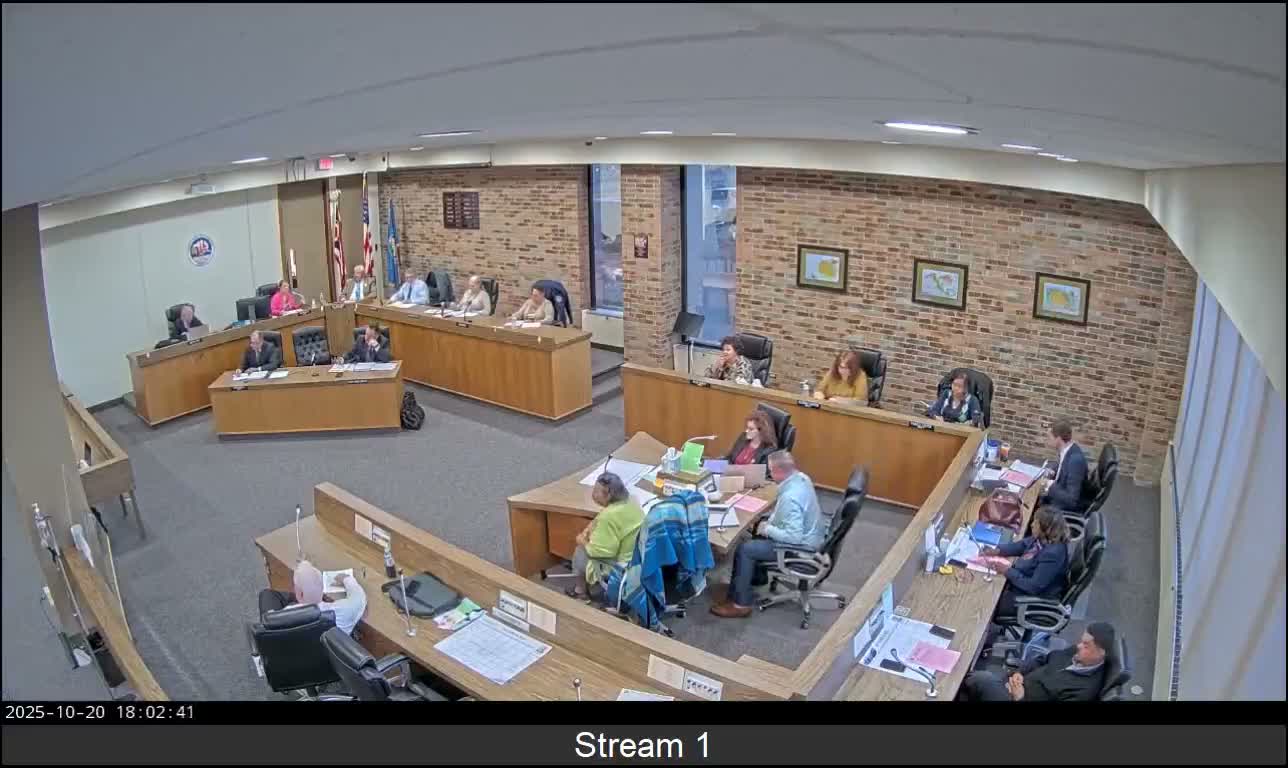
A public confrontation over City Hall security policies briefly interrupted a meeting of the Lorain City Council after a resident who arrived to speak said auxiliary staff detained him and refused him entry without an appointment.
The dispute began during the public‑comment period when a speaker listed on the sign‑up as Erin Knapp and who identified himself in remarks as Aaron Napp told the council he had been stopped at the City Hall door, detained about 10 minutes and refused entry “until the mayor had to come down” and intervene. Napp said the practice stemmed from an August 25 directive he said was signed by Director Ray Kerrio instructing auxiliary staff “to stop citizens, ask why they’re here, and refuse entry without an appointment.”
Napp framed the policy as more than a safety measure. “This is not about safety. It’s about fear. Fear of the people you serve,” he said, adding that City Hall “is the people’s house governed by Ohio Revised Code 149.43 and 121.22,” which he said guarantee open access, open records and reasonable times for public meetings and recordings. He asked council to “restore the rule of law,” to publicly post the rules governing access and recording and to affirm that “no one will be denied entry without lawful cause.”
Council members and staff repeatedly warned the chamber to clear when voices in the audience rose, and a point of order was called. After back‑and‑forth between speakers in the audience and the chair, a motion to recess was made and carried unanimously; the council cleared the chamber and took a brief recess to restore order. When the council reconvened, the majority resumed the agenda and continued voting on items.
Council did not adopt any immediate policy change on the floor. Members at the meeting referred to existing rules and cited the council’s authority to manage meeting decorum; Mayor Bradley and administration staff said press releases or clarifications would follow about ongoing investigations and other matters. Napp also referenced a recent contempt case involving a James Mauricio, asserting the policy had been used to detain others; the council did not adjudicate that claim during the meeting.
The most recent procedural step recorded in the meeting minutes was a motion to reconvene and continue the agenda; later, at the meeting’s end, council voted unanimously to recess into an executive session under Ohio Revised Code §121.22(G)(3) to consult with counsel about pending or imminent litigation.
The council did not vote on or change the security directive during the public meeting. For clarity: the request to publicly post access and recording rules was made from the floor and is not recorded as a council‑adopted order in the minutes of this meeting.
What’s next: The council resumed its agenda after the recess and scheduled an executive‑session discussion at the end of the public meeting. Any formal policy changes would require administrative action or a subsequent ordinance or directive.