
Rep. Norris presents bill to let Blaine impose special local taxes for redevelopment around National Sports Center; committee lays bill over
Get AI-powered insights, summaries, and transcripts
Sign Up Free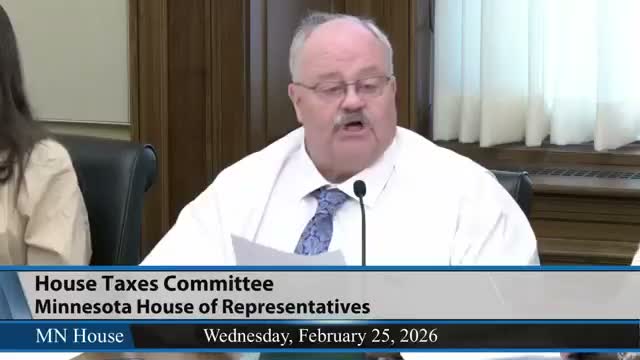
Summary
House File 387 would authorize the City of Blaine to create a geographically confined special taxing district to support a mixed‑use redevelopment near the National Sports Center, permit special local sales taxes (up to 3% in listed categories), and align tax term with bond repayment; the committee laid the bill over for possible inclusion in the omnibus tax bill.
Representative Trevor Norris presented House File 387 on Feb. 24 on behalf of the City of Blaine, saying the bill would authorize a geographically defined special taxing district (the "105th redevelopment area") adjacent to the state‑owned National Sports Center. Norris said the center draws millions of visitors annually and that the surrounding commercial district is critical to keeping tournaments and related tourism dollars in Blaine.
Tim Sanders, identified in testimony as mayor and a former member, said the district would support a large mixed‑use project—restaurants, lodging, entertainment and housing—and that the city would also seek special local sales taxes and an extended abatement period to align with project bonds. Jason Zimmerman, finance director for the City of Blaine, said the proposal is intended to be geographically targeted (not a citywide sales tax), to match revenue streams to infrastructure and maintenance needs, and to provide a financing backstop through property tax levies if necessary.
Members questioned the structure and public‑benefit safeguards. Representative Johnson and others asked how long the tax authority would last; Sanders said the tax termination date in the bill is Jan. 1, 2055, chosen to align with bond repayment schedules, and explained that council ordinances would implement and can periodically adjust rates up to the statutory ceilings. Several members, including Chair Gomez, voiced concern about public dollars supporting a project where much of the benefit accrues to private development and asked for clearer guardrails.
Representatives sought technical clarifications: Representative Robbins asked whether language allowing the council to impose and adjust rates to ‘‘produce revenues sufficient to finance the purposes’’ is common; legal staff said authorizing legislation for special taxes is customized and sometimes includes flexibility so local governments need not return to the legislature to change rates that remain within statutory caps. On lease terms, members were told long‑term state land leases tied to the development are approximately 30 years with possible extensions up to 90 years.
Representative Norris closed by thanking chairs and staff; the chair laid House File 387 over for possible inclusion in the omnibus tax bill. No committee vote was taken on final authorization at this hearing.
Next steps: The bill will be available for further committee consideration and potential placement in the omnibus tax package; authors and city officials will work with House Research and Fiscal staff on follow‑up details and spreadsheets.