
Bill to bar on‑duty masking by officers fails after heated debate over federal agents
Get AI-powered insights, summaries, and transcripts
Subscribe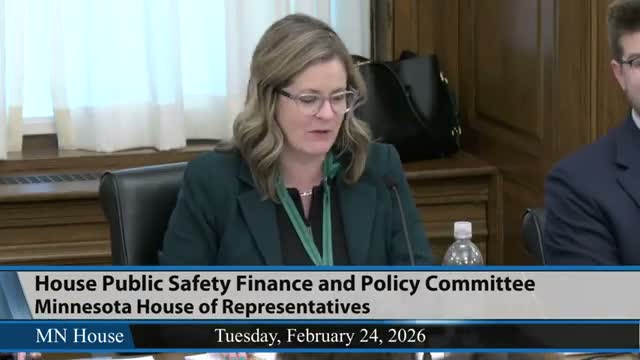
Summary
House File 34‑12, which would narrow circumstances when officers may wear masks on duty and require identification in most interactions, drew testimony from residents and civil‑liberties groups but failed on a 10‑10 roll call. Supporters cited public trust; opponents warned of federal‑state conflicts.
Representative Finke introduced House File 34‑12, proposing that law‑enforcement officers generally not wear masks while on duty, with enumerated exceptions for undercover work, public‑health reasons or to prevent serious facial injury. Testimony included Rain Hedlund recounting a December encounter with men in plain clothes and unmarked vehicles who she said behaved like federal agents and did not display badges; John Bueller of the ACLU of Minnesota supported the bill, saying masked agents can impede accountability.
Proponents emphasized trust between communities and local police, noting that unmarked, masked agents have frightened residents and eroded confidence. Opponents raised concerns about federal supremacy, enforcement and the safety of officers. Several members pointed out current law already makes concealing identity in some circumstances illegal and said the bill clarifies allowed exceptions.
The committee debated whether the proposal would conflict with federal functions and whether state officers should be exempted; nonpartisan staff explained August effective dates are commonly used to align changes with the Sentencing Guidelines Commission. Representative Finke asked for a roll call; the clerk recorded 10 ayes and 10 nays and the motion did not prevail.
The committee left the bill without advancing it; sponsors characterized the measure as both practical and protective of civil liberties, while critics said it risked pitting state and local authorities against federal actors.