
Historian Ryan Cole recounts Lafayette’s 1824–25 triumphant U.S. tour and its lasting legacy
Get AI-powered insights, summaries, and transcripts
Subscribe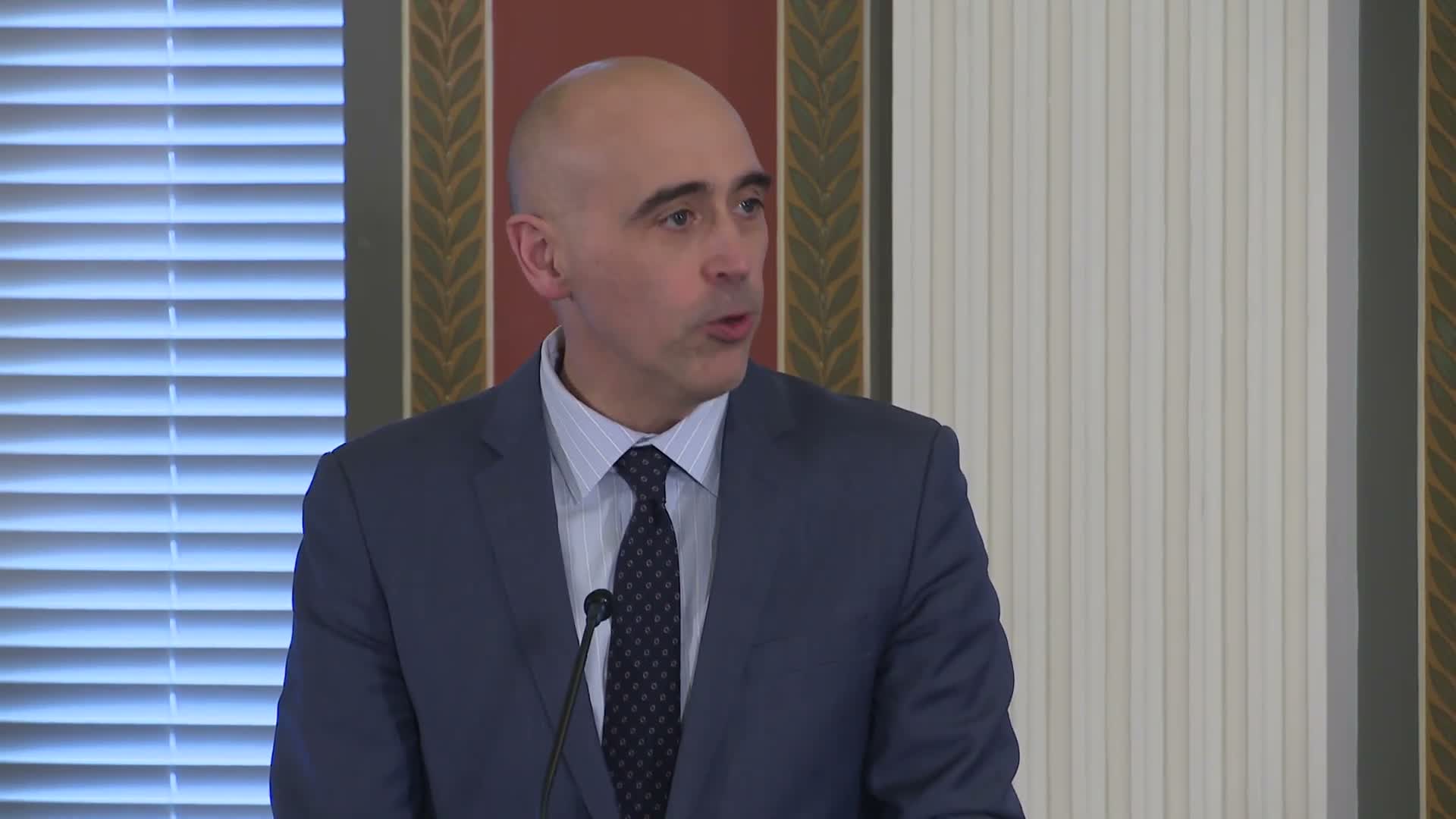
Summary
At a Library of Congress event, Ryan Cole described Gilbert du Motier, Marquis de Lafayette’s 13‑month 1824–25 tour of 24 states — a 6,000‑mile national spectacle that stirred mass crowds, spurred local spending and left a durable commemorative legacy. Cole and Chuck Schwamb unpacked the tour’s politics, Freemasonry links and public memory.
Ryan Cole, author of The Last Adieu, told an audience at the John W. Kluge Center that Gilbert du Motier, Marquis de Lafayette’s 1824–25 visit to the United States was both an emotional homecoming and a national spectacle that briefly reconciled a politically divided country.
Cole opened by placing the tour in the political and economic context of the 1820s — U.S. expansion to 24 states, technological change and the 1819 financial panic — and argued that Americans sought comfort in revolutionary memory as the nation confronted rapid change. "When he arrived, Lafayette became a living link to the Revolution," Cole said, noting that the tour occurred on the eve of the nation’s fiftieth anniversary of the Declaration of Independence.
Cole described the journey’s logistics and reception: Lafayette sailed on July 13, 1824, and by July 15 his ship appeared off Staten Island, where Vice President Daniel Tompkins received him. Cole said Lafayette’s 13‑month tour covered roughly 6,000 miles and reached all 24 states, drawing enormous crowds — as many as 90,000 in New York City on one appearance — and inspiring souvenirs, banquets and public monuments.
Cole recounted how communities refurbished buildings (including what is now Independence Hall in Philadelphia), dismissed schools, and expended public funds and private donations to stage festivities. He said Congress voted in December 1824 to give Lafayette $200,000 as compensation and that the award prompted debate because many Revolutionary War veterans remained impoverished; Cole read from a post‑tour Lafayette letter urging Congress to use generosity to address veterans’ needs.
Speakers also discussed Lafayette’s stance on slavery. Cole said Lafayette privately decried slavery and "there’s only one issue for which I am less resigned than ever, and that is slavery and anti‑Black prejudice," quoting Lafayette’s own words from letters. Cole noted that Lafayette publicly sought out meetings with Black veterans and visited a free school for Black children during his tour.
Chuck Schwamb, executive director of the American Friends of Lafayette, described his group’s bicentennial commemorations and reenactments that sought to educate the public about Lafayette as a military leader and civil‑rights‑minded figure. "We followed him around and tried to stay as historically accurate as possible," Schwamb said, adding that the Masonic community was heavily involved in many local ceremonies and that Lafayette himself was a Mason.
In audience questions, Cole and Schwamb addressed Lafayette’s stamina and the tour’s practical demands; Cole cited contemporaneous letters reporting Lafayette’s poor health before the tour but intense energy while traveling. Cole and Schwamb also discussed where Lafayette papers can be found in the United States (Cornell, the Lilly Library at Indiana University Bloomington, Lafayette College, Cleveland State and local historical societies in states he visited).
The event closed with an announcement that Cole would sign books at a reception following the program.
Sources: Remarks and answers by Ryan Cole and Chuck Schwamb at the John W. Kluge Center event; questions from the audience and online participants.