
House passes SB 1507 to disconnect from parts of 2025 federal tax changes, expand EITC and add job credits
Get AI-powered insights, summaries, and transcripts
Subscribe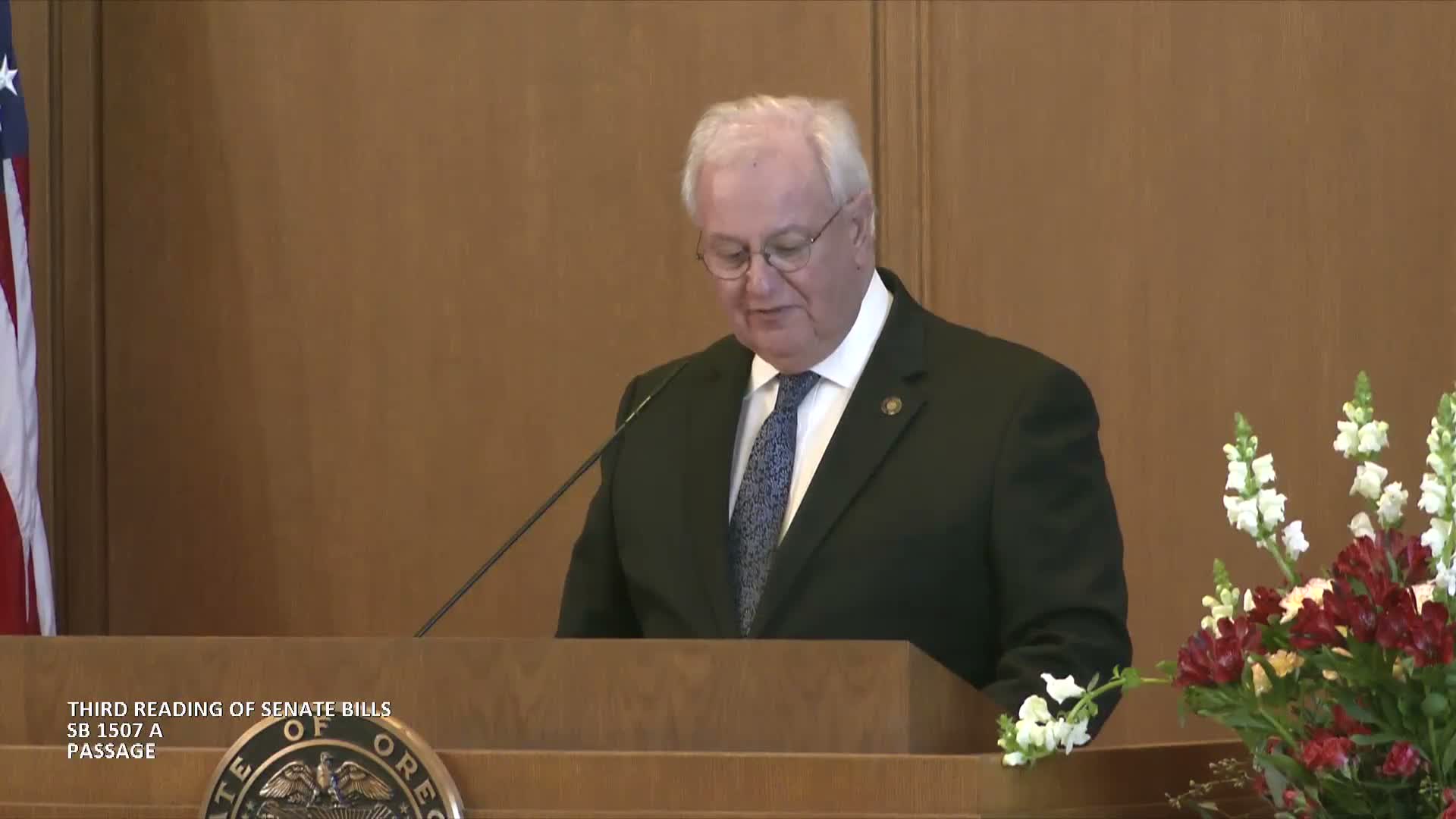
Summary
Lawmakers approved SB 1507, a tax package that disconnects Oregon from select federal provisions (including portions of bonus depreciation and QSBS), expands the state Earned Income Tax Credit, and creates a jobs tax credit. Supporters said it preserves funding for schools and services; opponents warned it raises costs for businesses and investment.
The Oregon House passed Senate Bill 1507 on Feb. 25 after extended floor debate over state tax policy, business investment incentives and budget trade‑offs.
Representative Nathanson introduced the measure as a targeted response to federal tax changes, arguing the state must act to preserve funding for schools and basic services. "This bill is about Oregon taking some control," Nathanson said, outlining five components: an expansion of the state Earned Income Tax Credit (EITC), a new Oregon jobs tax credit to encourage hiring, adjusted depreciation treatment (spreading rather than immediate full bonus depreciation), a disconnect from the expanded Qualified Small Business Stock (QSBS) exclusion, and limiting the vehicle‑loan interest deduction (Representative Nathanson).
Supporters — including Representative Fraggle and others — framed the bill as protecting nearly $300–$500 million in state revenues that would otherwise be lost to federal changes, and emphasized an historic expansion to the EITC that would deliver relief to working households.
Opponents argued the changes effectively raise taxes on businesses and punish investment, particularly pointing to the disconnect from bonus depreciation. Representative Yonker said the move would discourage capital purchases and could prompt firms to invest out of state. Farmers and manufacturers on the floor said accelerated depreciation is vital to cash flow and investment decisions for capital‑intensive industries.
Lawmakers debated technical compliance costs, timing, and whether the state should seek alternatives to preserve business competitiveness. Some members said the bill contains targeted credits for job creation but cautioned those credits may not match the scale of the federal changes.
The clerk announced SB 15 07 had received the constitutional majority and was declared passed; the roll‑call vote totals were not printed in the floor excerpt provided.
Next steps: The measure will proceed for enrollment and any subsequent steps toward enactment. Several speakers said they will pursue interim work on related tax issues, including items not included in this bill such as GILTI or FDII adjustments.
Reporting note: Floor debate featured conflicting framings: proponents emphasized fiscal stability and support for low‑income households; opponents warned of reduced investment and business relocation risk. The debate included concrete dollar figures offered by members and projections that should be verified against the Legislative Revenue Office estimates.