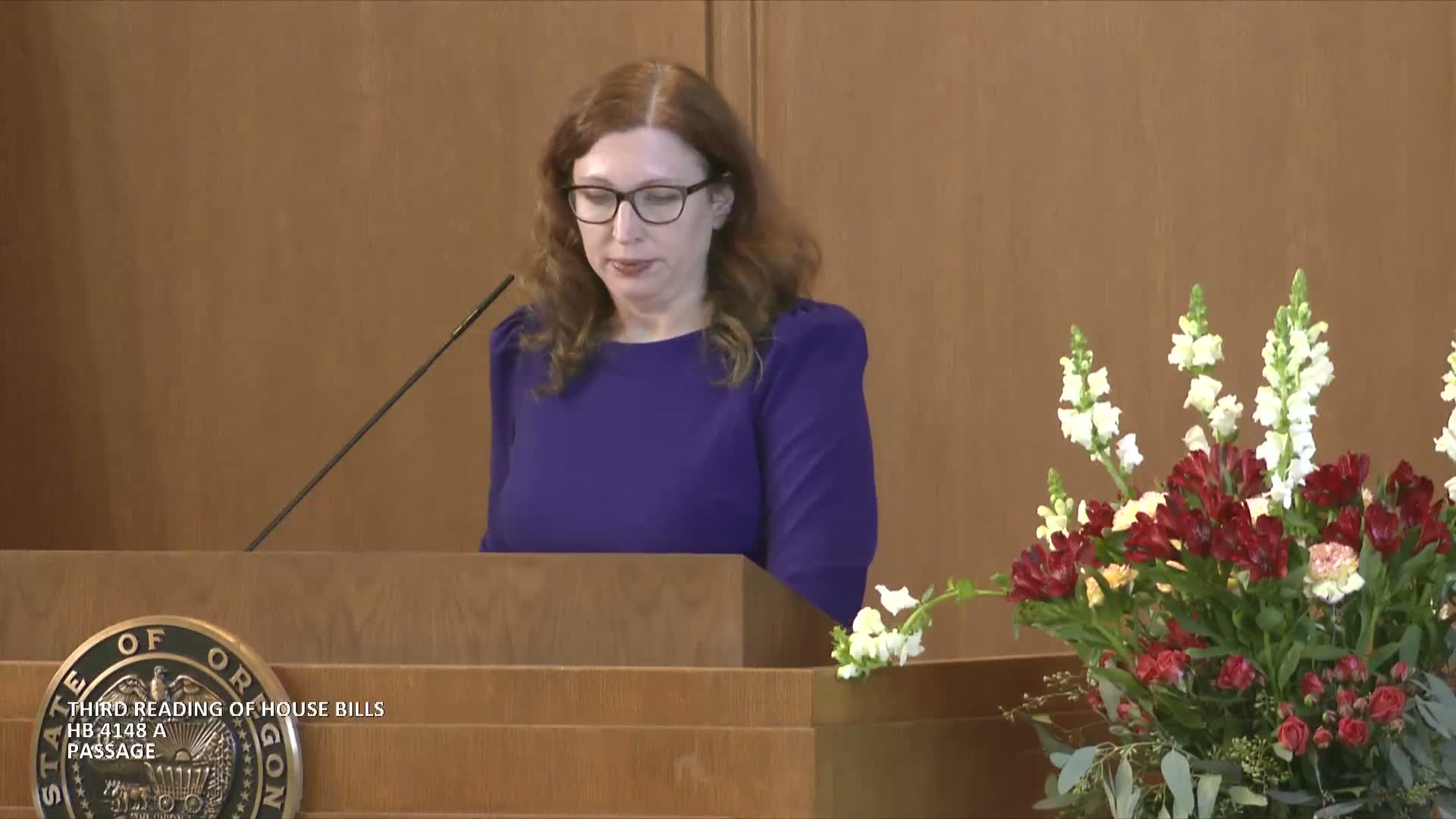
House approves HB 4148 to give local governments more flexibility in lodging‑tax spending
Loading...
Summary
Legislators approved HB 4148, an optional rebalancing of local transient lodging tax allocations (moving from a 70/30 floor toward a 50/50 split), authorizing resiliency grants and biennial reporting; supporters said it helps destination communities fund infrastructure, opponents warned of reduced tourism promotion.
The Oregon House passed House Bill 4148 on Feb. 25, a bill that shifts the statutory floor for local transient lodging tax (TLT) allocations and gives local governments optional flexibility to spend more of TLT revenue on local services and infrastructure.
Representative Cyrus Javedi, co‑sponsoring the bill, said HB 4148 modernizes the longstanding 70/30 allocation rule and creates optional resiliency grants for small restaurants and hoteliers to meet off‑season challenges. "At its core, this bill is pro tourism," he said, arguing that pairing marketing with investments in infrastructure and public services improves visitor experiences and benefits local economies.
Co‑sponsor Representative Walters emphasized that the change is optional and intended to help destination communities cope with peak seasonal pressures — for example, supporting wastewater systems, parks and emergency response during large visitor influxes.
Opponents countered that reducing the promotion floor from 70% to 50% risks starving marketing budgets that attract visitors. Representative Yacht Rieszke said cutting promotion could harm the tourism sector, and Representative Younger warned the bill shifts revenue to governments at the expense of private businesses that invest in attracting visitors.
Supporters noted optionality and reporting requirements: the bill requires biennial transparency reporting by the Legislative Revenue Office and leaves decisions to local elected officials. After floor debate that included cost and policy trade‑offs, the clerk announced that House Bill 41 48 had received the constitutional majority and was declared passed.
What happens next: HB 4148 will go to the enrollment stage and, if enacted, local governments may opt in to the new allocation rules and use a portion of funds for resiliency grants and certain local services.
Reporting note: Debate emphasized the optional nature of the change and a requirement for biennial public reporting; supporters argued the changes respond to infrastructure strain in high‑visitation communities.