
Oregon House passes HB 4145 to implement Measure 114 despite sharp objections over fees, access and process
Get AI-powered insights, summaries, and transcripts
Subscribe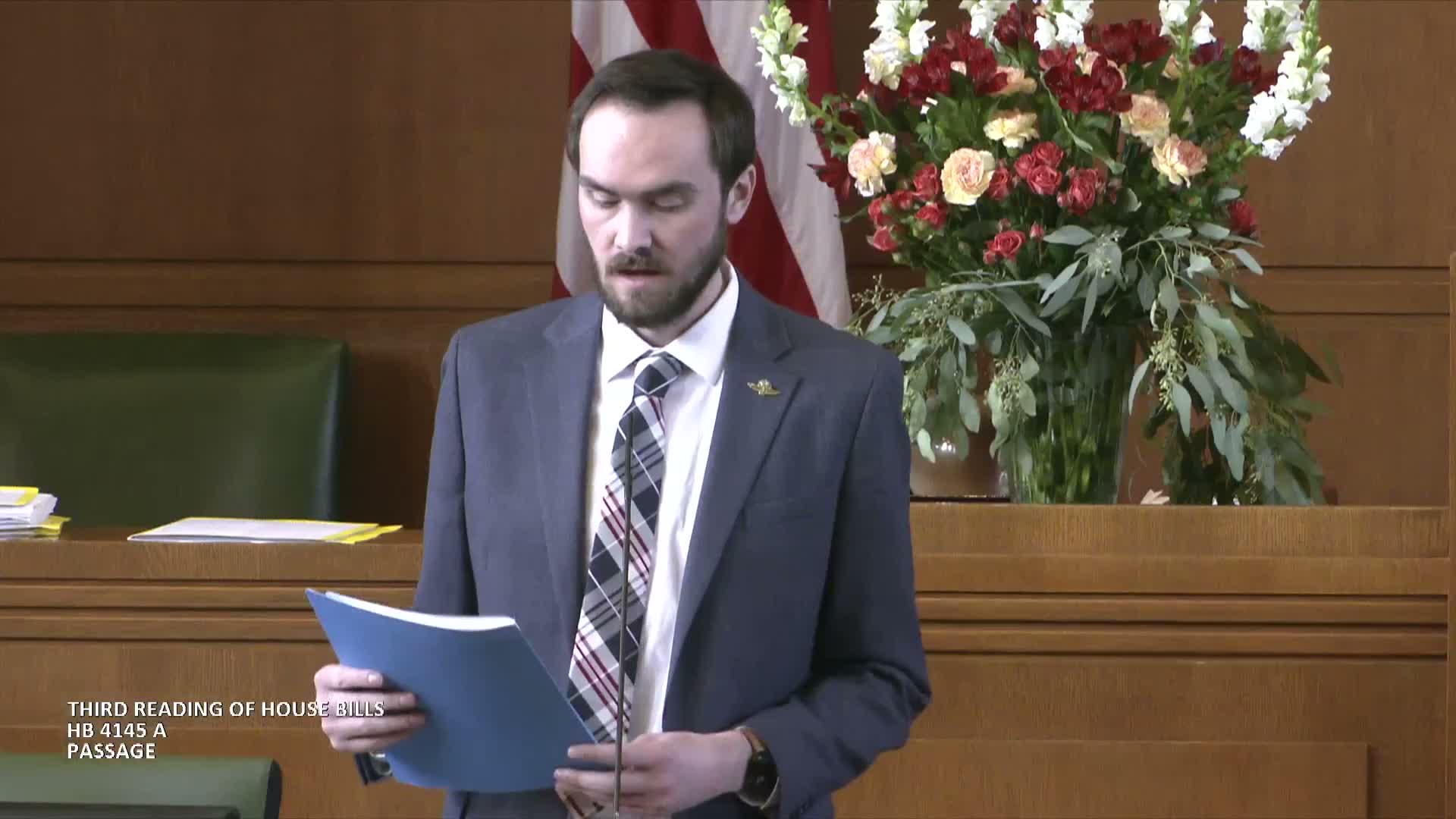
Summary
The Oregon House on Feb. 25 passed HB 4145, a package of technical and implementation changes to Measure 114 that creates a permit‑to‑purchase system, raises permit fees and delays a large‑capacity magazine prohibition; supporters said it makes Measure 114 workable, opponents called it a burden on law‑abiding citizens and questioned committee process.
The Oregon House on Feb. 25 passed House Bill 4145, a 28‑page measure that lawmakers said is intended to implement and clarify Measure 114 — the 2022 voter initiative on firearms policy — and to give law enforcement time and structure to administer permit‑to‑purchase procedures.
Representative Lindsay McDonald, who opened debate in support, described HB 4145 as “a necessary, responsible, and thoughtful step forward in implementing Measure 114,” and said the bill establishes where Oregonians apply for permits, refines safety‑training standards, protects permit holder data from public disclosure and provides implementation timelines (Representative McDonald). She told colleagues the bill delays the effective date for the sale or possession ban on new large‑capacity magazines to Jan. 1, 2027, or the date of a controlling court decision, and that the changes “ensure that when Measure 114 is implemented, it will function in a way that is workable, constitutional, and fair.”
Supporters argued the legislation protects public safety while preserving due process. Representative Graeber said states with permit‑to‑purchase systems saw reductions in firearms homicides and suicides, and that HB 4145 would give law enforcement and the state time to build a permit infrastructure.
Opponents criticized the bill’s costs, timelines and venue provisions. Representative Bobby Levy objected to fee increases that she said raise the maximum application fee from $65 to $150 and increase renewal fees, saying the higher costs would “price out” lower‑income Oregonians and be an added burden for rural residents who must travel long distances to apply (Representative Levy). Several members pressed the bill’s centralized judicial‑review provision, which directs certain challenges to Marion County, calling it effectively forum‑shopping that could limit access to justice for people across the state.
Other lawmakers raised privacy and administrative concerns about fingerprinting and the role of federal databases. On the floor, Representative Carlos summarized the bill language noting the Department is to “request that the Federal Bureau of Investigation return the fingerprint cards” but acknowledged deletions in the draft that leave the FBI’s ultimate handling of cards unclear; members warned the state cannot compel a federal agency to destroy or not retain records (Representative Carlos).
Representative Brit Mannix moved to re‑refer the bill to the House Judiciary Committee, arguing the committee process had been flawed and important committee questions were unanswered. The referral motion was debated and rejected by the House.
After more than three hours of floor debate that included supporters’ data about public‑safety impacts and opponents’ constitutional and access objections, the clerk announced House Bill 4145 A “having received the constitutional majority” and declared the bill passed. The roll‑call vote counts were not specified on the floor record.
What happens next: HB 4145 will proceed to enrollment and any further processing required for enactment; the Oregon Supreme Court’s pending review of Measure 114 was repeatedly cited during debate, and several speakers said the court process could affect implementation timing.
Key votes and procedural notes: Representative Osborne moved to suspend the rule requiring section‑by‑section reading for a set of bills earlier in the session; Representative Mannix’s referral motion to Judiciary failed; the House later declared HB 4145 passed after the final vote.
Reported by: transcript of Oregon House floor session, Feb. 25, 2026. The text above attributes direct quotes to speakers recorded on the floor.