Get Full Government Meeting Transcripts, Videos, & Alerts Forever!
Get email alerts on the Hb 4014 Task Force topic
No spam. Unsubscribe anytime.
Oregon subcommittee advances bill to form task force on taxation of international income
Summary
The Ways and Means subcommittee moved HB 4014A to the full committee with a 'do pass' recommendation. Supporters said a statutory task force would produce structured outcomes; critics argued a flexible LRO work group would allow broader participation and avoid taxpayer‑funded public fights.
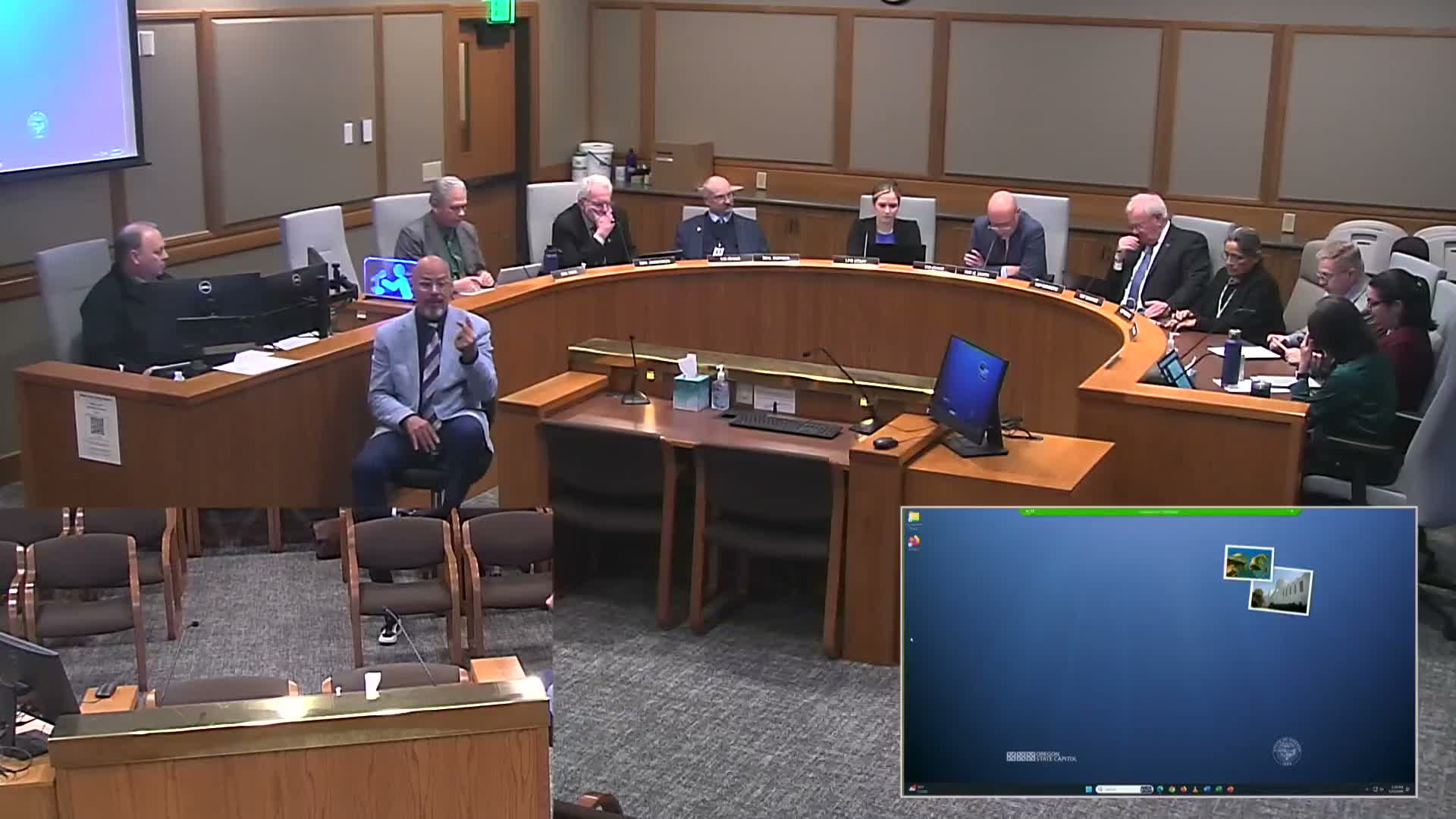
The joint Ways and Means Subcommittee on General Government voted to send House Bill 4014A to the full Ways and Means Committee with a "do pass" recommendation after a work session on Feb. 25, 2026.
Legislative staff told the subcommittee the bill would establish an 11‑member task force to study the taxation of international income, require Legislative Revenue Office staff support, and direct a report to interim revenue committees by Dec. 1, 2026, with the task force set to sunset on Dec. 31, 2027. Staff said the fiscal impact on the Legislative Revenue Office would be minimal.
Why it matters: The bill would create a statutorily authorized forum to examine whether changes to Oregon's tax code could simplify or improve the state's tax treatment of income tied to international activity. Proponents said a formal task force signals legislative intent and can provide structured, staffed work that produces actionable recommendations; opponents warned it risks becoming a public battleground between business and labor interests and may exclude broader stakeholder input.
Senator Meek, who said he will vote "no" on the floor if the bill reaches that stage, described the measure as likely to set up "a cage match between labor and business groups" and said a directed LRO work group would be a more nimble, inclusive alternative. Meek told the committee he would offer a "courtesy yes" in committee to avoid replacement by the co‑chair at this hearing but maintained his floor opposition.
Representative Tran questioned how many Oregon companies would be affected by changes stemming from the task force and said limiting membership to 11 people could exclude valuable perspectives; legislative staff said they did not have that number on hand and offered to provide it later. Other members debated the difference between a legislatively created task force — which receives staff and fiscal support and has fixed membership — and an LRO work group, which is more flexible and can include more participants but carries less formal legislative commitment.
The Legislative Fiscal Office recommended advancing HB 4014A to the full committee. A member moved to send the bill forward with a "do pass" recommendation; during discussion some members urged changing the committee recommendation language to "do pass with no recommendation" to achieve unanimity but the chair proceeded with the original motion. The roll call includes several recorded "yes" and "no" responses on the audio; the chair announced the motion passed.
What happens next: HB 4014A will be considered by the full Ways and Means Committee. The task force, if ultimately created by statute, would be required to submit its report to the relevant interim revenue committees by Dec. 1, 2026, and would sunset on Dec. 31, 2027.
Clarifying details: The bill specifies an 11‑member task force, a report deadline of Dec. 1, 2026, and a statutory sunset of Dec. 31, 2027. Staff reported the fiscal impact to the Legislative Revenue Office is "minimal." The transcript records committee members debating whether LRO can support one or two task forces within existing capacity but said multiple concurrent task forces can increase state costs and would require a fiscal note.
The committee adjourned after the vote.