Get Full Government Meeting Transcripts, Videos, & Alerts Forever!
Get email alerts on the Opioid Recovery Employment topic
No spam. Unsubscribe anytime.
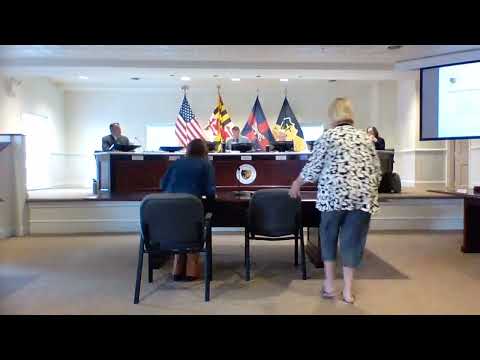
Berlin council approves Recovery Works MOU using opioid restitution funds to place residents in paid work
Summary
The council approved motion 2025-53 to launch a Recovery Works employment pilot in partnership with Hope for Recovery and Worcester Goes Purple, using opioid restitution funds (roughly $50,000 initially) to hire part-time public-works staff drawn from treatment programs; the measure passed with three votes in favor, one abstention and one absence.
Mayor and the council voted to approve motion 2025-53, a memorandum of understanding to launch a Recovery Works employment program that will use opioid restitution funds to place people in recovery into supervised, part-time roles with the town and partner organizations. The MOU names Hope for Recovery and Worcester Goes Purple as partners and was presented to council as a path to convert settlement dollars into direct recovery-support employment.
The proposal calls for a vetted candidate pool delivered by partner treatment facilities, standard interviews and background checks, and integrated peer-support supervision in coordination with WVU peer support staff so employees in recovery have an ongoing communication link to treatment resources. “Some individuals haven't been employed for some time. Having that experience on a resume can springboard them into full-time positions,” a Hope for Recovery representative said during the meeting.
Staff told the council that the town currently has roughly $20,000 available in the opioid restitution account and approximately $30,000 more that can be accessed through the state, for a program-start total near $50,000. Officials described beginning with one or two part-time positions assigned to public works duties — event set-up, downtown beautification, parks maintenance — while retaining the town’s normal hiring and background procedures.
Council members asked about timelines, eligibility rules and whether program participants would be publicly labeled. Staff said candidates would be referred through the partner organization rather than being recruited on the open job board, that normal hiring checks (including criminal‑record reviews where applicable) would apply, and that the program will include counseling and peer support so participants would not be ‘‘branded’’ as program enrollees in public records.
The motion was moved and seconded and passed as recorded: three council members in favor, one abstention (Council member Morris) and one absence (Vice President Burrell). The council directed staff to finalize the MOU and begin implementation in the fall once hiring details and job descriptions are complete.
Next steps: staff will return with the finalized MOU, position descriptions, and an implementation timeline; the council requested follow-up reporting on placements and outcomes.