Get Full Government Meeting Transcripts, Videos, & Alerts Forever!
Get email alerts on the Arts And Culture topic
No spam. Unsubscribe anytime.
Salina approves $59,901 cultural‑planning contract with Keane Independent Research after debate
Summary
The Salina City Commission approved a contract with Keane Independent Research for a cultural assessment and strategic plan — $49,910 plus a $9,991 contingency, not to exceed $59,901 — after commissioners and residents debated whether the work could be done in‑house or should be contracted out.
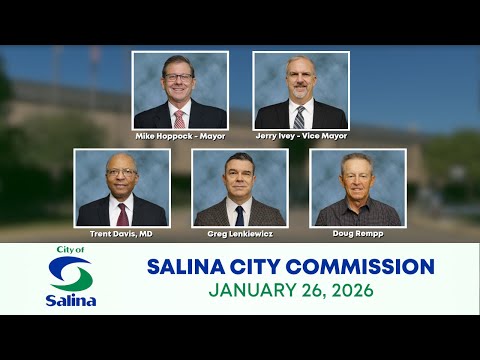
The Salina City Commission on Jan. 26 authorized the city manager to execute a contract with Keane Independent Research for a strategic cultural plan, approving a $49,910 base contract with a $9,991 contingency for a total not to exceed $59,901.
Brad Anderson, Salina’s executive director of arts and humanities, told the commission the last cultural plan was adopted in 2009 and that the city has seen measurable benefits from the earlier work. Anderson said the 2009 plan found only about 52% of Salina residents then thought the arts were important; later surveys rose to about 88%. "I'm asking for support for a cultural assessment and strategic plan for our city," Anderson said during the presentation.
Keane Independent Research was the selection panel’s top choice after a qualifications-based process in which the city solicited proposals from 38 firms and received five bids. Alex Keane, the principal on the Zoom call, said his firm was "very excited to get started" and to examine arts as both a quality‑of‑life and an economic driver.
Commissioners questioned whether the work could instead be done by local volunteers or city staff. One commissioner argued the city already employs many cultural-sector professionals and suggested a local task force could produce similar work. Anderson responded that no local group submitted a proposal and that a year‑long, professionally run process would be difficult to manage in‑house and that independent researchers provide data the city can rely on.
Members of the public split on the decision. Ben Winholz and Tony Johnson, among others, urged scrutiny of Arts & Humanities’ staffing and budget; Douglas Bailey and other residents spoke in favor of continuing the cultural planning effort as a driver of economic development.
The motion to authorize the contract passed 4 to 1. The contract authorizes a year‑long process of discovery, public surveying and small‑group meetings, with a preliminary report expected around October and a final document and implementation strategy in late winter.
Next steps: Staff will finalize and execute the agreement, begin the consultant's engagement, and return status updates to the commission as the project advances.