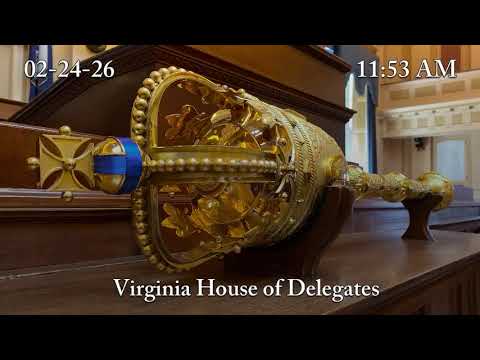
House adopts wide slate of bills on health, housing and consumer protections; several roll calls recorded
Loading...
Summary
The Virginia House of Delegates on Feb. 24 passed a broad set of Senate cognates on health, housing, labor and consumer protections, including measures to require bias‑reduction training for certain health licensees and to expand eviction‑related protections; vote tallies were recorded on multiple measures.
RICHMOND — The Virginia House of Delegates approved a long list of Senate cognates on Feb. 24, moving dozens of measures through third reading as members worked through an uncontested third‑reading block and several individual roll calls.
Several bills received recorded votes. Delegate Willard, presenting Senate Bill 22, said: "SB 22 directs the boards of medicine and nursing to require continuing education on implicit and explicit bias reduction in health care settings for certain licensees." The chamber approved the bill on a 63‑34 vote. Delegate Henson presented Senate Bill 28, which provides overtime protections for live‑in domestic workers; the House passed it after the committee substitute was agreed to, with the clerk recording 63 ayes, 34 noes and one abstention.
Other measures that passed included consumer‑protection, health and housing items that were presented as cognates to House bills. Notable outcomes recorded during the session included:
- SB 22 (bias‑reduction continuing education for certain health licensees): passed, recorded vote 63‑34. - SB 28 (overtime protections for live‑in domestic workers): passed, recorded vote 63‑34‑1 abstention. - SB 48 (changes to notice/waiting period in landlord‑tenant law): passed, recorded vote 64‑34. - SB 132 (agrirelated temporary tent regulations review): passed by voice vote or large margin recorded in the transcript (93‑5 in that roll call block). - SB 340 (defines agrivoltaics; advisory panel): passed, recorded vote 68‑30. - SB 596 (codifying protections for contraception access): passed, recorded vote 65‑33.
Presenters for the measures repeatedly described them as cognates to existing House bills that had previously passed the chamber. For example, several members noted that a committee substitute made a bill "identical to my house bill" before moving passage; committee substitutes were adopted for multiple items during the block.
House clerks closed rows and called recorded votes repeatedly through the afternoon. Many measures were presented as "uncontested" third‑reading items and advanced with little floor debate; the chamber also disposed of memorial and commending resolutions during the session.
The Speaker announced conferee appointments for several Senate bills and reminded members that this was "budget week," directing attention to introduced budgets and deadlines for floor amendments ahead of Thursday's deadline.
The House adjourned at the end of the afternoon calendar to reconvene the following day at noon.