
Oregon House approves lodging tax hike to fund wolf compensation and prevention
Get AI-powered insights, summaries, and transcripts
Subscribe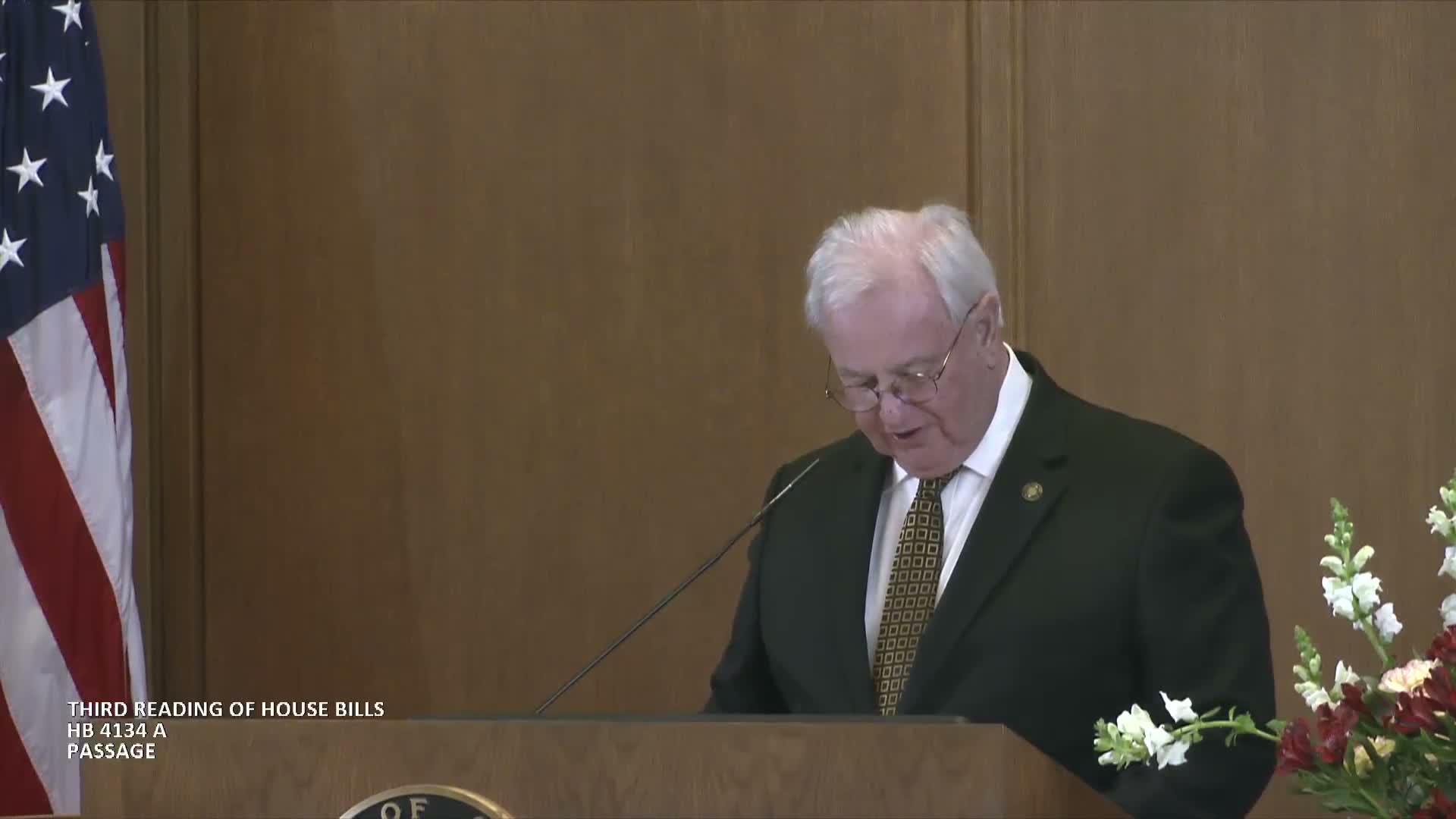
Summary
The Oregon House passed House Bill 4,134 on Feb. 24, 2026, increasing the state transient lodging tax to create a dedicated wolf management compensation and proactive trust fund. Supporters said it provides reliable funding for nonlethal deterrence and compensation; opponents warned of costs to Oregonians and tourism.
SALEM, Ore. — The Oregon House of Representatives on Feb. 24 passed House Bill 4,134, increasing the state transient lodging tax and directing a portion of the revenue to a wolf management compensation and proactive trust fund.
Representative Helm, the bill sponsor, said the measure would create a predictable revenue stream for Oregon Department of Fish and Wildlife programs and for compensating producers harmed by wolf depredation. "We started collecting revenues from the transient lodging tax in fiscal year 2004, and it has increased every year since except for the pandemic," Helm said in closing, pointing to state revenue trends and asserting the tourism industry has recovered.
Opponents framed the measure as a tax on Oregonians who travel within the state. "This is not just a tax on tourists. This is a tax on Oregonian families," Representative Juncker said on the floor, citing department revenue estimates and asserting that roughly one-third of current transient lodging tax revenue is paid by Oregonians traveling inside the state.
Rep. Bobby Levy, who urged passage, described HB 4,134 as a modest but necessary step to make wolf management funding reliable. "House Bill 4,134 will finally provide a stable funding source for Oregon's wolf management compensation and proactive trust fund," Levy said, adding the fund would support compensation for confirmed livestock losses and proactive, nonlethal deterrence methods.
Speakers on both sides raised economic concerns. Several members from rural districts said they feared the added 1.25 percentage points could hurt motels, restaurants and tourism-dependent communities; others said the measure was targeted to visitors and would sustain outdoor and conservation-based tourism by protecting species and landscapes.
The clerk opened the voting system after final remarks. The clerk later announced that House Bill 4,134 "having received the constitutional majority, is declared passed." The transcript does not record a full roll-call tally in the floor record provided.
What happens next: With passage in the House, HB 4,134 will move to the Senate for further consideration. Supporters said the bill is designed as a targeted revenue source for wildlife management; opponents signaled they may continue to press fiscal and economic concerns during the next stages of the legislative process.