
Committee tables bill to let oversight panel review OPEGA working papers after privacy and funding concerns
Get AI-powered insights, summaries, and transcripts
Sign Up Free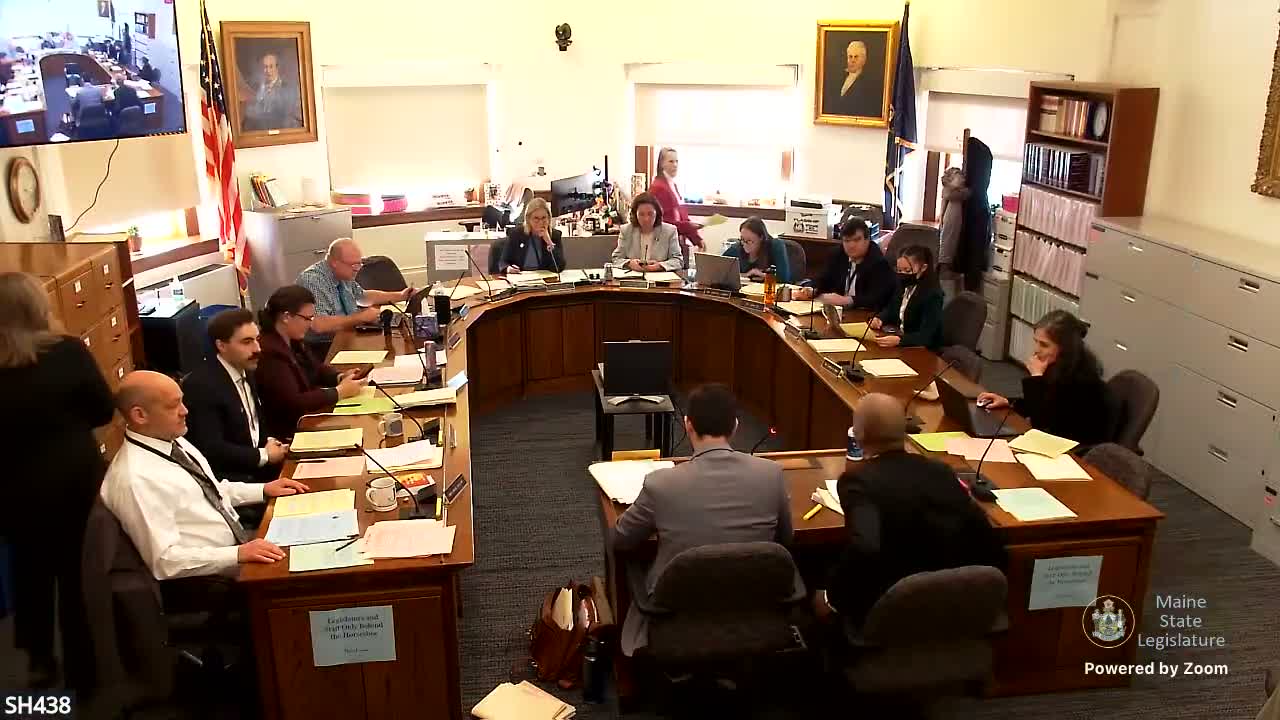
Summary
Senators and witnesses sparred over LD 127, which would allow the Government Oversight Committee limited executive-session access to OPEGA working papers; opponents warned the change risks exposure of tax, medical and other sensitive records and possible loss of federal funding. The committee voted to table the bill to allow further work and information gathering.
The committee tabled LD 127 after an extended work session in which lawmakers, the bill sponsor and multiple outside witnesses discussed whether the Government Oversight Committee (GOC) should be granted limited executive-session access to the Office of Program Evaluation and Government Accountability's (OPEGA) working papers.
Senator Craig Hickman, sponsor of the committee amendment, said the changes would clarify the GOC's statutory authority to review confidential materials in executive session when those materials are "considered and referenced in a report" and to adopt a committee code of conduct and confidentiality protections. Hickman argued the change is a narrow, structural fix after a court ruling limited GOC access and that allowing a review of working papers is necessary for the committee to perform "thorough oversight of government agencies." "This language, I believe, would authorize us to do that should it pass," Hickman said.
Opponents—including business and health-sector witnesses, and several committee members—said the amendment as drafted risks disclosure of highly sensitive records (tax returns, medical/HIPAA-protected records, personnel files) and lacks mandatory criminal or procedural safeguards. Linda Caprera of the Maine State Chamber warned the amendment provides access to "mental health records, tax return information, immigration records" and said the draft "does not cover any of those concerns." Attorney Charlie Sultan and representatives of health systems raised similar concerns about the potential for leaks, citing federal confidentiality rules and practical risks when sensitive materials are exposed to a broader legislative body.
Eli Murphy (OPLA) and the committee discussed a prior Attorney General opinion and a blue memo (dated 02/06/2026) that identify federal grant statutes and regulations as a potential barrier: some federal child-welfare funding rules require safeguards that "prohibit disclosure to any committee or legislative body" other than certain oversight offices, meaning improper access could jeopardize federal funds. Murphy told members the memo and relevant AG analysis will be circulated.
Senator Jeff Timberlake, a co-sponsor, defended the amendment's safeguards—paper-only materials, in-building storage and signed confidentiality commitments—and argued the bipartisan GOC needs the access to investigate serious program failures, including child-death cases. Public witnesses pressed for precise limits and stronger penalties for unauthorized disclosure. Committee members asked the sponsor to identify specific failures in the current OPEGA/GOC structure that necessitate the change; Hickman cited unresolved oversight gaps and the committee's inability to obtain needed answers in public.
After extended debate and requests for additional materials, Representative Sato moved to table LD 127; Representative Moon seconded. A roll-call followed: six in favor, three opposed and five absent. The committee tabled the bill to allow further study and to provide requested legal and federal-funding guidance to members.
What’s next: The sponsor and staff will provide requested documents (case law, the blue memo, drafting clarifications) and the bill will be rescheduled for further consideration.