Get Full Government Meeting Transcripts, Videos, & Alerts Forever!
Get email alerts on the Transportation Golf Carts topic
No spam. Unsubscribe anytime.
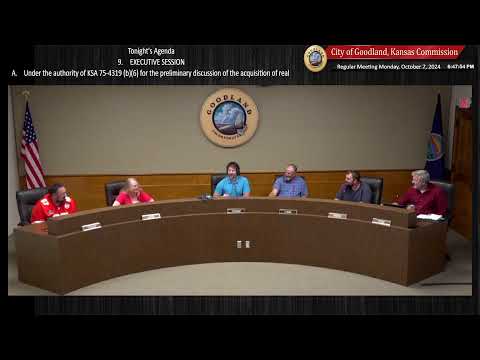
Goodland commission approves ordinance allowing golf carts on city streets after safety debate
Summary
The city commission approved ordinance 17-84 to permit authorized golf carts on designated streets with safety equipment and sunrise‑to‑sunset limits after a divided vote (3–2) and extended debate about crash risks and enforcement.
The Goodland City Commission on Oct. 7 approved ordinance 17-84 to allow registered golf carts on city streets that meet a police‑department safety checklist, despite vocal safety objections from the police chief and two commissioners.
Police Chief Earhart told the commission the proposed ordinance requires equipment such as mirrors, headlights, turn signals, seat belts and a checklist inspection before a tag would be issued. But he said he does not support allowing golf carts on streets, telling the commission, “Not even a little bit,” when asked whether a side‑impact crash would be survivable in a golf cart.
Supporters said the ordinance includes multiple safety requirements and registration steps — proof of insurance, an inspection at the police department and limits on streets where carts may operate — and argued it provides a legal pathway for vehicles that are already used in other small Kansas communities. Opponents warned that most golf carts lack the structural protection of utility task vehicles and could be especially vulnerable on Main Street and other busier corridors.
Commissioner Redland moved to adopt the ordinance; Commissioner Howard seconded. The measure passed on a roll call vote, 3–2, with Redland, Howard and Mayor Aaron Thompson voting in favor and Commissioners Myers and Showalter opposed.
The ordinance limits use to streets with posted speed limits of 30 mph or less, requires the carts to meet the listed equipment checklist and authorizes police to inspect vehicles and issue tags. City staff said the police department will perform a VIN/serial‑number check and a visual inspection before registration.
The commission did not immediately expand the ordinance to cover electric scooters, which several speakers said pose similar risks but are not classified as motor vehicles under current law. Staff indicated a separate ordinance addressing scooters could follow.
The ordinance takes effect as adopted; staff will finalize the registration process with the police department and return with any implementation details if needed.