Senate passes slate of third‑reading bills; child-labor and solar siting spark floor debate
Loading...
Summary
The Oregon Senate suspended section‑by‑section readings and approved a package of third‑reading bills, including SB 1595 and multiple House bills on licensing, consumer protections and early literacy. Debate centered on child labor preemption language and a contested renewable energy siting exemption.
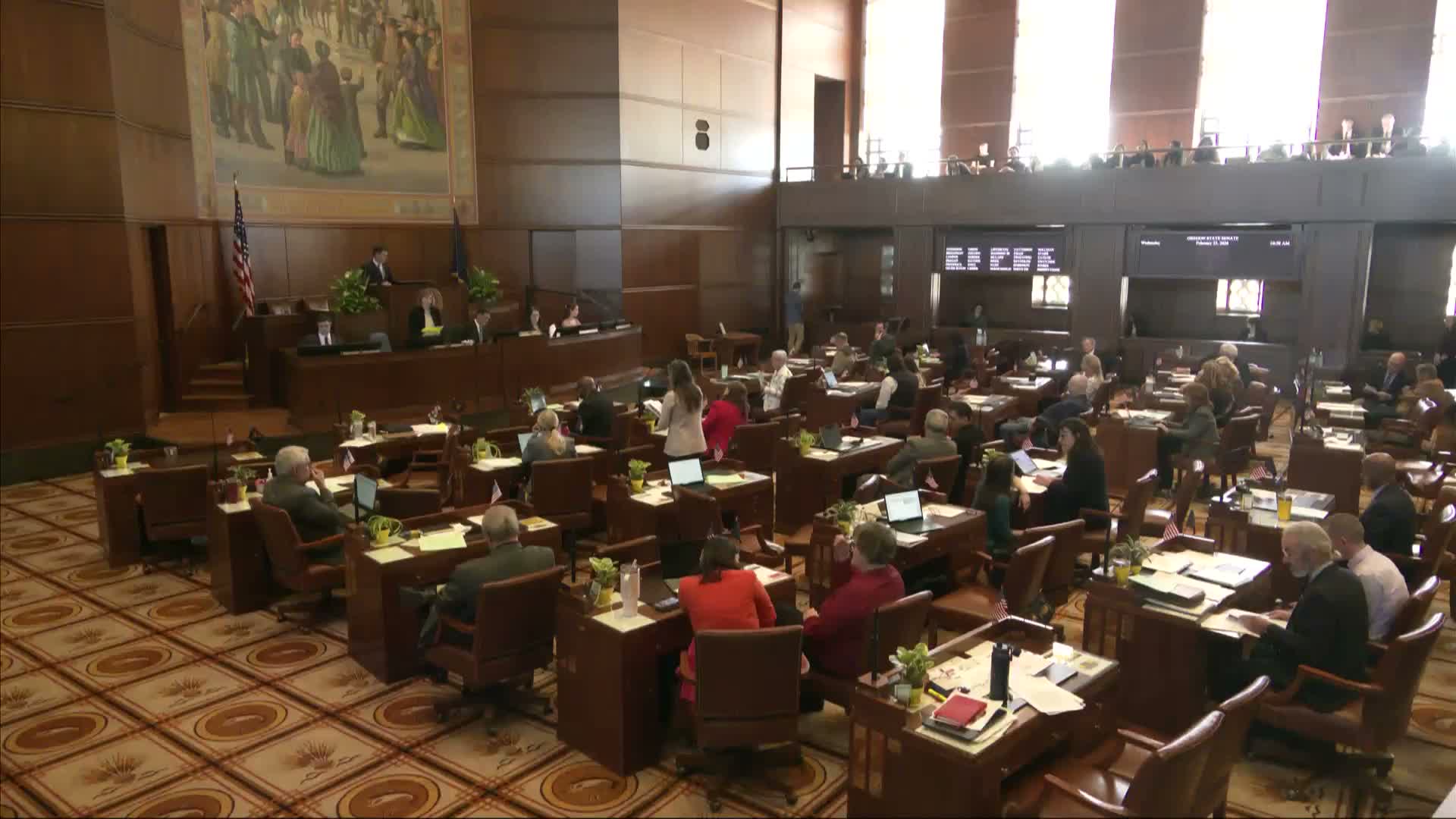
The Oregon State Senate met in floor session on Feb. 25 and approved a series of third‑reading measures after a unanimous‑consent motion to suspend section‑by‑section reading.
Lawmakers approved Senate Bill 1595, which delays the operative date of earlier professional licensing changes; sponsor Senator Jama described the change as moving an operative date "from 2026 to 2028" to allow for effective implementation and stakeholder coordination. "It's a simple bill. That's all it does, and I urge you," Jama said on the floor.
House bills taken up and declared passed included HB 4012 (a directed study and compliance work by the Bureau of Labor and Industries and Construction Contractors Board on unlicensed construction labor contractors), HB 4024 (a ban on speculative ticketing), HB 4005 (Water Professionals Appreciation Week), HB 4034 (streamlining animal rescue operational requirements into Department of Agriculture rulemaking), HB 4097 (authorizing the Oregon Ocean Science Trust to establish a 501(c)(3) arm), HB 4025 (a technical fix to remove water utilities from a winter moratorium), HB 4029 (residential solar consumer‑protection disclosures), HB 4068 (correction to residential treatment home age language), and HB 4083 (behavioral health workforce credentialing reforms).
Several bills drew floor questions or explanations. HB 4013, concerning child labor standards, prompted discussion about whether it "does nothing" until a federal trigger occurs and whether agency rulemaking authority could be broadened; sponsor Senator Taylor said the statutory language is "very, very tight" and intended to maintain the status quo if federal law changes. On HB 4022, which codifies Oregon's participation in the Dolly Parton Imagination Library, senators clarified that DELC contracts with statewide nonprofit implementers and that the book list is selected nationally.
The most contested debate focused on HB 4031, a measure creating limited exemptions from the Energy Facility Siting Council certificate process for certain renewable energy projects that meet construction and service deadlines and federal tax-credit criteria. Opponents warned about loss of prime farmland and reduced local control; Senator Nash urged a "no" vote, citing concerns about fast‑tracking and lack of outreach. Supporters said the measure includes a sunset and preserves local notice and hearing processes.
The Senate recorded roll‑call votes for all third‑reading items and declared each bill to have received a constitutional majority where applicable. No final passage was held on additional items before adjournment; the Senate recessed until 10 a.m. Thursday, Feb. 26.
Next steps: bills declared passed on the Senate floor will be transmitted per legislative process (enrolled and transmitted to the Governor or returned to the originating chamber as appropriate).