
Heated House debate over Rotor Act centers on ADS‑B mandate, national security and regular order
Get AI-powered insights, summaries, and transcripts
Subscribe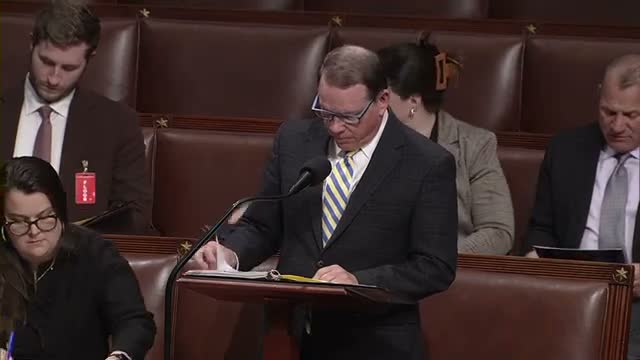
Summary
Floor debate on S.2503 (the Rotor Act) split members over a mandate requiring ADS‑B In/Out in busy airspace; supporters said the technology could have averted a January 2025 DCA collision, while opponents, citing a Department of War statement read into the record, warned of operational security and budgetary risks and urged a broader bipartisan Alert Act and regular committee consideration.
The House spent significant floor time debating S.2503, the Rotor Act, which would require Automatic Dependent Surveillance–Broadcast (ADS‑B) In and Out capabilities for aircraft operating in congested airspace. The measure drew voices on both sides of a policy and procedural divide.
Supporters argued the technology is a proven safety tool that could have provided pilots crucial seconds of warning in the Jan. 29, 2025, mid‑air collision near Reagan National Airport that killed 67 people. "ADSB in would have given those pilots a fighting chance to avoid the disaster," a proponent said on the floor, summarizing the NTSB's findings.
Opponents, including Rep. Rogers (chair of the House Armed Services Committee), quoted a Department of War statement saying, "as currently drafted, enactment of this bill would create significant unresolved budgetary burdens and operational security risks affecting national defense activities." Rogers and other critics said the bill's equipment mandates could force military and other sensitive aircraft to broadcast location data on unencrypted public channels and urged a technology‑agnostic, committee‑driven alternative called the Alert Act that sponsors say addresses all 50 of the NTSB recommendations.
Why it matters: supporters point to repeated NTSB recommendations going back years and to potential immediate safety benefits in heavily trafficked regions such as the National Capital Region. Opponents point to national‑security exemptions, equipment costs and the need for fuller intercommittee work so the House and Senate can reconcile a comprehensive approach.
Floor action and next step: members requested the yeas and nays; a sufficient number rose and the yeas and nays were ordered, but further proceedings were postponed for a recorded vote. The House left the measure pending and moved to other business.
Direct floor quotes reflect the split: "We owe it to the victims, to the families, and to the flying public to leave no stone unturned," a supporter said; "For obvious reasons, we do not want our enemies to know where our bombers or fighters are or where they are headed," the Armed Services Committee chair replied, reading the defense department's concerns.
The debate underscores competing priorities—rapid legislative action on a safety recommendation versus fuller committee consideration of a broad set of NTSB recommendations and defense implications.