
Ways and Means hears bill to track language acquisition for deaf and hard-of-hearing children
Get AI-powered insights, summaries, and transcripts
Subscribe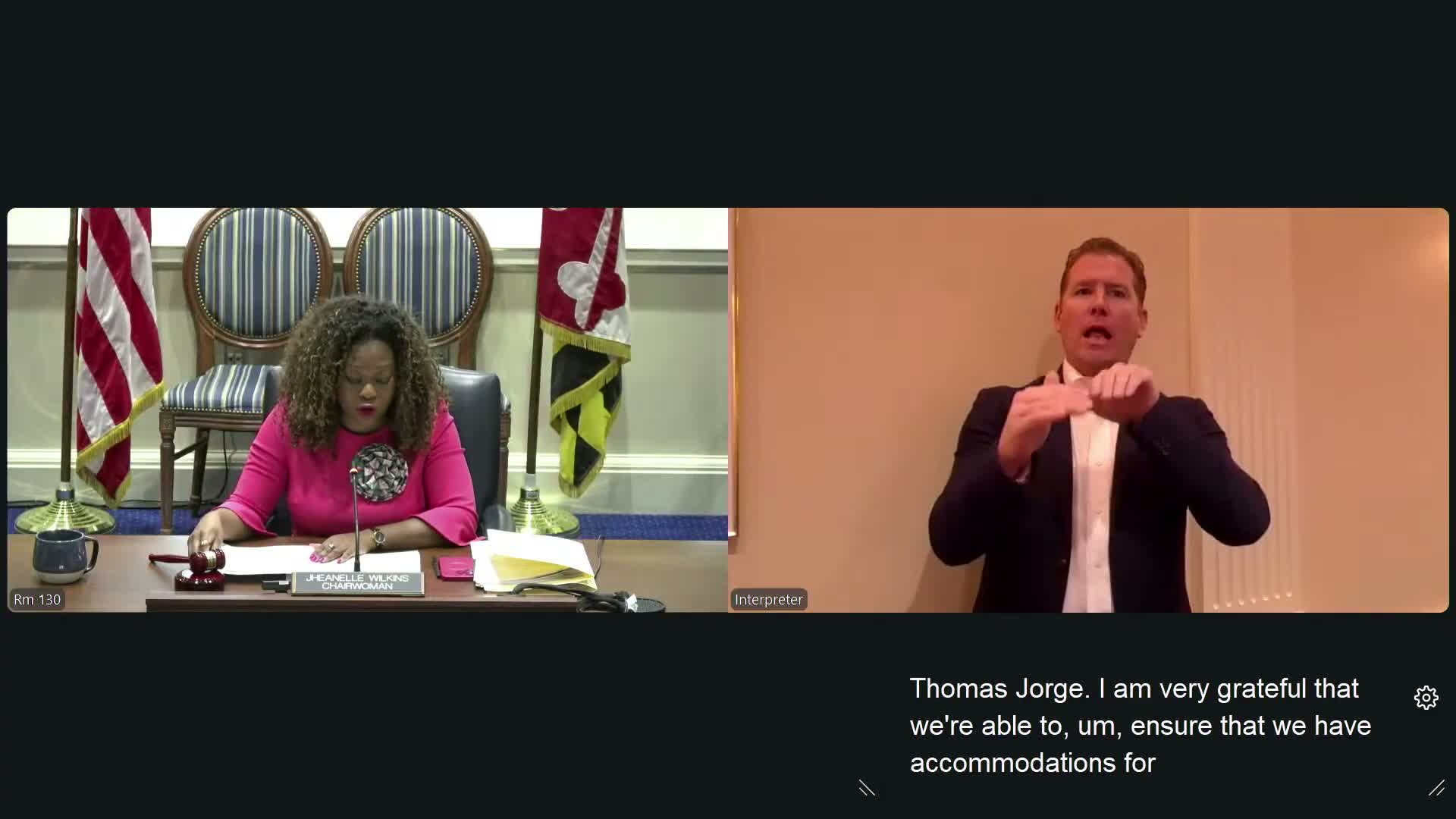
Summary
Delegates and advocates urged a favorable report on HB 879, which would create an MSDE-run language acquisition tracking program for deaf and hard-of-hearing children up to age 9, require routine assessments, establish a state coordinator and advisory council, and allow parental written opt-out.
ANNAPOLIS — Lawmakers and advocates told the House Ways and Means Committee on Feb. 25 that Maryland should establish a statewide program to measure whether deaf and hard-of-hearing children are learning language on schedule.
Delegate Heather Bagnell, the bill sponsor, told the committee HB 879 would create a language-acquisition tracking program within the Maryland State Department of Education that assesses participants from enrollment through age 9 and allows parents to choose the communication modality. “Language deprivation in early child development is a leading cause of delays,” Bagnell said, adding the bill sets an assessment schedule of every six months from birth through age 5 and annually thereafter to age 9. She described two sponsor amendments that shorten the initial assessment timeline and add two advisory‑council members with speech‑language pathology expertise (one using spoken language; one using American Sign Language).
Advocates, educators and parents said regular, validated assessments would let families and schools identify delays earlier and target interventions before problems compound. Dr. Marla Hatrick, educational policy consultant for the National Association of the Deaf, said the measure “prioritizes language outcomes” without prescribing a single communication approach. Tina Joyner, president of the Maryland Association of the Deaf, called the bill a way to empower families with consistent benchmarks and to prevent long-term academic and social harm.
John Serrano, superintendent of the Maryland School for the Deaf, and other witnesses described gaps in outreach and services that leave some children without early language access. “We must take deliberate, systemic action to ensure that every deaf and hard-of-hearing child has equitable access to language from the start,” Serrano said.
The bill would: establish a state coordinator at MSDE and an advisory council (including parents and deaf-community representatives); require an approved assessment tool that can measure signed and/or spoken language; permit parents to opt out in writing; and require MSDE to compile statewide reporting that compares language-acquisition outcomes for deaf and hard-of-hearing children with their hearing peers. Bagnell stressed the measure does not require development of a new assessment tool; the advisory council would select from validated existing instruments.
Committee members asked about fiscal impacts and whether counties would need new staffing; Bagnell and witnesses said assessments are intended to be administered by teachers or assessment specialists, not necessarily by speech‑language pathologists, and that the amendment timeline is designed to reduce burden on schools.
There was no formal vote during the hearing. Sponsors requested a favorable report and the committee heard a broad and largely bipartisan set of witness statements supporting the bill.
What’s next: The committee may consider amendments and a formal vote on whether to report HB 879 favorably to the full House.