Lifetime Citizen Portal Access — AI Briefings, Alerts & Unlimited Follows
Equal Justice Works fellow recounts client's ordeal and urges support for expanded legal services
Loading...
Summary
At a Scales of Justice event, Malcolm Lloyd, a 2024 Equal Justice Works fellow with the ACLU of Louisiana, recounted a former client's experience of pretrial incarceration, mistreatment and a 15-year plea to argue for trauma-centered legal services, policy change and funding support.
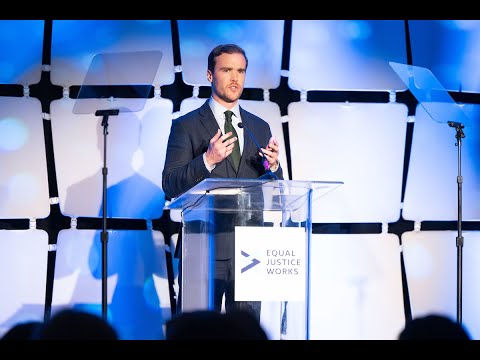
Malcolm Lloyd, the 2024 Equal Justice Works fellow working with the ACLU of Louisiana, told attendees at a Scales of Justice event that his fellowship enables him to confront the school-to-prison pipeline and expand legal services for marginalized children and families.
Lloyd opened his remarks by describing the case of "Jonathan," a name he said he changed to protect the client's identity. He recounted first meeting Jonathan at 15 after a physical arrest in New Orleans and later reuniting with him at Dixon Correctional Institute, where Jonathan, at 25, served as the youngest of the incarcerated legal advocates trained that day.
"Nearly 80% of all youth incarcerated in the state are Black," Lloyd said, adding that Black children in Louisiana are about four times more likely than white peers to be incarcerated. He framed those statistics as evidence of systemic failures in schools, policing and the criminal legal system that drive unequal outcomes for children.
Lloyd described Jonathan's time in custody: repeated family evictions, pretrial detention on a first-degree murder indictment, a suicide attempt while jailed, and what Lloyd said was mistreatment and misdiagnosis at a mental institution after the attempt. Lloyd said he spent four years investigating the case before Jonathan pleaded to 15 years in prison, which Lloyd called "the best of a worst case scenario." Lloyd also said children charged as adults are "36 times more likely to commit suicide" than children in juvenile detention centers.
Drawing on his own background—he said he began mentoring at-risk children and later worked five years as a juvenile defense investigator at the Orleans public defender's office—Lloyd said the fellowship supports both direct legal representation and legislative advocacy. He outlined plans to bring civil rights cases on behalf of abused children, advance trauma-centered legislation and design a self-empowerment clinic aimed at expanding services for marginalized youth and families.
Lloyd closed by thanking past and current fellows, advocates and donors. He asked attendees to support the work through the event's text-to-give and said the fellowship is "an important and impactful way to address the systemic injustices imposed upon children like Jonathan."