Lifetime Citizen Portal Access — AI Briefings, Alerts & Unlimited Follows
Utilities and vendors pitch layered technology stack — cameras, DLR, satellites — to reduce ignition risk and limit PSPS scope
Loading...
Summary
In its technology panel, FERC heard from utilities and vendors that layered sensing — dynamic line ratings, AI cameras, satellite and lidar — combined with sectionalization and targeted safety settings can reduce ignitions and make public safety power shutoffs more surgical.
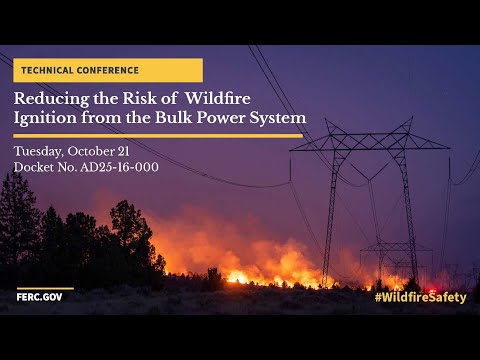
The second panel at the FERC technical conference focused on operational tools and sensing technologies to prevent and detect ignitions.
Mark Quinlan, PG&E’s senior vice president for wildfire emergency and grid operations, described a layered approach: operational mitigations (enhanced safety settings), continuous monitoring with AI‑enabled cameras (PG&E reported roughly 700 cameras covering about 95% of its high‑fire‑threat viewsheds), and grid sensing devices to detect anomalies on distribution and transmission.
Dynamic line rating (DLR) vendors and grid intelligence firms explained that DLR sensors provide preventive, timestamped data on line conditions (temperature, sag and other parameters) that can inform maintenance and, after an ignition, help determine whether a line was involved. Bridal Fomato of Heimdal Power noted DLR can be installed rapidly and provide both prevention and forensic value.
Camera‑based systems and triangulation were presented as an immediate way to shorten detection‑to‑response time and deliver actionable location data to fire agencies and utilities simultaneously. Sucheta Alakani of Pano AI described a human‑in‑the‑loop verification process that routes triangulated alerts to first responders and utilities; she said the vendor has practical case studies of early detections aiding containment.
Panelists cautioned that technology must be integrated with risk‑based processes, hyperlocal weather and fuels data, and reliability planning. Several speakers said technologies can lower net costs over time by enabling more targeted inspections, drone and remote sensing workflows, and fewer broad PSPS events, but noted smaller utilities may face barriers due to IT and staffing constraints.
Commissioners asked for demonstrations and case studies to validate efficacy and to inform possible regulatory acceptance of remote inspections and novel monitoring approaches.