Get Full Government Meeting Transcripts, Videos, & Alerts Forever!
Get email alerts on the Watershed Protection topic
No spam. Unsubscribe anytime.
Krog planners brief commission on watershed protection tools for drinking‑water safety
Summary
Krog planners Heidi Samoker and Sonia Carrizales presented a Western Connecticut Council of Governments study showing that about 80% of land in public water supply watersheds is privately owned and that Connecticut lacks state riparian buffer requirements; they highlighted appendices with model zoning language and stormwater screening matrices.
Heidi Samoker, principal planner at Krog, and Sonia Carrizales, environmental planner at Krog, presented findings from a watershed protection study produced by the Western Connecticut Council of Governments and oriented commissioners to resources communities can use to protect drinking‑water supplies.
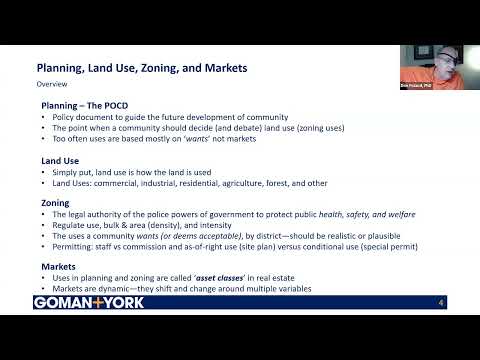
Samoker stressed that roughly 80% of land in a public water supply watershed is privately owned, so local zoning and land‑use controls are often the only protections for those recharge areas. "If it's privately owned, the only protection is through town regulation," she said, urging commissions to review whether overlay zones, setbacks and impervious cover limits are sufficient for local watersheds.
The presentation noted that Connecticut is the only New England state without state riparian buffer requirements, a gap the presenters said makes local measures more important. Krog highlighted three control types in the report's "watershed protection zoning toolbox": land‑use controls, activity‑based controls and review‑based controls that refer development applications to water suppliers for technical review.
Tools and appendices: The presenters pointed commissioners to three appendices: Appendix 4a (a table of land uses and potential groundwater/surface‑water impacts drawn from other New England states), Appendix 13 (a zoning commission checklist for watershed protection outlining a six‑step local process) and Appendix 14 (a watershed‑management stormwater screening matrix focused on nature‑based solutions).
Why it matters: Because roughly four‑fifths of watershed land in some areas is privately owned, Krog emphasized the role of local regulations in protecting water quality. The presenters said certain items—setbacks, overlay zones, riparian buffers and referral procedures—are within municipal control and can materially reduce contamination risk to public suppliers.
Provenance and follow‑up: Krog said the full report and links are available on the Western Connecticut Council of Governments website and offered to circulate the specific resource and Don Poland's presentation to commissioners by email.
(Presentation runs in the transcript from SEG 1239 to SEG 1391.)