Get Full Government Meeting Transcripts, Videos, & Alerts Forever!
Get email alerts on the Priority Pathways Draft Network topic
No spam. Unsubscribe anytime.
CROG previews draft Priority Pathways to connect bike and pedestrian routes across 38-town capital region
Summary
CROG and its consultants presented a draft regional Priority Pathways network, shared engagement results from roughly 400 public touchpoints and an interactive map, and said the draft will be refined with an advisory committee before a final plan and implementation guidance next year.
The Capitol Region Council of Governments on Tuesday presented a draft Priority Pathways bike-and-ped network intended to knit together existing trails and proposed segments across 38 member towns.
"We are building towards a safer, more connected, and more comfortable active transportation network for all people from age 8 to 80," said Shauna Kitzman, a transportation planner and Connecticut market lead for Toole Design, who led the public meeting and review of engagement findings.
Consultant Kyle Herring of Foursquare said the draft distinguishes three priority types: regional pathways that form the network spine, community connectors that are next in importance and local circulators that serve neighborhood connections. "We sketched out the network... and generated around a 170 different ideas about how we could improve it," Herring said, describing how advisory feedback and local plans shaped the draft.
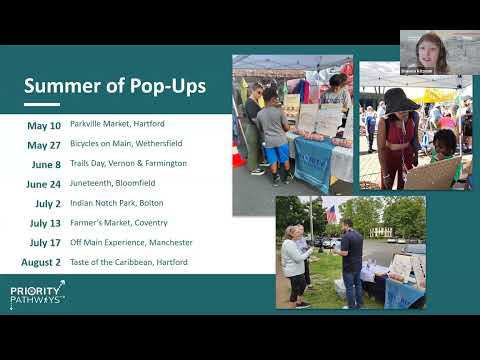
Project staff said the plan builds on existing studies and municipal plans and draws on multiple data inputs — including population and employment density, short-trip activity, travel-demand modeling and crash records — to score and prioritize segments. The team reported about eight pop-up outreach events over the summer and roughly 400 engagement touchpoints; safety, lack of safe crossings and high-speed multi-lane roads repeatedly surfaced as barriers to walking and biking.
Public commenters raised a range of local questions. A participant asked whether singletrack hiking trails or unpaved state forest routes are included; project staff said those generally fall outside the "all ages and abilities" criteria unless compacted or paved. When asked who would maintain new or existing segments, CROG staff member Caitlin said maintenance responsibility typically falls to the municipality, including for some East Coast Greenway segments.
Local participants also suggested prioritizing connections that enable potential new housing. "One of our colleagues... is doing a lot of work at the intersection of transportation, land use and housing," Shauna said, referring to Quinn Malloy, who will lead an advisory activity on that topic. Kevin Sullivan, a meeting participant, noted a recently passed housing bill includes bike-and-ped provisions and suggested pairing funding for active-transportation improvements with housing development.
The team encouraged the public to use an interactive web map that will be posted later this week to view, zoom and submit alignment suggestions or draw alternatives. The draft network and materials will be shared with the advisory committee in December for refinement; presenters said the final plan will be shared early next year with plan adoption and implementation moving into the spring. The meeting recording and web materials will be posted on the CROG project page for comment.