Lifetime Citizen Portal Access — AI Briefings, Alerts & Unlimited Follows
CROG consultants: regionaffordability driven more by incomes than extreme price spikes; renters most burdened
Loading...
Summary
Consultants for the 38-town CROG region told planners that housing affordability in the region is driven primarily by household incomes and a mismatch between existing housing stock and smaller, modern household preferences; they recommended speeding approvals and studying municipal sites to increase supply.
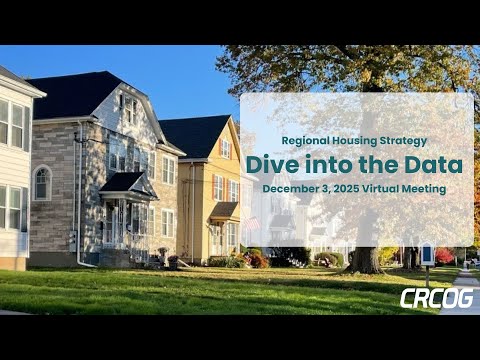
At a CROG virtual meeting, consultant Don Poland of Goman and York presented an analysis of housing markets and affordability across the 38-town CROG region and urged local officials to focus on reforms that reduce the time, cost and risk of new development. "Housing affordability is more of a problem of income," Poland told attendees, adding that "renters are the most burdened."
Poland framed affordability two ways: households may earn too little to access ownership, or housing may be priced too high. For the CROG region he said the data point toward the income problem: using a regional median home value of $364,000 and prevailing mortgage rates at the time of analysis, a household would need about $130,000 in income to keep ownership costs below 30 percent of income. Poland demonstrated the sensitivity to interest rates — reducing the mortgage rate in his model to 5 percent lowered the required household income to about $119,000.
The consultants presented several demographic and stock findings: about 10.8 percent of housing units were built since 2000 while nearly 70 percent are pre-1980; 62.2 percent of households are one- or two-person households, yet 57.7 percent of housing units have three or more bedrooms. Poland said that mismatch contributes to frustration for first-time buyers who can afford a price point but not the product or community amenities they prefer. "The community that a household can afford to buy into may not be the community the household wants to live in," he said.
On production, Poland said the region has shifted from single-family dominance to multifamily development in recent years and that permit activity rose in 2023–24. However, development timelines and financing remain major constraints: Poland outlined a 12-step development process in which developers may spend years and large sums before permitting decisions are known, and his pro forma example estimated per-unit construction costs in the example at about $333,000. He emphasized that early cash flow typically goes to investors and that projects are sensitive to occupancy and financing assumptions.
Attendees pressed the consultants on several points in a Q&A. One planner noted that existing units can be uninhabitable and that vacancy and unit quality complicate simple unit-count comparisons; a second attendee argued for using a single regional income denominator when communicating price-to-income ratios. Rural attendees raised infrastructure barriers — especially wastewater and water access — and Poland said CROG's case studies intentionally include sites with limited infrastructure to test funding and delivery options. Heidi Samoker noted the governor had recently signed a housing bill that includes a wastewater study, urging small communities to participate in that process.
Poland and CROG staff described next steps: CROG will study roughly 14–15 candidate sites submitted by member municipalities for pro forma feasibility, post the presentation slides and the recorded session on the project website, and continue developing policy recommendations aimed at shortening approval time and lowering development risk. "How do you create an approval process that is swift, simple, and certain?" Poland asked; he said that achieving that would bring more investment into the region.
The CROG team asked attendees to review the slides and recording (to be posted next week) and to stay engaged as the project moves toward specific recommendations for municipal tools, financing options, and case-study findings.