Get Full Government Meeting Transcripts, Videos, & Alerts Forever!
Get email alerts on the Zoning Short Term Rentals topic
No spam. Unsubscribe anytime.
Clawson commission votes to limit short‑term rentals to commercial hotel districts; staff to draft ordinance language
Summary
The planning commission voted Aug. 27 to direct staff to prepare ordinance language that would confine short‑term rentals to districts that already permit hotels/motels (B3 and BRD2). Commissioners emphasized enforcement gaps and asked staff to coordinate zoning language with council and code enforcement.
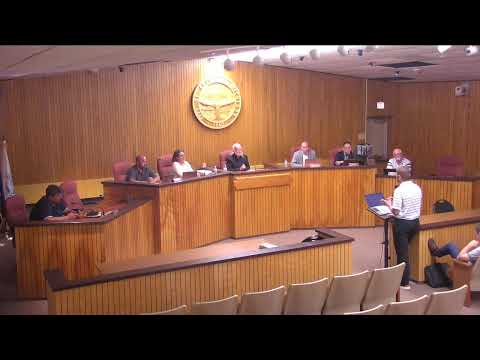
The Clawson Planning Commission voted Aug. 27 to move forward with a recommendation that short‑term rentals (STRs) be confined to districts that allow hotel and motel uses, specifically B3 and BRD2, and directed staff to draft ordinance language for future review.
Commissioners debated whether STRs should be treated as transient commercial uses and therefore not permitted in single‑family residential zones. Commissioner Redmond moved to restrict short‑term rentals to B3 and BRD2 — zones that allow hotels — and the motion received support and passed on a roll‑call vote. Staff and commissioners agreed the motion starts a process: planning staff will draft ordinance text reflecting the motion, confirm how it aligns with existing use definitions, and return to the commission for refinement before any proposal goes to city council.
Public speakers urged strong enforcement and clearer penalties where STR operators violate registration or nuisance standards. Nate Harrah said enforcement alone cannot be relied on as the primary remedy and encouraged zoning that places STRs in appropriate commercial districts. Staff noted that while the planning commission handles zoning (where STRs are allowed), code enforcement and council action determine penalties, inspections and registration details. Two properties were already identified by staff as potentially noncompliant and notified for registration follow‑up.
The commission’s vote is a direction to staff to produce ordinance language and analysis, not a final amendment. If staff returns a draft, the commission will review it and may forward a recommendation to city council; any change to the city code would require council action.