Get Full Government Meeting Transcripts, Videos, & Alerts Forever!
Get email alerts on the Noise Ordinance topic
No spam. Unsubscribe anytime.
Debate over noise ordinance exposes split on measurable standard vs. 'disturbing or unnecessary' test
Summary
Residents and council members debated replacing a measurable, meter-based noise standard with a subjective 'disturbing or unnecessary' standard; supporters of objective metrics warned that removing numeric criteria could hamper enforcement against recurring commercial sources.
An extended debate over a proposed revision to Morristown's noise ordinance took place on June 11 as the council introduced Ordinance O-18-2024, which would amend the town's noise regulations.
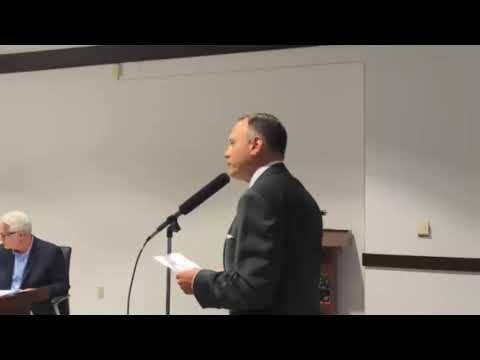
Resident Stephen Armington opposed the proposed revision in public comment, arguing the draft removes scientific criteria and replaces them with a subjective "disturbing or unnecessary" standard that could be arbitrary and difficult to defend in court. "What is disturbing or unnecessary to a police officer may not be disturbing or unnecessary to me," Armington said, warning the change could strip enforcement tools from the police.
Police and public safety representatives told the council that many noise complaints (particularly loud music from private properties) require certified, meter-based measurements and baseline readings that are often impractical to obtain. Proponents of keeping objective standards said the measurable approach provides a defensible basis for court actions; others on the council argued the model ordinance offers officers more options to address recurring urban noise issues and should be amended rather than repealed.
Council members discussed options including repealing the current measure, amending the model ordinance to add local discretion, or retaining the measurable baseline and strengthening enforcement protocols. The council voted to introduce O-18-2024 for later public hearing; further amendments and public testimony were scheduled to continue at upcoming meetings.
During the debate, officials repeatedly noted trade-offs: meter-based standards can be precise but may be hard to apply in private-property music complaints; subjective standards give on-the-spot flexibility but may be more vulnerable to legal challenge, according to testimony in the meeting record.
The council set a public hearing for the ordinance's next step; no final repeal or adoption of a new, permanent standard occurred that night.
The council also introduced Ordinance O-19-2024; a separate public hearing for that measure is scheduled June 25, 2024.