Get Full Government Meeting Transcripts, Videos, & Alerts Forever!
Get email alerts on the Health Cancer Screening topic
No spam. Unsubscribe anytime.
NIH/NCI statement summarizes promise and limits of multi‑cancer blood tests
Summary
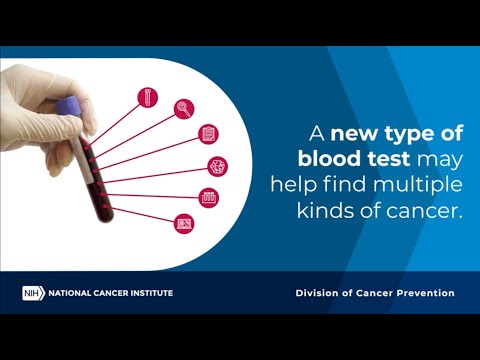
A transcripted NIH/NCI statement said new multi‑cancer detection blood tests 'may help find multiple kinds of cancer,' stressed they only assess the possibility of cancer and require follow‑up testing for positives, and noted the National Cancer Institute is studying whether their use will reduce deaths.
An unidentified presenter said a new type of blood test "may help find multiple kinds of cancer," describing multi‑cancer detection tests as tools that use a single blood sample to screen for more than one possible cancer.
The speaker, identified only in the transcript as an Unidentified Speaker and listed as a presenter, noted limits to the tests: "Like any cancer screening, multi cancer detection tests only assess the possibility of cancer being present," and added that "If there is a positive multi cancer detection test result, more tests are needed to diagnose cancer." The statement also warned that "Some people with a negative result could later be diagnosed with cancer" and that "No multi cancer detection test can find every type of cancer."
The presenter said some multi‑cancer detection tests are already available to the public while additional tests remain in development. The National Cancer Institute (NCI), part of the National Institutes of Health (NIH), was named as studying these tests "to find out if using them will save lives," indicating that the question of mortality benefit remains under investigation.
For more information, listeners were directed to prevention.cancer.gov/mcd and cancer.gov. The transcript also lists the US Department of Health and Human Services and the National Institutes of Health in attribution. A final transcript fragment includes a partial phone number ('+1 804'), which is incomplete in the record.
The statement provides basic public‑facing information about multi‑cancer detection tests and points to official NCI resources for details and updates; it does not report study results or endorse any specific commercial test.