Get Full Government Meeting Transcripts, Videos, & Alerts Forever!
Get email alerts on the Water Systems topic
No spam. Unsubscribe anytime.
Keller Associates tells Rexburg council study shows zone shortfalls, recharge limit likely by 2027
Summary
Consultants presented a final water facility planning study showing supply and storage shortfalls in upper zones, a possible need to expand recharge capacity by about 2027, early CIP priorities (including addressing an intermittently unusable well), and recommended funding and rate‑study follow‑up.
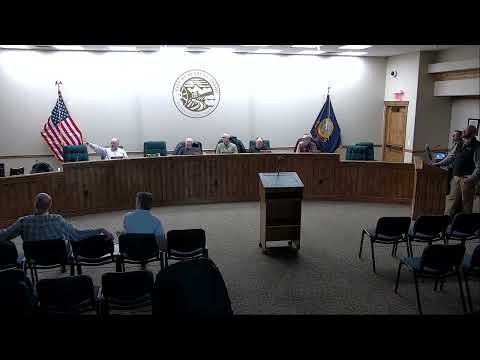
Tyrone Clark of Keller Associates presented the final draft of a Water Facility Planning Study to the Rexburg City Council, saying the city's system has zone‑specific supply and storage shortfalls that require prioritized capital projects and attention to recharge capacity.
Keller used the city's comprehensive‑plan population projection (1.89% annual growth) and five years of consumption data to model average‑day, max‑day and peak‑hour demand. Quinn Gardner, the project lead, said the system has three pressure zones fed by nine wells, five booster stations and five tanks and that Zones 2 and 3 already show deficiencies under the model’s 20‑year horizon.
The report found the city’s non‑recharge water rights are already being used and that, unless additional recharge capacity is secured, the need for recharge that counts toward the city’s rights will increase as demand grows. Tyrone Clark said the consultants’ linear projection indicates the city could exceed its current operational recharge capacity around 2027, absent new recharge sites. "That would get us up beyond what the, what our rights are with that recharge," Clark explained.
Consultants flagged operational items that affect reliability: one well (identified in the study as Well 3) is effectively unusable in summer and was counted in the model only with that limitation; losing that well would create a large Zone 1 deficit, so addressing it made the initial CIP list. The study paired supply and storage analyses with hydraulic modeling and identified targeted alternatives—looping mains, upsizing short lines, new wells and storage additions—ranked into a 20‑year capital improvement plan.
Fire‑flow needs were emphasized for public‑safety planning. The study used common thresholds (residential 1,500 gpm; commercial 2,500 gpm; industrial 4,500 gpm) and a downtown target requested by the fire chief of 8,000 gpm. Consultants said many failures are clustered and often trace to delivery or looping issues that can be corrected more cost‑effectively than wholesale replacement.
On water quality, Keller presented chlorination alternatives (liquid chlorine, gas, onsite generation) and emphasized that continuous chlorination would be driven by Idaho Department of Environmental Quality (DEQ) sampling results: "If enough of those start to come up with positives ... it would trigger DEQ into saying, okay, guys. It's time to chlorinate," Clark said. The study includes high‑level cost estimates for chlorination options for planning purposes only.
Funding and timing questions came up in council discussion. The presentation referenced roughly a near‑term package in the multimillion‑dollar range (conversations in the meeting cited figures on the order of $19 million for prioritized near‑term projects), and staff said the Keller study will feed a concurrent rate study so the city can align rates, capacity fees and potential loan/grant funding with CIP needs.
Consultants and staff also described ongoing coordination with Teton County and the Idaho Department of Water Resources on a gravel‑pit recharge site; staff said they expect a hearing to move a diversion point so the city can use a gravel pit for higher‑rate recharge if the site proves appropriate.
The council opened a public hearing on the study and received no public comments; staff said follow‑up will include refining project scopes, feeding costs into the rate study and returning recommendations for prioritization and funding strategies.
"I would say short answer on that is it's not a panic. Don't lose sleep over it at night," Tyrone Clark told the council, while emphasizing that planning and near‑term projects are necessary to avoid emergency measures later.
Next steps identified were to incorporate the study data into the city's rate‑study process, pursue grants and low‑interest loans where feasible, complete the gravel‑pit recharge feasibility work with IDWR and the county, and bring recommended CIP prioritization back to council for action.