Lifetime Citizen Portal Access — AI Briefings, Alerts & Unlimited Follows
Committee hearing highlights fusion progress, technical hurdles and private-sector timelines
Loading...
Summary
Senators at a hearing on nuclear fusion reviewed scientific milestones at Lawrence Livermore National Laboratory, rapid private investment and pledges from companies such as Helion, while pressing witnesses on reproducibility, power conversion and U.S. competitiveness with China.
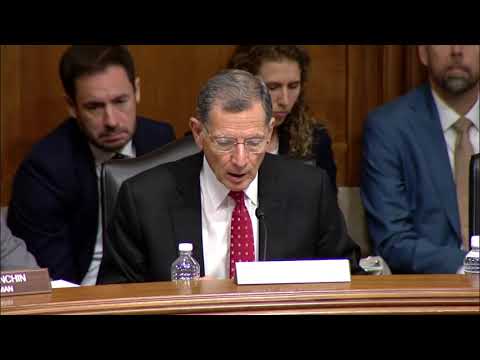
Unidentified Senator opened the hearing by thanking the chairman and colleagues and stressing urgency for action, saying, "This is a critically important topic, nuclear fusion." The senator pointed to recent scientific and private-sector progress and pressed witnesses on timelines and stewardship of taxpayer dollars.
The senator cited a December 2022 Department of Energy announcement that scientists at the Lawrence Livermore National Laboratory achieved scientific breakeven — producing more energy than the experiment consumed — and said the lab has repeated that outcome on four additional occasions. He also noted growth in the private fusion industry, saying the number of companies rose from 33 in 2022 to 45 and that, according to the Fusion Industry Association, the sector has attracted over $7,000,000,000 in private investment with about $900,000,000 in new funding in the last year.
At the same time, the senator underscored technical hurdles. "No question that scientific breakeven was significant, yet scientists have not yet been able to reliably and consistently reproduce the reactant," he said, and added that converting fusion energy into electricity remains unresolved: "To date, no fusion reactor has made it to this stage." He questioned how firms that have announced commercial commitments plan to meet them, naming Helion as an example and noting agreements Helion has with Microsoft to supply electricity by 2028 and with Nucor around 2030.
The hearing also framed fusion within broader energy needs. The senator warned that U.S. electricity demand is expected to grow rapidly — he compared the future need to "adding a new California to the grid" — and pointed to drivers such as data centers for artificial intelligence, bitcoin mining and cloud computing. He raised concerns about international competition, citing a recent Wall Street Journal piece and quoting a passage that suggested Beijing leads the U.S. in parts of the fusion race. In response to that coverage, another speaker said, "We're not out of the race yet." The senator said he would question Dr. Alon, who the transcript identifies as leading the Department of Energy's fusion office and as one of the witnesses at the hearing.
The senator closed by asking how the Department can better protect American interests, regain competitive advantage and be a better steward of taxpayer dollars supporting fusion research. He thanked the witnesses for appearing and said he looked forward to their testimony. The chairman then thanked the senator and moved the hearing toward witness testimony.
Witness testimony addressing the technical challenges, commercial timelines and federal oversight was next on the agenda.