Get Full Government Meeting Transcripts, Videos, & Alerts Forever!
Get email alerts on the Energy Policy topic
No spam. Unsubscribe anytime.
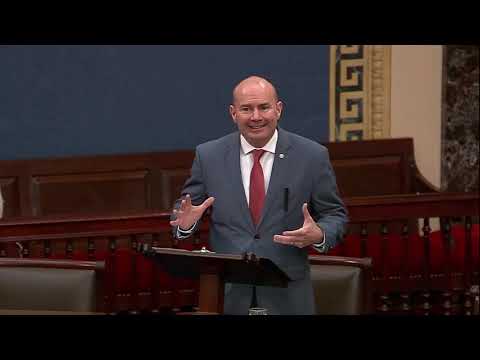
Unnamed senator urges colleagues to oppose Democratic bid to terminate Trump’s energy declaration, calls U.S. in ‘energy emergency’
Summary
An unnamed senator told the Senate the United States faces an energy emergency, blamed federal permitting and regulatory decisions for higher prices and import reliance, cited statistics on AI-driven electricity demand and methane fees, and urged colleagues to vote no on a Democratic resolution to terminate President Trump’s emergency declaration.
Unidentified Senator told the Senate that the United States is in an energy emergency and urged colleagues to oppose a Democratic resolution that would terminate President Trump’s emergency declaration. “The power grid is buckling. Energy demand is exploding,” the Unidentified Senator said, arguing the administration’s regulatory approach has weakened domestic supply.
The senator framed the dispute as one over policy and executive authority. He cited a Goldman Sachs forecast he said shows artificial intelligence alone could drive a 160% increase in data-center power demand by 2030 and warned that the largest data centers can consume as much electricity as 700,000 households. He also pointed to a January event when, he said, grid operators relied on coal and natural gas to meet record demand and that wind and solar contributed only a small portion of incremental generation on peak days.
The senator criticized federal environmental statutes—naming NEPA, the Clean Water Act and the Endangered Species Act—as obstacles to permitting reform and blamed the Biden administration for pausing leases early in the administration and for what he described as slow leasing under Interior leadership. He also cited an EPA methane fee schedule, saying the Biden EPA introduced methane fees starting at $900 per metric ton in 2025 and rising to $1,500, which he said burdens producers and ultimately consumers.
On trade and supply, the senator stated that the U.S. imported roughly 1,300,000 barrels per day from OPEC in 2023—up nearly 50% from 2020—and warned of critical-mineral dependencies on foreign suppliers for components such as titanium, cobalt and copper. He argued these dynamics increase national vulnerability and the cost of living for low- and middle-income families.
The senator explicitly described his position as consistent with past efforts to constrain executive power—saying he authored an Article I Act requiring congressional approval of emergency declarations within 30 days—but said this declaration did not represent an abuse of power and that Congress’s failure to act justified the president’s step. He said Senate Democrats were forcing a vote on a resolution to terminate the declaration and urged colleagues to vote no.
The transcript records statements of policy and criticism but does not record a formal vote or the outcome of the Democrats’ resolution in this excerpt; no other speakers responded in the provided text. The remarks concluded with the senator’s plea that the chamber preserve the president’s authority to address what he characterized as a national emergency.