Get Full Government Meeting Transcripts, Videos, & Alerts Forever!
Get email alerts on the Roadless Rule topic
No spam. Unsubscribe anytime.
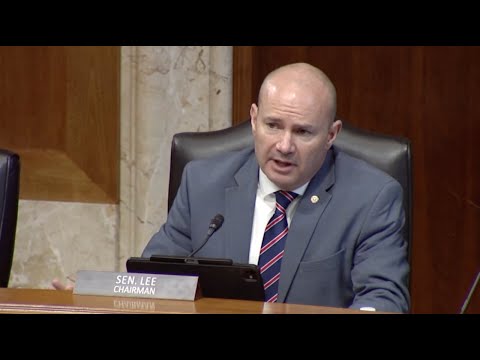
Hearing highlights Forest Service plan to begin repealing 2001 roadless rule
Summary
Committee exchange focused on the Forest Service announcement to begin rulemaking to repeal the 2001 roadless rule, the rule’s scope across roughly 59 million acres, and agency plans for public input and forest-plan amendments (Idaho and Colorado exempt).
At a hearing of the Senate Committee on Energy and Natural Resources, two panel participants discussed the Forest Service’s announcement to begin a rulemaking process to repeal the 2001 roadless rule, which Speaker 1 said covers roughly 59,000,000 acres of national forest system lands and about 60% of Forest Service land in Utah. Speaker 1 said that acreage ‘‘represents nearly 10% of the total, federal land footprint.’’
Why it matters: The roadless rule restricts road construction and effectively limits timber harvesting on affected federal lands; proponents of repeal argue that lifting the rule would allow more active forest management, including work aimed at reducing wildfire risk and supporting timber-dependent communities.
What participants said: Speaker 1 said the rule has produced ‘‘environmental disaster’’ effects for forest health and wildfire mitigation and has contributed to the ‘‘demise of our domestic timber industry.’’ Speaker 2 responded that the rule ‘‘doesn’t help for sure, and it definitely hinders,’’ citing Forest Service data that about 24.5 million acres of roadless areas lie within one mile of the wildland-urban interface and noting that many ‘‘roadless’’ areas are eroded or historically roaded.
Process and next steps: Speaker 2 described a rulemaking the agency will begin ‘‘this fall’’ to repeal the rule, including public input and subsequent amendments to forest plans to adopt the change. Speaker 2 said two states — Idaho and Colorado — would not be affected because they ‘‘have their own unique rudderless rules,’’ and the agency would not repeal those state rules.
Context and caveats: The speakers framed the discussion as addressing wildfire mitigation, timber supply and local economies. Neither speaker reported a formal vote or final policy change during the session; Speaker 2 described the steps the agency will take but emphasized rulemaking and plan amendments are forthcoming and will include public comment.
What’s next: According to the explanation in the hearing exchange, the Forest Service will begin the formal rulemaking process in the fall, solicit public input, and then proceed to amend affected forest plans. No effective date for any repeal was given at the hearing.